

Putin Was Informed About The Drop In The Number Of Space Launches In Russia To The Minimum Since The Time Of Gagarin
9- 12.01.2026, 21:28
- 6,918
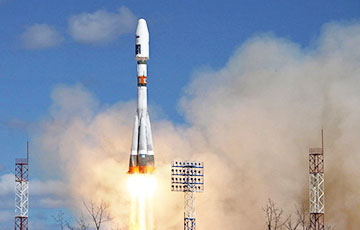
Russia continues to rapidly surrender its position in the global space market.
Russia continues to give up its position in the global space market, where it was once a pioneer and leader. At the end of 2025, the state corporation Roscosmos realized 17 launches of space rockets, Deputy Prime Minister Denis Manturov said at a meeting with Russian dictator Vladimir Putin.
The number of Roscosmos launches did not change compared to last year, while the United States increased their number from 145 to 181, China - from 68 to 91. As a result, Russia lagged more than 10 times behind the United States and more than five times behind China, reports The Moscow Times.
If you exclude the pandemic period, the number of launches in Russia for the second year in a row has been at its lowest since 1961, when Yuri Gagarii made the first space flight (there were nine in a year then). By the mid-1960s, the USSR was launching more than 40 rockets a year; by the early 1970s, it had brought the number of launches to 80-86 a year, setting a record of 99 launches in 1982.
The number has since fallen almost sixfold, leaving Russia on the verge of dropping out of the top 3 spacefaring nations. New Zealand also conducted 17 space launches last year (compared to 13 in 2024 and seven in 2023) and equaled Russia in terms of space market share.
Roskosmos had originally planned at least 20 launches this year. However, three of them had to be postponed, says space popularizer Vitaly Egorov. In late November, there was an accident on the Baikonur launch pad, which disrupted the launch of the Progress MS-33 spacecraft. Then "Proton-M" with a weather satellite, already placed on the launch table, had to be removed and sent to repair the upper stage. Finally, the test launch of the Soyuz-5 advanced medium rocket, which was expected in late December, also had to be postponed until March 2026.
All three failures have a different cause, which "in general is not the best way to characterize the state of the Russian space industry," Egorov writes: "The crash of the launch table is a mistake of the launch calculation of the Baikonur Cosmodrome. The problem with the upper stage - the sphere of responsibility of RSC Energia. The postponement of flight tests is again a problem at the cosmodrome, for which the Russian JSC TsENKI, part of Roscosmos, is responsible.
A quarter of a century ago, Russia was the leader in launches into orbit: Roscosmos carried out more than 30 launches a year, compared to 28 for the United States, 12 for Europe and 5 for China (as of 2000). But since then, the U.S. has increased the number of launches 5.2 times, and China almost 14 times.
In hopes of returning to the club of leading space powers, the Kremlin in 2025 approved a 4.4 trillion-ruble national space exploration project, under which it plans to put into orbit almost 900 satellites for the Rassvet project (analogous to Starlink), as well as more than 100 more Earth remote sensing vehicles. According to the plan, by 2030 the number of space launches in Russia should increase to 68 per year, and in 12 years to beat the USSR record of more than 100 annually.
Despite the ambitious expectations, in conditions of technological isolation Russia is doomed to lag behind the space leaders, said space expert Ivan Timofeev. The Kremlin calls China a strategic partner in space should not rely on it either, the expert believes: "China does not want to cooperate, it will do everything on its own. And [Russia] has nothing to offer it.

Bank's name: Bank Millennium S.A.
Address: ul. Stanislawa Zaryna, 2A, 02-593, Warszawa
IBAN: PL97116022020000000216711123
SWIFT: BIGBPLPW
Name of the account holder: Fundacja “KARTA ‘97”
Purpose/title of payment: Donation for statuary aims
You can contact us by the e-mail [email protected]