

Daniel Fried: There are several ways to put pressure on the Russians
6- 27.08.2025, 18:44
- 12,628
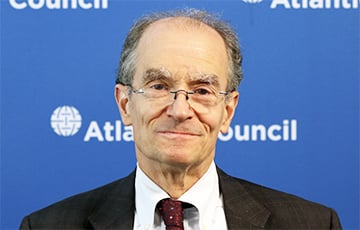
Photo: ned.org
Exclusive interview with the former U.S. State Department Coordinator for Sanctions Policy for Charter97.org.
Why did U.S. President Donald Trump call Lukashenka? What are the ways to exert pressure on Russia? What developments are taking place in the Russian economy?
Daniel Fried, a former U.S. State Department Coordinator for Sanctions Policy, former U.S. Ambassador to Poland, and expert at the Atlantic Council think tank, spoke about this in an interview with Charter97.org.
— What are you making out of Trump-Lukashenka phone call ahead of Trump's Putin summit in Alaska?
— The downsides of such a phone call are apparent: it encourages Lukashenka, it removes his isolation. He gets to brag about it. The reason for a phone call can only be if we get something material out of it, like the release of political prisoners. If you get that, I will, in a qualified way, support the outreach to Lukashenka. I said "in a qualified way" because — we have seen this pattern before — there is always the danger that Lukashenka will arrest some dissidents or just ordinary Belarusians on bad charges and that he will hold them basically as hostages, hoping to receive something from a Western country in exchange for releasing them. So, there is a moral hazard in making concessions to Lukashenka because it encourages him to arrest more people, to get more concessions, to let them go.
Having said that, I would still be sympathetic of any effort that gets people out of prison. I understand the moral hazard argument, but if you can get somebody out of detention — that is one person whose life you've changed for the better, and that's worth something.
I had a conversation many years ago with the current Polish Foreign Minister, Radek Sikorski, and he made the wise observation that no matter what we tried with Lukashenka, there were always problems and there were always very limited results. If you put pressure on him, he arrested more people. If you tried to do deals with him to get people out, he simply pocketed your concessions, let people out, and then arrested more people. It is extremely frustrating trying to work with him.
The Belarusians were also engaged in, frankly, aggressive action against Poland by sending all the migrants across the border, so the Poles decided to get tough. As a general rule, I think that any U.S. outreach to Lukashenka should be well coordinated with the Poles and Lithuanians at a minimum, and hopefully, also with the EU generally, and the key players.
So, my quick answer is: yeah, I guess there may be some good coming out of the Trump call, but I wanted to give you a fuller answer of all the dangers and hazards of dealing with Lukashenka, as well as the reasons to do it.
— After the call the President of the United States of America, publicly, through a social network, has called the illegitimate Belarusian dictator "highly respected". Why?
— Highly respected by whom? I doubt he's highly respected by Vladimir Putin, so I question that. The only defense of a post like that is if it results in something tangible, like political prisoners getting out. Calling Lukashenka "highly respected" is clearly not justified on its merits, but politics is not always a pure art. If you can get a decent result by flattering Lukashenka, that may be a defensible position.
— Before the beginning of the Anchorage summit between Trump and Putin, many people expected that the US president would press for a ceasefire. But after the summit, any mention of a ceasefire disappeared. What could be the reason for that sudden change?
— The Anchorage meeting between Trump and Putin was a disappointment in many ways. Not only did Trump say he was going to press for a ceasefire going into the meeting, flying up to Alaska, but he also said if he didn't get a ceasefire, he would be disappointed and there would be consequences for Putin, that he would impose economic pressure on Russia if he didn't get a ceasefire. And then, in the conversation with Putin, he simply dropped it. He looked weak at the end of that day. He looked like he had been played. It was dismaying to see a US President with such advantages cave to an adversary who had major weaknesses.
So, I was not happy with the Anchorage summit at all. This was partly made up on Monday when President Trump and President Zelensky had a very good meeting and then a subsequent good meeting where key Europeans joined Zelensky for a conversation with Trump about the way forward. That produced a new American commitment to back up the British, French-led coalition of the willing.
Trump said that would mean the US would participate in security guarantees for Ukraine. If we mean it, that's a really big deal. In fact, Trump's qualification that it would not be US boots on the ground, but it could be US air power, is a perfectly reasonable position. I never expected the US would put boots on the ground in Ukraine, but I'm delighted that Trump said we could back up the Europeans with serious air power.
Steve Witkoff, the special envoy, said on the Sunday talk shows the day before the Monday meeting that the security guarantees for Ukraine could be Article 5-like of the North Atlantic Treaty, which says an attack on one is an attack on all. If that means anything at all, it means that our backup for the European coalition of the willing would be serious.
The question is not whether this would be my favourite policy. Speaking personally, I would bring Ukraine into NATO. But as a former diplomat, the more relevant question is could I work within the four corners of what the President laid out as his policy to come up with a practical solution to the problem of Ukrainian security? I think the answer is yes. That is, if the coalition of the willing put in, for example, reconnaissance, maybe air defense, logistics support, and the Americans backed it up with series integrated real-time intelligence and serious air power (and it would have to be other countries also), I think that could be a very powerful security arrangement for Ukraine, even though (as I said, I think NATO membership would be best) This could work.
The Russians said, no, they're not interested. Steve Witkoff implied that the Russians had agreed to security guarantees for Ukraine. But I think that the special envoy Witkoff missed the Russian qualifier, that they would be part of the security guarantees. To me, to the Poles or the Finns or the Lithuanians, that's a poison pill. But Steve Witkoff is not a professional, and he didn't hear it. It doesn't mean he's dumb or ill-intentioned, he's just not been living with these issues for decades as I have. Just as you would be ill-advised to send me in as a negotiator of a complicated real estate deal (which is Steve Woodkoff's area of professional expertise) because I'll miss stuff, I'll get stuff wrong, you won't be happy with the result. You see where I'm going with this? Steve Witkoff is not going to catch poison pills. He is going to see the shiny object and not understand what's inside. Not because he's dumb, but because he doesn't have the experience.
So, Friday's meeting in Alaska, I was not happy with. Monday's meeting at the White House was far better, but it is not yet leading to the kind of results we need. I'm not sure where we're headed now.
— Would that be the correct way to summarize that the main outcome of these meetings is unclarity?
— I understand why you say that and you're not wrong, but I would put it somewhat differently. The way I would put it is as a result of the Monday meeting we have a sense of an outline of an agreement, which means some kind of territorial arrangement, which at its best would include an end of the conflict roughly along the existing front line, hopefully without formal recognition of it as permanent, but a kind of de facto recognition. So, territory is number one. Number two is security for Ukraine (which is even more important). It would be provided by the coalition of the willing with a serious US backstop. Because Ukraine will be principally responsible for its own defense, security guarantees have to include arrangements for long-term weapon shipments to Ukraine and long-term industrial cooperation, so Ukraine can build its own weapons. That's the outline of a sustainable agreement that could work.
What is not clear (to go back to your language) is whether Trump will push back on Putin when it becomes clear even to him that Putin has no intention of negotiating a settlement along the lines I just discussed, which are the lines that Trump and Witkoff outlined on Monday. So, it's not just lack of clarity. To be more specific, there is a lack of clarity as to whether Trump will back his own proposal.
The Russians will not agree to anything reasonable unless they feel they have no choice. Therefore, it is our task to make them feel they have no choice. To do that, we can impose greater economic pressure on Russia. We have options and we should use them. And secondly, we should advance preparations for Ukrainian security. I've written this earlier a few months ago with Stephen Hadley and Franklin Kramer in Foreign Affairs: ultimately, we may have to act without Russia's permission. Ukrainian security should not depend on Putin's agreement to security arrangements. He forfeited that right when he started the war. But that is my view, and that is ahead of where the Trump administration currently is.
— You wrote previously that there were two options to solve this territorial dispute in Ukraine: freezing the de facto line of contact or a legally-binding swap of territories. Could you elaborate?
— I don't like at all the legal recognition of the Russian conquests of territory. It is a bad policy and it would violate nearly 100 years of US policy not to do that: the Stimson doctrine that we would not recognize Japan's control over Manchuria; the Welles declaration that we would not recognize the Soviet annexation of the Baltic states; Pompeo Declaration of 2018 that the US would not recognize Russia's claimed annexation of Crimea. So, I much prefer not asking Ukraine to formally surrender its territory. But you could have (and the Ukrainians, I think, would agree) to freeze the conflict more or less along existing lines. That does give Putin quite a bit. He gets to keep the territory his armies occupy. He gets to have victory parades and statues built for himself. But the Ukrainians would maintain their position that they have not surrendered that territory. We would back the Ukrainians and not recognize it either. You could have a long term settlement. It would be similar to the Korean armistice line or to the demarcation line between East and West Germany, which was not intended to be a final international border. So, I much prefer that kind of de facto solution.
The other option is what I would call the Winter War precedent. During Finland's Winter War with the Soviet Union, the Finns had to surrender territory, including their second-largest city, Vyborg. The Finns are proud of what their grandfathers did to save their country. Stalin wanted to send a communist regime into Helsinki to run the whole country. He wanted all of Finland. He wanted it back because it had been part of the Russian Empire. The Finns prevented him from doing so.
Ukraine deserves better than that. For one thing, the Western democracies were unable to even reach Finland because World War II had already started and Finland's geography was pretty bad — Ukraine's geography is not as bad. To Ukraine's west is Poland, a NATO ally and a country that supports Ukraine's security. But it doesn't matter what I say.
If the Ukrainians decided (I don't think they will) that they had to accept a Winter War kind of peace, I would support this decision. Finland's president Alexander Stub, a good man, tough on Russia, pro-NATO, mentioned this in the Oval Office. He made a reference to it. I am not sure whether President Trump understood the reference, but I would bet dollars to rubles that Zelensky understood the reference and every other European leader in the room understood the reference. I'm not recommending this, but as an analytical notion, those are the two kinds of solutions to the territorial issue that are out there.
Out of the two big issues at stake, territory and security, security is more important because if you have a good territorial settlement without security, Putin can just invade and take more territory. With security, you have the basis for a lasting settlement.
— The parallels between the Finnish War and the war of aggression against Ukraine are indeed stunning: then and now, the Russians thought they would take it all in a matter of weeks; then and now, the Russian military were effectively crushed…
— At the beginning of the big invasion, those parallels occurred to me, but I did not keep writing about it or talking about it because I didn't want the Ukrainians to think that their American friends, like myself, believe that they have to surrender territory. It would be better if Trump simply said to Putin, "We are going to have a final peace on the basis of this existing line. The Ukrainians are going to have their position, and you will have your position, and we will just all live with it," — in other words, a de facto line of contact rather than a formal international border. Putin won't accept it unless he has to, which means we need to use the leverage we have against Russia to put Putin in a more reasonable frame of mind. We have that leverage. We could put additional pressure on the Russian economy, which is already vulnerable.
— How do you see the Russian economy? Apparently, Russia is not that robust as they try to portray themselves. What is your view?
— Vladimir Milov, the Russian economist, is now living outside of Russia, has written about this. I think that their economy is vulnerable. The sanctions and other forms of economic pressure have hurt the Russian economy, but there's more we can do. If we were serious about economic pressure on Russia, then we ought to go after Russia's biggest export earner, which is the sale of oil. There are various ways to do that. Right before the Anchorage meeting, the US announced extra tariffs against India because it is buying Russian oil. I appreciated the symbolism, but that seemed to be a clumsy way. For one thing, why go against India only and not China — if you're going to go after Russian oil, go after Russian oil.
I think it may be impractical to try to block all Russian sales of oil at once. You may want to ramp this down a little more slowly. We did so with respect to Iranian oil, where we threatened economic sanctions against anybody who bought Iranian oil, but we waived those sanctions if they would reduce the purchases of Iranian oil every six months.
I have been talking to various energy experts about what we could do. Without getting into too much detail, the fact is there are options. The price of oil is generally low right now. Supplies are not that tight. So, we have some options to squeeze the Russians.
The purpose is to go after their oil revenue, not their oil volumes. There are ways to do this. We should do this, put pressure on Russia, make it clear that we, the U.S. will help the Ukrainians purchase a steady flow of arms. You can do that even if the American taxpayer doesn't pay the full freight. There are different ways in which this can be done. Put the pressure on Russia and tell Putin that unless he negotiates a fair end of the war along the lines Trump has laid out, there will be more pressure. Trump needs to do this. But the problem with this American president is that he tip tows up to the line of serious pressure against Russia and he has not yet crossed it. He needs to if he wants to win this one. He can win but it will take tough measures.

Bank's name: Bank Millennium S.A.
Address: ul. Stanislawa Zaryna, 2A, 02-593, Warszawa
IBAN: PL97116022020000000216711123
SWIFT: BIGBPLPW
Name of the account holder: Fundacja “KARTA ‘97”
Purpose/title of payment: Donation for statuary aims
You can contact us by the e-mail [email protected]