

Daniel Fried: This Will Be Putin’s Major Mistake
2- 28.11.2025, 14:44
- 18,862
Trump will have to act.
How hard will U.S. sanctions against Rosneft and Lukoil hit Russia? Is Washington prepared to maintain pressure on the Kremlin? Will Putin agree to genuine peace negotiations?
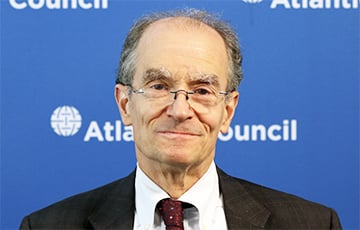
Former U.S. State Department sanctions coordinator, former U.S. ambassador to Poland, and Atlantic Council expert Daniel Fried spoke about this in an interview with Charter97.org.
— What do you make of the US Treasury imposing sanctions on Russia’s biggest oil firms, Rosneft and Lukoil?
— These were the first new sanctions the Trump administration had imposed on Russia at all. They were significant: the US putting full blocking sanctions on the two largest Russian oil companies is a potential blow. I say "potential" because sanctions aren't self-enforcing. The administration is going to have to decide how it goes after Chinese and other companies that are importing Russian oil and dealing with those sanctioned firms. It also needs to impose sanctions against more ships in the Russian shadow fleet. However, already, according to some serious economic analysts, Russian oil revenue has dropped over the past month as companies around the world have turned to alternative suppliers. This has happened without a major spike in oil prices, which is something the Biden administration, and I suppose some in the Trump administration, had feared. So, so far — a success.
I'd also note that Lukoil made an effort to transfer some of its assets to a Russian front company Gunvor, and the Treasury Secretary published a response to all this. It was decisive, strong, and indicated that the US Treasury is not going to allow the assets to be transferred to front companies. That was a good move. So I am reasonably hopeful that these sanctions are serious. But all of this is going to be looked at in the context of the current intense negotiations to get a settlement in Ukraine, and I don't know where these are going. So the sanctions, I think, have great potential. I think they need to be intensified in their implementation to put enough pressure on Russia to get Putin to negotiate seriously, which he has not done so far.
Had the administration not sanctioned Rosneft and Lukoil, your question would have been, "When is the Trump administration finally going to take some action against the Russian economy?" — and I would have no good answer. So the questions that I have now about the way ahead on these sanctions are a better class of questions than the ones we would have if we hadn't taken the action in the first place.
— How to discourage India and China from buying Russian oil?
— Some Indian companies have already (reportedly — and I believe this), moved away from importing Russian oil. Some Chinese companies have, but I think China is more of a problem. This is not easy because the Chinese may decide to simply dare the Trump administration to take action and they ignore the sanctions on the assumption that we won't move against big Chinese companies.
If you want to see a very smart set of policy recommendations about how to deal with this dilemma, read the article in Foreign Affairs by Richard Nephew, my former colleague in the State Department Sanctions Office, a very capable sanctions expert. His argument is to start picking some Chinese companies to go after and hit them one by one to show larger companies that we are serious. Start moving. I think we will need to. It is easier because oil markets are relatively soft. There seems to be quite a bit of oil around. Production is going up. So, this is a good time to step on the Russian receipts from oil sales. And I hope we do it.
— What could be done about the so-called Russian shadow fleet? As we speak, hundreds of vessels are transporting Russian oil to India, China, Africa, and other destinations. What could be done about it?
— The European Union is ahead of the United States in going after individual vessels in the shadow fleet. At a minimum, we need to catch up. Then, both Europe and the United States need to do the research to go after all the vessels in the shadow fleet and start going after the companies that are servicing them. There have been some articles written about the Danes closing the straits, the shadow fleet uses, on the grounds that they are environmentally unsafe. So in addition to sanctioning the shadow fleets, there may be additional measures. And I think we need to take them.
— In sum, as painful as it is, the practical approach is to go one by one, one tanker after another?
— Sanctions enforcement is a labour-intensive process. If you're going to go after the shadow fleet you have to identify the vessels. At this point, I would hope that the administration had directed the intelligence assets necessary to identify these vessels or alternatively to work with Ukrainian, Baltic and other research groups that are following this. You don't have to start from scratch. There are a lot of groups out there that are very capable of identifying vessels in the shadow fleet, so we should work with them, verify that information and proceed. This is what The Office of Foreign Assets Control of the US Department of the Treasury enforcement does. It's what the intelligence community in the U.S. can do, so this is not an insurmountable problem.
— But practically speaking, there is a leap between a reasonable suspicion and a legal action. How do you arrest a vessel from, let's say, Gabon?
— If you have a factual basis to decide that a vessel is transporting Russian oil above the price cap or in circumvention of sanctions, we should go after it.
By the way, we can also lower the price cap. That's an additional step we can take.
— Could you elaborate a bit on how the price cap works?
— The price cap is an interesting mechanism that the U.S. developed in 2022, which basically says that Russian oil can be sold but not above a certain price. If it is sold above a certain price, the persons, companies or businesspeople that are violating the price cap are themselves subject to sanctions. The price cap was rather clever because it incentivized the Indians and the Chinese to buy Russian oil at that discounted lower price. It was in India's interest to buy cheaper oil. So the Indians found it advantageous to respect the oil price cap. Lowering the price cap means that there will be greater Russian efforts to circumvent it by using the shadow fleet — but then we can go after the shadow fleet. The price cap works in combination with the sanctions on Rosneft and Lukoil. There will be Russian sales of oil through unsanctioned companies. I think we ought to go after those unsanctioned companies. But it probably is not in our interest to take all Russian oil off the markets immediately because that might cause a price spike. So, the way you do this is to keep sanctioning the companies, recognizing that some Russian oil will flow anyway through unsanctioned companies, but then go after that through the price cap and keep lowering the price cap. It's what we call "belt and suspenders", where you have two separate means of achieving the same objective.
— How would you characterize the recent efforts by the administration to stop the war in Ukraine?
— That has been high drama now, hasn't it? The recent leaks of the transcript of the phone call between special envoy Steve Witkoff and Yury Ushakov have been an embarrassment, especially when combined with the leak of a phone call between Ushakov and Kirill Dmitriev. It shows that the U.S. allowed the Russians to shape what we said was our compromise proposal — that is an embarrassment. That compromise proposal was a hot mess of Russian maximalist positions, ambiguity, unworkability, and a few decent elements thrown in. Happily, it was superseded. Secretary Rubio raced in a meeting in Geneva where the bad 28-point plan was superseded by a 19-point plan which is better by all accounts. That 19 point plan has not been made public, but Ukrainians have said it's better. It is being worked on. I think there are substantial areas that have not been agreed such as territory and security assurances for Ukraine. Those are the key issues. President Trump, as usual, is forward-leaning saying, "We're close to a deal," and he's pushing ahead with negotiations.
Steve Witkoff is supposed to go to Moscow. Army Secretary Dan Driscoll, who's been to Ukraine, was then at Geneva, is supposed to go back to Ukraine to talk to the Ukrainians. So, this is in motion. It is a rough process, but diplomatic solutions are often rough. The question is whether it has potential, I think it does. But the Russians will not accept any reasonable plan and that is going to be the major challenge. Will the Trump administration put pressure on Russia once they understand that Putin has no intention of negotiating in good faith?
— Indeed. The key problem here, it seems, is that in the end, Putin is not likely to sign any remotely reasonable agreement.
— No. Putin is not going to agree to real security for Ukraine. He is going to resist, stall, do whatever he can to keep the war going. President Trump will have to decide to put pressure on Russia if Trump really wants a deal.
— When you look at the initial 28-point proposal, the lifting of sanctions is there. If the document was shaped by Russians, that means that sanctions are important for Russia?
— The 28-point plan calls for a gradual lifting of sanctions. The language suggests that the lifting of sanctions would occur in parallel with the implementation of the agreement. That is not a terrible formula. It's not the lifting of all sanctions at once, it's gradual. The 28-point plan included a provision that if Russia, in the future, violates the agreement by attacking Ukraine, the sanctions would come back on. So, that language struck me as more of the workable category (as opposed to some awful categories).
— You have said recently that Vladimir Putin's arrogance could be his downfall.
— What I meant was that President Trump wants an end to the war. He wants a deal. Putin is not cooperating. The Ukrainians have decided to cooperate. So, the question is will Trump decide that Putin really is the problem and put pressure on Russia? Trump has gotten very close to that and has started putting pressure on Russia. If Putin maintains his arrogant position and demands that exceed Russia's ability to win the war on the battlefield, Trump could turn on him. That is possible. That's what I meant by Putin's arrogance could be his downfall. Putin could get a deal that would leave Russia in physical possession of a lot of Ukrainian territory, but that's not enough for Putin. He wants it all. And that maximalism could be a problem for him if it alienates Trump.
— Putin's hubris is our best ally?
— It may turn out to be that. Stalin once said of Hitler, "The trouble with Hitler is he never knows when to stop." Putin is a little bit Stalin, but he's also a little bit Hitler. He doesn't know when to stop.
— ... and in Finland, Stalin did know when to stop.
— I think Stalin did at least sometimes when presented with counterforce.
— Ambassador Fried, thank you for the interview.
— Zhyvie Belarus!

Bank's name: Bank Millennium S.A.
Address: ul. Stanislawa Zaryna, 2A, 02-593, Warszawa
IBAN: PL97116022020000000216711123
SWIFT: BIGBPLPW
Name of the account holder: Fundacja “KARTA ‘97”
Purpose/title of payment: Donation for statuary aims
You can contact us by the e-mail [email protected]