


The Russian Foreign Ministry Did Not Rule Out The Transfer Of The "flying Chernobyl" To Belarus
8- 13.11.2025, 1:03
- 7,380
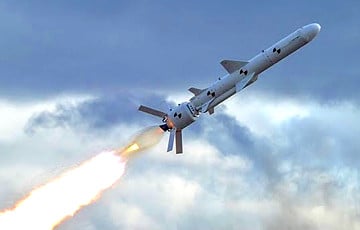
Burevestnik has a dubious reputation.
Russia may deploy in Belarus the Burevestnik cruise missile, whose "successful" tests were recently announced by Vladimir Putin, head of the Second Department of CIS countries of the Russian Foreign Ministry Alexei Polishchuk told TASS. According to him, no such requests have been received from Minsk so far, but if the situation changes, military specialists will scrutinize the request "taking into account the unique tactical and technical characteristics of this product." "The final decision will be made by the military and political leadership of the two countries in the spirit of alliance," Polischuk added.
According to him, Belarus is "reliably covered by the Russian nuclear shield," while the updated legal framework of the "allied state" allows placing "all the latest types of weapons" on its territory. The Foreign Ministry spokesman noted that the countries have already strengthened joint defense "in connection with the tense military and political situation on the western borders," and by the end of the year, the Oreshnik missile system will be transferred to the republic - in addition to the non-strategic nuclear weapons already deployed there.
Polishchuk recalled that in March, an interstate treaty on security guarantees came into force, providing for mutual defense, "immediate" provision of military assistance in case of aggression against one of the parties, and "all available forces and means, including nuclear weapons" can be used for this purpose.
He also reported on the meeting of the delegations of Russia and Belarus in Moscow on security issues on September 26. He said they agreed on their assessments of "intensified missile and nuclear threats" from NATO, while pointing to the alliance's plans to deploy U.S. intermediate-range and shorter-range missiles in Europe, and "recognized as justified" their active cooperation in these areas.
On November 10, Lukashenko said the republic does not need systems such as the Burevestnik missile and the Poseidon nuclear torpedo. "Because this Burevestnik flies for 24 hours. You can launch it from Vladivostok - it will hit any point. Why drag it to the front line? Or, let's say, Poseidon. Are we going to launch Poseidon at Narochi?" - Lukashenko said.
Putin announced the completion of "decisive" tests of the Burevestnik on October 26, instructing to "determine possible ways of use" of the missile and begin preparing infrastructure for its deployment in the armed forces. The head of the General Staff, Valery Gerasimov, claimed that during the test flight the novelty had covered 14,000 km in 15 hours, "and this is not the limit."
The Burevestnik has a dubious reputation, the Nuclear Threat Initiative organization noted. From 2016 to 2024, 13 tests of this missile were conducted, of which only two ended in partial success. And in 2019, another test launch killed seven people - Rosatom employees and Defense Ministry soldiers.
A former U.S. State Department official Thomas Countryman called the missile "a uniquely stupid weapon - a flying Chernobyl that threatens Russia itself more than other countries." In 2020, U.S. special envoy for arms control Marshall Billingsley pointed out that because of its nuclear engine, Putin's new missile leaves behind radiation "exhaust" as it flies, contaminating the environment, and its fall has the potential to contaminate terrain.

Bank's name: Bank Millennium S.A.
Address: ul. Stanislawa Zaryna, 2A, 02-593, Warszawa
IBAN: PL97116022020000000216711123
SWIFT: BIGBPLPW
Name of the account holder: Fundacja “KARTA ‘97”
Purpose/title of payment: Donation for statuary aims
You can contact us by the e-mail [email protected]