

Vitaly Portnikov: Merkel Should Ask Herself One Important Question
18- 7.10.2025, 15:34
- 37,320
How Nord Stream influenced the start of the war against Ukraine.
The statements of former German Chancellor Angela Merkel caused a strong reaction in Europe. The politician actually shifted part of the responsibility for Russia's aggression to Poland and the Baltic states, and tried to justify the Kremlin's behavior with the COVID-19 pandemic.
Why did Merkel decide to raise the topic of Poland's and the Baltic states' responsibility right now? Can this be seen as an attempt to justify her own policy towards Russia?
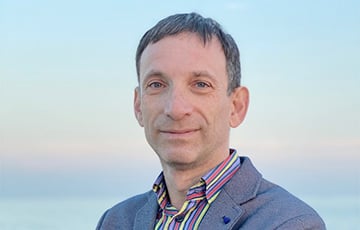
About this, Charter97.org talked to the well-known Ukrainian political scientist and publicist Vitaly Portnikov:
- I think that Angela Merkel can consider from her political experience that the main task was to contain Putin - through negotiations, through some economic, political promises. It is absolutely reasonable to realize that when a big war starts, there is much less possibility to stop it than to prevent it.
On the other hand, it seems to me that looking for culprits in one's own political camp is not quite correct either. For Putin to decide on the so-called big war - and I would like to remind you that he did not plan any big war, but planned a blitzkrieg, which was to be finished in a few days - there were specific political conditions that had to occur. And I want to remind you that Angela Merkel did not prevent Putin from occupying or annexing Crimea or starting hostilities in Donbass.
And the next stage of events - why Putin decided to blitzkrieg - is no longer a question of whether he was spoken to or not, it is a question of his assessment of the situation. This assessment of the situation was also connected with the way the Russian president assessed the potential of Ukraine - in terms of the resistance of the Ukrainian leadership and armed forces to this blitzkrieg, and in terms of the consequences of this blitzkrieg.
And here we are approaching, by the way, the issue that will always be debated between Angela Merkel and those who accuse her of underestimating the situation. The very emergence of alternative energy routes such as Nord Stream: did it deter Putin from further war or, on the contrary, did it give him the opportunity for new military actions, showing that there is an alternative to the Ukrainian gas transportation system?That's a very good question Angela Merkel could ask.
- Russia has stepped up hybrid attacks on Europe - Russian drones and airplanes have been flying over EU countries. What is Putin's goal? Combat reconnaissance? Probing NATO's borders?
- I think it's both. But, of course, the main thing is to try to understand where those red lines are, after which the West is ready for some decisive response.
- Any major war requires escalation in case the aggressor fails to achieve its own goals. This is a perfectly logical approach for any aggressive side to take to the situation. The Russian army cannot occupy the territory that Putin would already like to see under his control. Ukraine does not agree to surrender. In that sense, no reason is seen that could help break the stalemate in the war. And Putin sees as one of those reasons, one of the possibilities, is a further escalation and scaling up of the war.
- How should Europe respond to these provocations? How can we put an end to them, knowing Putin's psychology?"
- I think Europe needs to get rid of fear. There are concrete actions that can be taken: a common no-fly zone between NATO countries and Ukraine to shoot down Russian missiles and drones in Ukrainian airspace in a joint effort; more military aid to Ukraine; more sanctions. Of course, it is necessary to shoot down Russian drones in NATO countries' airspace.
- Ukraine continues to strike Russian refineries and terminals, which is already causing fuel problems in Russia. Is this an effective tool of pressure? We do realize that for Putin, this war is existential. He doesn't care whether Russians have gasoline at their gas stations. Is there a line where such attacks by the AFU can make Putin stop?
- It depends on what the actual damage is and how quickly refineries can be restored after the strikes. It's not easy to assess this, of course, we can't do it ourselves. We are not energy specialists, we are not economists. We see that there are strikes, that there are losses. How all this is being restored is the next question.
Definitely, this is a serious leverage. Certainly, in the situation we are seeing, a certain level of economic damage can lead to a cessation of hostilities. But that level of economic damage is not easy to establish.Not to mention that I don't think that ending the war is any serious threat to the Putin regime at all, because that would depend on the effectiveness of the security apparatus in Russia itself.

Bank's name: Bank Millennium S.A.
Address: ul. Stanislawa Zaryna, 2A, 02-593, Warszawa
IBAN: PL97116022020000000216711123
SWIFT: BIGBPLPW
Name of the account holder: Fundacja “KARTA ‘97”
Purpose/title of payment: Donation for statuary aims
You can contact us by the e-mail [email protected]