

"Night Of The Shot Poets": Valery Moryakov - A Literary Star Of Belarus In The 1920s
5- 30.10.2025, 0:15
- 6,654
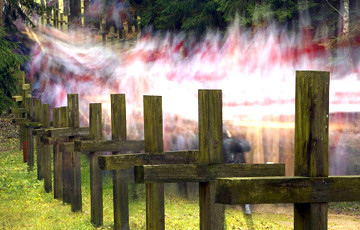
Yanka Kupala called him "the future of Belarusian poetry," but Moryakov's future turned out to be tragic.
Valery Moryakov became famous when he was not even 20 years old. Yanka Kupala called him "the future of Belarusian poetry," but Moryakov's future turned out to be tragic. On the night of October 29-30, more than 100 representatives of the Belarusian intelligentsia and national elite, including 22 writers, were shot in Minsk. Among them was 28-year-old Valery Moryakov.
About the poet's fate DW talked to the researcher of Belarusian literature, teacher, playwright and screenwriter Vasil Dranko-Maisiuk.
The favorite poet of students
Valery Moryakov published his first collection of poems "Pyalestki" in 1926, when he was only 17 years old. Then there were several more books, works in magazines, newspapers and meetings with readers.
"If in the early 1920s the star was Mihas Charot, at the end - Valery Moryakov. He was the favorite poet of high school and college students. Many people recalled that they even confessed their love to each other using Moryakov's poems", - says Vasil Dranko-Maisyuk.
Moryakov was an intimate lyricist and was not fond of socialist realism, and when he was forced to write something opportunistic, he did it "emphasized mockingly".
The researcher notes that the poet as if "foresaw the first wave of those terrible repressions, when many friends and colleagues were arrested". For example, in the work "Maya paema" (1929), Moryakov described the time when "brother strangles brother", and in the poem "Hare" revealed the image of a repressed Belarusian intellectual.
Valery Moryakov was one of those who were not afraid to visit the poet Ales Dudar in exile. "Moryakov brought with him the remnants of that sympathy for me and that admiration for me, which surrounded me during my last days in Minsk," Dudar recalled.
He did not admit guilt, did not denounce anyone
Moryakov himself was first detained on March 21, 1935, but three months later the case was dropped, he was released. The poet was arrested again on November 6, 1936. "Sailor, knowing that the third wave of repression was already beginning, feeling it, said that he would not be given alive, that he would shoot back, that he had a gun. But he was captured at the train station, he didn't have a pistol at that time. He ended up in the cloisters, from which, unfortunately, did not come out," says Dranko-Maysiuk.
The literary scholar adds that Moryakov did not admit his guilt, did not incriminate anyone, did not denounce anyone: "This is very important, there are not many people who could be so strong both physically and morally not to break down."
In June 1937, the BSSR Head-Lite published a list of literature that was "subject to seizure from public libraries, educational institutions and bookstores" - all of Valery Moryakov's books were to be burned.
On October 28, 1937, the poet was sentenced by an extrajudicial body of the NKVD as "a member of a counter-revolutionary national-fascist organization" to capital punishment with confiscation of property. Shot on October 29, 1937. Place of burial - Minsk tract Kuropaty.
Moryakov's nephew became the main researcher of his work
The poet was rehabilitated on April 23, 1957. Two years later his book "Lyrics" was published, and in 1989 - a collection of selected poems of Moryakov "Vyarshyni zhadanniau: Vershy, paemas".
But in a new way Valery Moryakov was discovered by his native nephew Leonid Moryakov (died in 2016. - Ed.).
"He gave all his money, all his energy to Belarusian culture to promote these forgotten poets, including Valery Moryakov," notes Dranko-Maisiuk.
In 1999, the book "Valery Marakou. Leos, chronika, kantext", and in 2003 - the collection "Rabinavaya Noch", which included selected works of Valery Moryakov uncensored 1920-30s.
Leonid Moryakov also published a large-scale study of repression in the Belarusian lands - a 10-volume encyclopedic reference book "Repressed writers, scientists, educators, public and cultural figures of Belarus. 1794-1991". It contains information about 20 thousand victims.
Separate books about repressed Orthodox priests and the study "Akhvyary i karnikі", which revealed the names of those who repressed Belarusians, were published.

Bank's name: Bank Millennium S.A.
Address: ul. Stanislawa Zaryna, 2A, 02-593, Warszawa
IBAN: PL97116022020000000216711123
SWIFT: BIGBPLPW
Name of the account holder: Fundacja “KARTA ‘97”
Purpose/title of payment: Donation for statuary aims
You can contact us by the e-mail [email protected]