

Ukrainian MP: Lukashenko Peddles Myths
9- 15.10.2025, 16:53
- 15,988
The United States misunderstands what is happening in Belarus.
Once again "green men" have appeared on the Estonian border. Estonian border guards have detected the movement of armed groups from the Russian side in the area of "Saatse boot" - the section where Russian territory cuts into Estonian territory.
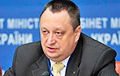
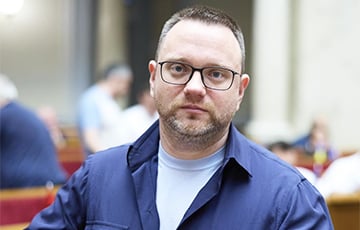
What does this and other incidents on the border of the Baltic States mean? Can we say that the Kremlin is increasing its hybrid pressure on Europe, testing NATO's reaction? Such a question Charter97.org asked the deputy of the Verkhovna Rada of Ukraine from the party "Servant of the People" Oleh Dunde:
- In this case, from my point of view, this is an element of a test operation: to see the reaction, to test how they will react, what methods, tools of defense and counteraction will be used by the Baltic States in such a situation, in case of a threat. Are they ready for this? This is the first thing.
Secondly, this is an attempt to scare and force the European Union, under the threat of war on NATO's eastern flank, to take a more compromising stance towards Russia's war against Ukraine.
- Amid Donald Trump's pressure on Putin on the Ukrainian issue, could the Kremlin try to raise the stakes by staging provocations near the borders of the Baltic states? Or does Russia no longer have the strength for a new escalation?"
- It should be noted that Russia is very often underestimated. In what sense? It is not uncommon to hear arguments that Russia will not be able to cope with Ukraine, and in these formulations one can trace condescension towards Ukraine.
Few of our Western partners objectively assess the strength and combat capability of the Ukrainian army. Even if we look back to the beginning of 2022, Ukraine was already the most defensible state in the European space.
While war tactics and strategy have changed completely in three years, the Russian army has changed along with them. At the same time, European armies have remained at the same level. As a result, today we can state that a modern army with conditionally modern armament on the part of Russia is theoretically and practically capable of fighting against armies armed by obsolete standards.
If we make a historical analogy, it reminds us of the Crimean War of 1853-1856, when the modern French and British armies with their firearms were opposed by the Russian imperial army with obsolete weapon systems. What it led to - we know from history.
The current situation is much the same, only now the more modern army is Russian. The fact that Russia is actively using drones does not indicate its exhaustion at all. It means that it has adopted new tactics and combat strategy, adapting to the realities of modern warfare.
And European armies, unfortunately, have not done so. The situation with the use of drones in Poland has clearly shown this: while in Ukraine the success rate of shooting down drones is about 90%, in Poland this figure does not reach even 25%. This speaks for itself.
Given the geographical location of the Baltic states, they do remain extremely vulnerable. However, in my opinion, Russia is unlikely to undertake any military provocations on the border. It makes no practical sense. If Moscow decides to take action, it will be a full-scale military operation to occupy the Baltic states.
- Dictator Lukashenko has recently been hinting at a "big agreement with the United States." This is happening against the backdrop of escalating confrontation between Russia and the West. What can this mean?
- In this case, Minsk is trying to peddle the myths that exist in Washington: as if Belarus is an independent state capable of mediating or influencing the Kremlin's position. In exchange for such a "role," the Belarusian authorities are likely to offer to release several political prisoners, who are being used as hostages.
For this, Minsk expects to receive a relaxation of the sanctions regime from the United States. It is not taken into account that in fact Belarus today is Moscow's "backyard", through which the sanctions are circumvented. We have already seen concrete examples, for example, with the use of Belavia to circumvent the sanctions imposed on Russian aviation. There are also a number of other areas - potash fertilizer supplies, the activities of Belaruskali, and much more.
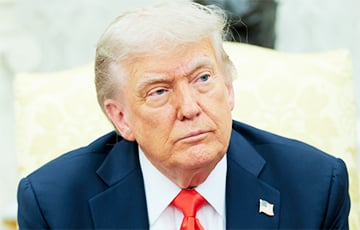
The problem is that the United States, primarily Washington and President Trump, see the situation with Russia as a field for negotiations, as a trade process: "you give me and I give you". At the same time, they do not realize that Moscow is dominated by an ideology similar to that of the early Soviet Union: "we do not need any negotiations, we need everything. Negotiations for the Kremlin are just a tool to pressure the West to weaken and force it to capitulate. Thus, Washington takes the position of a pragmatic merchant, where the question is reduced only to the price of the deal, while Russia takes a dictatorial and imperial position.
- How should NATO countries react to such manifestations of hybrid warfare in order to contain Russia?
- First of all, it is necessary to change the very perception of war in the political and military leadership of European countries. Without this realization, it is impossible to develop an effective strategy. After that, European countries should recognize that at the moment they are objectively weak. To change the situation requires maximum investment in new technologies and large-scale renewal of the command staff. Only then can real change be expected. Without these steps, the situation will remain the same.

Bank's name: Bank Millennium S.A.
Address: ul. Stanislawa Zaryna, 2A, 02-593, Warszawa
IBAN: PL97116022020000000216711123
SWIFT: BIGBPLPW
Name of the account holder: Fundacja “KARTA ‘97”
Purpose/title of payment: Donation for statuary aims
You can contact us by the e-mail [email protected]