

Gray Cat Blogger: In 2020, Law Enforcers Feared That The Pre-trial Detention Center Would Be Taken By Storm
7- 1.10.2025, 14:31
- 13,056
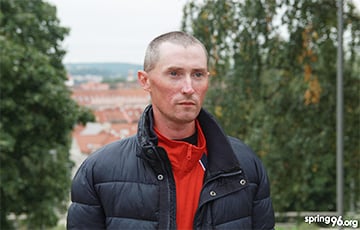
Photo: spring96.org
The request for changes in Belarus has not gone anywhere.
Blogger Dmitry Kozlov ("Gray Cat") became known to Belarusians during the 2019 parliamentary campaign and protests against integration with Russia. His hot streamings were then watched by tens of thousands of people.
On June 10, 2020, even before the "elections", the blogger was detained together with activists of the civil campaign "European Belarus" and sentenced to six years in prison.
On September 11, 2025, he was deported from Belarus to Lithuania together with other political prisoners.
The website Charter97.org talked to Dmitry Kozlov about the events of 2020, Lukashenko's prison, and the protest potential of Belarusians:
- I began to see the ground for protests with "Tuneiad" marches in early 2017. Already then I realized (in fact, that's why I started keeping a video blog) that something was happening in the Belarusian society. There have been cardinal and irreversible changes that are impossible to stop. Everyone felt it. In principle, that's when the Belarusian political blogosphere was born.
We approached the parliamentary campaign, when a huge number of people put themselves forward as candidates. At the same time there was the topic of student protests: the authorities provoked students to take to the streets. I saw that the public began to perceive the campaign not as an opportunity to actually change the "parliament" (everyone realizes that this body has been a pure decoration since 1996), but as a tribune to convey ideas.
It was possible to directly communicate with people, to see a cross-section of sentiments. I went to apartments, collected signatures, you could feel the atmosphere.
Protests against integration with Russia were also a pleasant surprise. When Pavel Severynets announced the idea of these protests on Facebook, many people criticized him, saying: "You'll come out - and at most 50-100 people will gather, it will look pathetic". Especially on October Square in Minsk, which is huge in itself. But already December 7, 2019, more people came to the first rally than anyone expected.
The effect was strong: December 8, then on December 20-21, there were even more people - many hundreds. All democratic forces united then, created an organizing committee to organize the actions. They even tried to involve BRSM and state structures to show a semblance of society's unity in the face of a huge empire from the East. But, as expected, the authorities refused. However, these actions showed an important shift: a completely different electorate came to the rallies - people who had never participated in protests before. A lot of young people, a lot of new faces.
- For many Belarusians, 2020 became a time of hope and struggle. You were already behind bars at that time and could not personally participate in the events. How did you experience what was happening in the country while in prison? What was the hardest thing for you, and what gave you strength in those days?
- Yes, absolutely. I only partially caught the 2020 processes at large - it was the signature-gathering actions that took place on Komarovka. I already saw then that the effect was overwhelming, we knew that there was a huge demand for change in Belarus, that people would come out. We understood it, we felt people well, the mass of people. From 11 a.m. to 7 p.m. there was a queue, a crowd, 16 signature collectors for Svetlana Tikhanovska at Komarovska market, and they were constantly working. Some people stood in line for 3-3.5 hours.
But then they put me in jail. I did not catch the main events - when candidates were already registered, when rallies were held after the presidential campaign. I only heard about it. But the news traveled pretty well back then. In the pre-trial detention center on Volodarskogo I heard what was going on, read about it, was worried, of course. On August 9-10, I even heard the noise of clashes not far away, and in the following days I also heard what was happening remotely. It was even visually felt - by the law enforcers, how they were running around worried, afraid that the detention center could be stormed.
Afterwards I followed the development of events, expected what would happen to the country, what would happen to us, how the case would develop further. Because we were in a suspended state. The investigation was underway, but we knew that we had committed nothing, no crimes. This, by the way, gave me strength: I knew that I was in jail solely for my political beliefs. So I had no guilt.
I was energized by people's support: even though the censorship was working, and they did not give me one third of the letters, I still received a lot of them. Once in one day I received 42 letters on Volodarka. This, of course, was incredibly supportive. For example, a letter comes, and it says, "From so-and-so street." And the letter has 30 signatures from different people.
- Your process also took place behind closed doors. Was there any support felt? Was there any connection with friends?
- Yes, we all were in the same cage (Dmitri Kozlov was tried with activists of "European Belarus" and one of the opposition leaders Pavel Seviarynets - note). The trial took place from May 12 to May 25, 2021. We were all taken to the cage, we met, talked quietly, exchanged opinions and news. Lawyers came, brought information. There we learned, for example, about the death of Witold Ashurka, about other political events that were happening at that time.
What was happening at the trial? A comedy was taking place, a farce was taking place. Prosecutors, judges - knowing perfectly well what was going on, were doing their dirty work, criminal orders - fabricating the case. The judges rejected absolutely all reasonable protests. They pulled quotes from my videos, I said: "We need to understand in context, let's see a little more". And they said: "No, that's enough." Everything was fabricated.
- What was the biggest challenge during the years of imprisonment?
- The biggest worry was the uncertainty. You don't understand what's going on. When you read about the events in retrospect, like 2010-2011, everything is clear. In hindsight, everything is simple. But when you live - the story hasn't happened yet, you don't understand what to expect next.
As time went on, the screws were tightened more and more, and less information reached you. It was the same with letters: gradually everything was cut off. As a result, since February 2022 I found myself in complete isolation. Only my lawyer came once every six months. And she was already afraid to say anything. What I could hear in the colony from others, I knew.
Belief, realization of my innocence and the way Belarusians fight helped me to hold on. When there was a "referendum" in 2022, I heard about people speaking out. Then - when the war started. Then I heard about new criminal cases: that someone was detained in 2023-2024. So there is activity. Not everything is over. Belarusians were simply driven by force and silenced, but it doesn't mean that they have no opinion and that they refused the request for change.
- How did you learn about the beginning of the war in Ukraine in 2022, being in prison?
- I learned about the beginning of the war simply by radio. In the colony worked different radio channels, television - of course, propaganda. But nevertheless it sounded: "A military operation has begun."
The possibility of war had been talked about before. But I did not believe that Putin would decide to launch a full-scale war.
- Your "release" actually turned out to be a forced expulsion abroad. What did it mean for you to be free, but far from your homeland?
- I cannot fully call it liberation. Freedom is when you decide for yourself. And when everything is decided for you, when you are forcibly taken out and deported to another country without asking whether you want it or not, under what conditions - this is not freedom.
This is, in fact, a slave trade deal: like buying a slave from another. Someone bids a price, buys you out - and that's it. The U.S. facilitated our liberation. But I can't express gratitude, I can't feel free. Because the regime imprisoned new people. They paid a heavy price for our liberation. This is not a gesture of good will.
- What would you like to say to Belarusians today?
- I want to tell Belarusians not to despair. Just a few days ago, I produced a stream in Vilnius: I had only 115 subscribers, but 10 thousand people watched it. This shows that the main request comes from Belarus.
People are watching - it means they are waiting for something, Belarusians still believe. I think it will definitely lead to positive consequences.
I would like to tell the Belarusians how to act: be careful, take care of themselves. Because Lukashenko's regime is livid. As they say, it is the darkest time before the dawn. They are trying to intimidate as much as possible, to crush any opinion. But people don't fall for it. We see that neither those who are released from prison, nor those who remain in Belarus, are not broken. A lot of people behave cheerfully, ignoring the risk. Sometimes too recklessly - but it is still admirable. I believe in our people.

Bank's name: Bank Millennium S.A.
Address: ul. Stanislawa Zaryna, 2A, 02-593, Warszawa
IBAN: PL97116022020000000216711123
SWIFT: BIGBPLPW
Name of the account holder: Fundacja “KARTA ‘97”
Purpose/title of payment: Donation for statuary aims
You can contact us by the e-mail [email protected]