

"The Kremlin's Strategic Goal Consists Of Several Levels"
8- 7.04.2026, 12:02
- 7,282
Why is Putin restricting the internet?
Russia is increasingly restricting the internet: there are outages, authorities are cracking down on VPNs and blocking Telegram. This shows that the Kremlin is leading the country further and further toward isolation and total control.
What is Putin ultimately aiming for by starting a massive restriction of the internet in Russia?
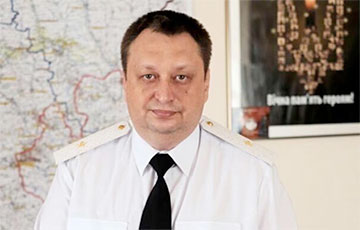
About this, Charter97.org talked with SBU Major General in Reserve Viktor Yagun:
- If we look at what is happening not as a technical restriction, but as a classic model of state behavior in conditions of protracted war and internal mobilization of the system, then restricting the Internet in Russia is not an ad hoc decision. It is an element of a long-term strategy of transition to a controlled information space based on the model of digital "sovereignty". That is, it is a variant of digital martial law.
The Kremlin's strategic goal consists of several levels. The first level is political control. Putin's system long ago came to the realization that its main risk is not military defeat per se, but uncontrolled information about that defeat. So the task is very simple: not just censorship, but creating an environment in which the state determines what even exists as fact and what does not.
The second level is the scenario of a long war. Russia is gradually rebuilding itself into a model of a fortress state. In such a model, the free internet is seen as a vulnerability because it allows bypassing state propaganda, gives access to alternative casualty data, and creates horizontal connections between people. It even makes it easier to organize protests, as we have seen in Iran.
The goal, therefore, is not just to block it, but to be able to put the country into domestic internet mode at any time. That is, to a model similar to China's, but with a tougher coercive component. Something between North Korea and China.
The third level is a counterintelligence barrier. For the Russian security services, Telegram is not only a problem for the opposition, but also a problem of operational information about infrastructure strikes, the real effects of the war, troop movements, the effectiveness of Ukrainian attacks, and the underground's contacts with Ukrainian security services. Practically, the Kremlin is trying to reduce transparency on its own territory.

Bank's name: Bank Millennium S.A.
Address: ul. Stanislawa Zaryna, 2A, 02-593, Warszawa
IBAN: PL97116022020000000216711123
SWIFT: BIGBPLPW
Name of the account holder: Fundacja “KARTA ‘97”
Purpose/title of payment: Donation for statuary aims
You can contact us by the e-mail [email protected]