

"Really Impressive": Expert Confirmed The Presence Of Ukrainian Military In Libya
- 3.04.2026, 22:45
- 1,588
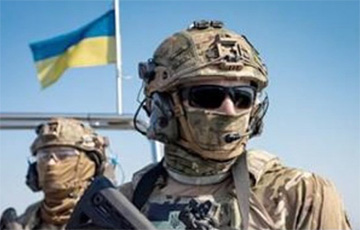
Russia is losing its "shadow fleet" vessels not only in the Black Sea.
Western media information about the alleged deployment of a Ukrainian military contingent in Libya to counter the Russian shadow fleet looks very plausible.
A military expert, former SBU officer Ivan Stupak said this in a commentary "Unian". In his opinion, the reliability of this information can be estimated at "95-97%".
"Of course, there are some details there. We don't know how accurate they are. Whether there are full-scale exercises or partial ones, but I am convinced that it is really true," Stupak believes.
He reinforces his opinion by the fact that Russia is losing its "shadow fleet" vessels not only in the Black Sea.
"That is, the Black Sea is really such a lake, and there Ukraine can really show itself in full force, but shadow fleet vessels were also destroyed not only in the Black Sea, but also in the Mediterranean Sea off the coast of Greece. And I was also very impressed by this case - this is Senegal (Atlantic Ocean), the west coast of Senegal. That's really impressive. So I am convinced that somewhere there, I don't know, maybe Libya, maybe some additional country, but they have our specialists on their territory, who are working and tracking down the Russian shadow fleet, forcing it to incur losses," Stupak emphasized.
According to the military expert, the logic is that there are a lot of "shadow fleet" vessels. In particular, we are talking about "thousands upon thousands" of ships, and it is impossible to destroy all of them.
But he notes that the owners of "shadow fleet" ships earn money on the transportation of Russian oil.
He said that before the outbreak of hostilities between Israel and the United States against Iran, the cost of transportation of a batch of Russian oil, for example, from Ust-Luga to India was $8 million. And it is clear that the owner of dozens of tankers earns good money on this.
"For example, you are Ukraine. How will you convince me not to do it? I don't care if you have a war there. I have money. I want to make money in Russia, they have goods, I have opportunities. You're starting to destroy my fleet. Yesterday I had 50 ships, today it's 49, tomorrow it'll be 48. You've damaged them. Obviously, the ship didn't sink, but it's so old it needs substantial, extensive repairs. I'm a cheapskate, I don't want to use my own money. Why would I want to do that? But I'm losing money. I will either have to buy a new tanker costing under 50-60 million euros, or buy an average one for 25-30 million euros. Either way, I lose money. And then I begin to understand the signal you are giving me: 'I will stop incurring losses if I stop transporting Russian oil'," the expert noted.
As a fact, he cited the example of the decision of the Turkish company Besiktas Shipping, which owns a tanker damaged off the coast of Senegal, to stop transportation related to Russia.
"It made a statement and said: 'We will no longer transport Russian oil.' So that's the signal they read correctly. That's the logic here. To force the owners to refuse to transport Russian oil," Stupak emphasized.
"I think it is effective. You see, if you choose correctly... It's not just the first vessel that is struck. First, a list of companies, legal entities, owners of these vessels is selected. It is clear that legal entities can be different, but the circle of owners of these ships is quite limited. Greek billionaires, Tunisia and so on, they can be different. All of them are selected. It is calculated who has more ships, who is more involved in the transportation of Russian oil, and they start hitting these ships to hurt," Stupak emphasized.
He also added that the point is taken into account that they try to hit those ships that can be reached.
"Secondly, it is necessary to hit not just the ship, but that it was empty, without cargo. If it is full, if there is an oil spill, for example, in the Mediterranean Sea, and this big slick goes to Italy, to Spain - it will really be a huge problem for us. We can lose allies, so we need to work very carefully here," Stupak emphasized.
He noted that there is no information about a large-scale oil spill on the damaged vessels. There is a fuel leak from the engine compartment, but nothing more than that.
"No one can say that Ukraine is causing environmental damage. Even the Russians cannot say that," the expert concluded.

Bank's name: Bank Millennium S.A.
Address: ul. Stanislawa Zaryna, 2A, 02-593, Warszawa
IBAN: PL97116022020000000216711123
SWIFT: BIGBPLPW
Name of the account holder: Fundacja “KARTA ‘97”
Purpose/title of payment: Donation for statuary aims
You can contact us by the e-mail [email protected]