

Lukashenko Has No Confidence In The Army And Generals
3- 3.04.2026, 10:25
- 2,560
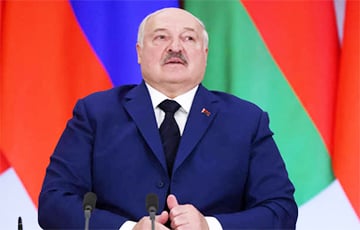
Why would a dictator say "nasty things" about the military?
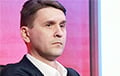
On 1 April Aliaksandr Lukashenka summarized the results of the comprehensive inspection of the armed forces, which had lasted almost two and a half months. About 300 army leaders were invited to the Palace of Independence - the event stretched for several hours. Political analyst Alexandr Fridman in a conversation with "Zerkalo" said that the results of the inspection were contradictory, and the politician himself showed more uncertainty about the quality of the Belarusian army than satisfaction.
Friedman explains the need for a large-scale inspection of the army by the dictator's desire to get an additional sense of security in a difficult regional situation.
- There are wars around, the situation is very tense. What can you do in this situation? Only to check what you really have - the armed forces you have," the analyst believes.
The dictator's speech itself, according to Friedman, showed concern rather than satisfaction with the state of the army.
- I think Lukashenko's statements indicated that he is not quite sure about the quality of the Belarusian armed forces," says the Zerkalo interlocutor. - Although after the criticism his tone became a bit more indulgent and calm. But nevertheless, he has much more concern than confidence.
The analyst believes that Lukashenko has not demonstrated full confidence in the readiness of the armed forces. He could not publicly say "We are not ready." Therefore, he voiced a conclusion in the style of "We are ready, but...". At the same time, he admitted that "I wouldn't like to show all the nasty things in our army (and there are plenty of them)."
"It's quite strange to scare the military with war."
Alexander Lukashenko told the army leaders that "we are preparing for war" and "there will be no peacetime."
- It's quite strange to scare the military with war," says Friedman. - If anyone understands what war is, and is constantly engaged in war, and feels war on a completely different level, it is the military. The analyst sees Lukashenko's remarks like "I don't intend to adjust to you - you will adjust to the commander-in-chief" as discontent and insecurity in his own generals.
- [These remarks] give the impression that he, Lukashenko, knows how modern warfare goes, because he has access to information on a completely different level. And here are these military men, generals - "you are still preparing to fight the old-fashioned way." And here, look, a completely different time has begun.
"In an unstable situation, it is often the army that determines whether the regime will hold or not."
It has come to public threats to the military: "None of you will remain in office unless you prove your worthiness." Friedman explains this by the peculiarities of Lukashenko's worldview. In the politician's logic, it means "to maintain combat capability" and "to keep in tone so that they don't relax," the expert explains.
This behavior he compares to the actions of Soviet dictator Joseph Stalin in the 1930s.
- Stalin was also very distrustful of the army, afraid of military leaders," Friedman draws a parallel. - In such systems, you don't want to be afraid, because the army is armed people. Generals are, as a rule, ambitious people. And in unfortunate circumstances, in the case of an unstable situation, it is often the army that ultimately determines whether the regime will stand or not, on whose side the army will be.
The consequences of the inspection remain to be seen, the political scientist believes. Organizational conclusions - restructuring or even personnel reshuffles - are possible in the coming months.
In his opinion, the main questions that can't be answered by any check remain open. How will the Belarusian army behave if it really has to fight? Will it follow orders? What will the morale be like?
- With the help of such checks, I believe, Lukashenko wants to get answers to these questions. But I don't think he has achieved much here. Only life itself can answer such questions," the analyst says.

Bank's name: Bank Millennium S.A.
Address: ul. Stanislawa Zaryna, 2A, 02-593, Warszawa
IBAN: PL97116022020000000216711123
SWIFT: BIGBPLPW
Name of the account holder: Fundacja “KARTA ‘97”
Purpose/title of payment: Donation for statuary aims
You can contact us by the e-mail [email protected]