NATO Countries Refused To Join Trump's Blockade Of The Strait Of Hormuz
1- 13.04.2026, 19:52
- 2,854
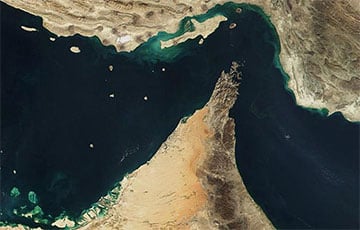
The blockade officially began today.
A number of European countries are willing to participate in the safety of shipping in the Strait of Hormuz, but they refuse to join the blockade that Donald Trump has announced in response to the breakdown in talks with Iran. The blockade officially began Monday, involving more than 15 U.S. warships, a senior U.S. official told The Wall Street Journal. The day before, on Sunday, Trump wrote, "Other countries will participate in this blockade."
Other NATO allies, including Britain and France, have said they will not be drawn into the conflict by participating in the blockade, notes Reuters. Instead, they are working on an initiative to unblock the Strait of Hormuz, and will hold a new conference this week with a "coalition of willing" countries to join. "We do not support the blockade," British Prime Minister Keir Starmer told the BBC. - My decision is quite clear: whatever the pressure - and it has been very significant - we will not allow ourselves to be dragged into this war."
Trump has previously publicly berated Starmer for his reluctance to help in the war against Iran and for his limited authorization to use British air bases. NATO Secretary General Mark Rutte told European countries last week after meeting with Trump that he wants concrete commitments to secure the Strait of Hormuz in the near future. But they are only ready to help once the fighting stops.
Starmer and French President Emmanuel Macron confirmed Monday that they will hold a second conference with more than 30 countries. "This purely defensive mission, unrelated to the belligerents, will be deployed as soon as the situation allows," Macron wrote. - We must make every effort to quickly reach a lasting and lasting solution to the conflict in the Middle East through diplomacy."
The initiative aims to establish rules for the safe passage of ships and coordinate the actions of the warships accompanying them, Starmer told parliament.
"Let me be very clear: this is about protecting shipping and supporting freedom of navigation after the end of the conflict. Our common goal here is a coordinated, independent, international plan," Starmer said.
Iran has accumulated 160 million barrels on tankers at sea outside the Strait of Hormuz, the WSJ notes. This oil actually has one buyer - independent Chinese refineries that are given import quotas by Beijing. Theoretically, they could buy oil from tankers, unhindered by Trump's blockade, until mid-June, assuming volumes of 1.8 million bpd.
In March, Iran sent 1.86 million and 2.15 million bpd for export in February, according to Vortexa data. That is a 26% increase over the same period in 2025.

Bank's name: Bank Millennium S.A.
Address: ul. Stanislawa Zaryna, 2A, 02-593, Warszawa
IBAN: PL97116022020000000216711123
SWIFT: BIGBPLPW
Name of the account holder: Fundacja “KARTA ‘97”
Purpose/title of payment: Donation for statuary aims
You can contact us by the e-mail [email protected]