
Road To The Pit
- Irina Khalip
- 6.03.2026, 11:43
- 8,706
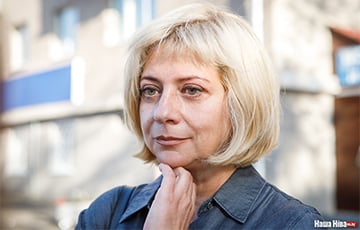
Photo: "Nasha Niva"
We are all a symbol of unkillable memory.
Every year for many years people gather near the Minsk "Pit". On the very place where the prisoners of the Minsk ghetto were shot on March 2, 1942. This year no one gathered. For security reasons - that's what the leaders of the Union of Jewish Communities wrote in their message. "Well, this has nothing to do with the dictatorship!" - some of the skeptics may object. No, it had a lot to do with it.
Jews were tried to smoke out of that place for many years, so that they would not get in the way, would not gather together and would not interfere with state holidays. In 1947, a small black obelisk appeared at the site of the shooting. It was not a big architectural or sculptural project: the obelisk was made in a Minsk funeral home, the work was supervised by senior master Morduch Spryshen. In 1952 he was arrested - in the house during the search found records with Jewish music - and sentenced to ten years in the camps. Sprishen went to Vorkuta. And the Yiddish poems that were carved on the obelisk were written by the poet Haim Maltinsky. He was arrested in 1949 in Birobidzhan. Among the charges was the text carved on the obelisk: why did the poet write about the five thousand Jews killed in Minsk on Purim, and not about peaceful Soviet citizens? This was, according to the accusers, a manifestation of Jewish bourgeois nationalism.
While the creators sat, the obelisk stood. Small and unnoticeable, like the fate of the Jews of the ghetto against the background of Soviet stories about the exploits of the army and partisans. And in the sixties, people began to come there. Survivors of the ghetto and descendants of the victims, Jews who had moved from other cities - they cleaned up the Pit, which had become overgrown over two decades, cleaned the obelisk, put stones as they should on Jewish graves. And they began to gather - not even on the anniversary of the shooting, but on May 9, a public holiday.
They tried to get rid of these gatherings. The KGB came to the Pit, filmed, identified those who came, then called them to the "organs" and threatened them. Before May 9, speakers were set up there and Soviet songs were played loudly so that the Jews who came would not hold rallies, would not talk, would not discuss anti-Semitism and bans on leaving for Israel. Nothing helped - Minsk Jews still gathered every year. And there were more and more of them.
And then perestroika began. The Iron Curtain was broken into small pieces, and Jews were no longer persecuted simply because they were Jews. And in 1992, architect and first head of the Union of Jewish Communities of Belarus Leonid Levin began to develop the project of the "Pit" memorial. In 2000 it was opened - 27 bronze figures descend down the steps into the pit, into oblivion. They have no faces, no age or gender - they are shadows and ghosts, they are bronze that looks incorporeal. And the Pit became a legalized, state-approved memorial.
In 2008, Lukashenko even visited the Pit - he made a speech, as he should, and even refrained from swearing at the opposition, remaining, to the surprise of those present, within the framework of the prepared report. He recalled Masha Bruskina, Isaiah Kazinets and even the Belsky brothers. (By the way, about the Belsky brothers only ten years later the whole world started to talk about them, because Donald Trump became the president of the USA: the grandmother of Jared Kushner fought in the very Belsky unit.)
The memorial was desecrated from time to time by vandals, they poured paint on it, but Minsk citizens always put the monument in order by their own efforts. And nothing could make people not to come to the Pit: neither hurricane winds, nor repressions, nor wars. But now - "for security reasons". So what does this have to do with Lukashenko?
Yes, it does. In the situation when the U.S. and Israel attack Iran and destroy facilities that threaten the whole world, to call the attack "treacherous" and the liquidated ghoul Khamenei "humanitarian" means to open Pandora's box and release the same ghouls, only smaller ones. I am not referring at all to the mad Islamists who drive trucks into crowds of people in Western countries or shoot at synagogues. Instead, we have these people in uniform, who are used to taking any nonsense of the leader as a guide to action. Tell them from the rostrum that the Jews killed the great humanist Ayatollah, and the focus for a while will easily shift from "zmagars" to "homeless cosmopolitans," for example. And then it's really better not to gather at the Pit.
But the Pit has withstood more than that. They tried to demolish it, to fill it with earth, and arrested those who gathered there. But it remained - as a symbol of suffering and struggle, despair and courage, grief and resistance. When we return, we will all go there. By ourselves, without reminders. Because we are also a symbol. A symbol of unkillable memory.
Irina Khalip, especially for Charter97.org.

Bank's name: Bank Millennium S.A.
Address: ul. Stanislawa Zaryna, 2A, 02-593, Warszawa
IBAN: PL97116022020000000216711123
SWIFT: BIGBPLPW
Name of the account holder: Fundacja “KARTA ‘97”
Purpose/title of payment: Donation for statuary aims
You can contact us by the e-mail [email protected]