

SBU Major General: Ukraine Deprives Russia Of Oil Revenues
- 25.03.2026, 16:35
- 1,176
The concentration of defenses around the Kremlin creates vulnerable areas in other regions.
On the night of March 25, Ukraine attacked northwestern Russia with drones. The strikes reached the Leningrad region, one of the key regions for Russian infrastructure.
Can the timing of the attack be considered a blow to the Kremlin's energy economy amid the sensitivity of the oil market?
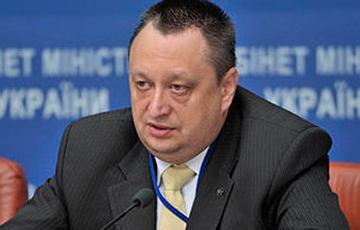
About this, Charter97.org spoke with SBU Major General in Reserve Viktor Yagun:
- The fact is that the day before, the Russian occupiers launched the most massive strike on Ukraine - more than a thousand Shaheds. At the same time, there were five strikes on directorates, including the regional directorates of the Security Service.
The occupiers there, of course, did not get anything. However, they tried to create the greatest effect for themselves by picturing a strike on the center of Lviv, where the Benedictine monastery near St. Andrew's Church - in the historic center of the city, which is protected by UNESCO - caught fire. Now the occupiers are trying to claim it was an air defense attack, but this will fail, as the Shahed was filmed by a BBC correspondent directly from the window of a nearby house.
Ukrainian President Vladimir Zelensky said on the evening of March 24 that Ukraine would not let this go unanswered.
Ukraine has a clear objective - to deprive Russia of the ability to export oil and receive revenues for it. Perhaps some people do not like this, some may talk about oil prices - but for us this is secondary, because people are dying and Russia is making money from the war. Russia should not be making this money.
Any ship, any oil terminal, any pipelines that allow Russia to generate revenue are legitimate targets and will be destroyed sooner or later.
- Does this raid mean a failure of the Russian Federation's air defense - and how realistic is it that Moscow could be the next target?
- This is the fundamental difference between the strikes of the AFU and the actions of the Russian occupiers. The Russian Federation carries out demonstration strikes, including strikes on residential neighborhoods that have no military significance.
It is possible that somewhere there are individual factories, workshops or garages where drones are assembled, and it makes sense to strike such objects. But when it is obvious that the occupiers are striking, as, for example, in Ivano-Frankivsk - yesterday there was a strike on a maternity hospital, a man who went there to see his wife and child was killed - it becomes clear that we are talking about ordinary terrorist acts.
Ukraine has nothing to do with such actions. Given that the drones we use are not a cheap tool, and it is important for us to get real results rather than a media picture, the strikes are carried out on objects that are critical for the enemy.
As for possible further targets - if a decision is made, a symbolic strike is theoretically possible, for example, on the Kremlin dome, as has happened before, to demonstrate capabilities. However, Russia has so strengthened the security system around this site and pulled there significant air defense forces that on the contrary, vulnerable zones are formed in other directions.
The question arises as to what exactly they are guarding there, perhaps one Lenin: it is obvious that Putin is far away from this place. Overall, their system looks unbalanced.
So the difference in approach is obvious: Ukraine strikes really important objects of the enemy's military and economic infrastructure, while Russia acts defiantly, trying to achieve effect at the expense of attacks on civilian objects.

Bank's name: Bank Millennium S.A.
Address: ul. Stanislawa Zaryna, 2A, 02-593, Warszawa
IBAN: PL97116022020000000216711123
SWIFT: BIGBPLPW
Name of the account holder: Fundacja “KARTA ‘97”
Purpose/title of payment: Donation for statuary aims
You can contact us by the e-mail [email protected]