
The Answer Is Very Simple
8- Valery Zaluzhny
- 23.03.2026, 9:25
- 8,414
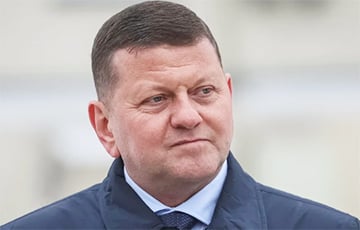
Photo: Reuters
This war will have only two strategies.
"Only the dead will see the end of the war." This inscription is placed on the wall of the Imperial War Museum in London not by chance at all.
The museum is the leading institution of this kind in the world, created to familiarize visitors with the history of world wars and their impact on society.
At the time of the museum's opening in 1917, the author of this statement George Santayana - one of the leading representatives of American critical realism, a recognized classic of American philosophy, a famous writer and publicist - was 54 years old. However, the inscription itself will appear only 19 years after the museum's opening and 14 years (in 1936) after the publication of this slogan in the world-famous Soliloquies in England.
Perhaps it is through a visit to this museum that a person who will someday be involved in global decisions will be able to determine for himself, for example, what are the main factors that make wars possible at all?
And most importantly - if there is no time for long lectures and sleepless nights at university - to understand that cyclicality in history exists precisely to avoid these mistakes that lead to large-scale casualties.
This cyclicality has now brought us to the point where it is still possible to decide what to do next. Because it is still possible to agree that a war that has lasted 13 years in the center of Europe was perceived by those who could have made a global decision (but didn't) through an attempt to deal carefully with Russia's desire for limitless expansion and historical regularity. But the current war in the Middle East is the biggest conflict of the 21st century in the region in terms of the intensity of the strikes and the number of countries involved. And from the looks of it, it is not over yet.
Is there any connection between these two largest conflicts of the 21st century in Europe and the Middle East? Is there any commonality that has led and will continue to lead to numerous victims, probably not only in this region?
I think so.
All this has been made possible precisely because of the lack of will, responsibility and courage to make any global decision. Or there is no one to take it.
And unfortunately, instead of producing global economic and security decisions, Munich and Davos have become media platforms, where analyzing speakers' speeches is the only thing left for the still existing think tanks. But both the war in Europe and the war in the Middle East, although they do not show millions of armies of heroically fighting allies, are certainly a global problem. It was clear and obvious that if the Russian-Ukrainian war could not be stopped by a global solution, we would witness and participate in a new big confrontation.
This has already happened in history.
The inability or unwillingness to make decisions in time and the hope for farthing or wisdom of someone always carries the risk of gradual scaling up of conflicts.
Because it was our war, the largest in Europe, that led first to the inability to resolve conflicts diplomatically, and then to the destruction of international law both de jure and de facto. Then indeed: a destroyed balance at one end of the world, of course, brings the desire and need to destroy the balance elsewhere.
And so on up to a global war. Or a war in which the number of localized conflicts will approach World War III in tension and consequences.
It is precisely about global solutions, the basis of which is history and its lessons, which leave generations forever passing away. It is an understanding of the nature of war and its consequences that should instruct those who start wars - and those who will try to end them - that any war as a process will always have two consequences.
First: as a result of war, someone has won and captured something, or defended something. Some side lost something, but found its victory in it as well. War realized and is realizing someone's state policy through violence. In this process someone became a hero, someone tried to rewrite history to cover up mistakes, someone became a general or a marshal. Some saw the end of their war because they died. It all makes sense. But what does this have to do with people about whom the same museum has separate exhibits? For example, Winston Churchill, Franklin Roosevelt, Charles de Gaulle, Dwight Eisenhower, Bernard Montgomery.
The answer is very simple. These men had a responsibility for the world and the future.
The second consequence of war is that each one, like an epidemic, carries the mission of starting the next war. It was here that these people - by virtue of upbringing, hard and persistent training and experience - were involved in creating global solutions that demanded responsibility for the future.
For example, in particular, the terms of the 1919 Treaty of Versailles, which ended World War I, caused discontent in Germany and, as a consequence, led to World War II. This is why Russia, which lost the Cold War and had to accept the independence of its former possessions, is trying to take revenge by brute force, regain its dominant role in Europe and maintain its influence in other regions of the world, particularly in the Middle East.
It was thanks to such people (like Roosevelt and Churchill - Ed.) and their knowledge that the developed countries managed to avoid external aggression and prevent civil war, due to the crises of the post-war period, for quite a long time.
That is why Ukraine needs not time to prepare and hold elections, but the peace gained in the war, which will provide a future for our children. As, for example, our grandfathers obtained it during World War II - with their blood. It is such blood that is justified.
In resorting to expert assessments of the present, especially regarding the options for the development of events, many experts return us to the realization of the first function of war and try, as in the summer of 2023, to make a show out of events that eventually lead to disaster. As for these expert assessments - let me remind you how in 2022 Russia expected to defeat Ukraine in a matter of days, if not hours. That confidence was dispelled only when Rosgvardia fighters in dress uniforms, with rubber truncheons and orchestras, remained forever on the outskirts of Kiev.
Retired American generals, as Sean McFate writes, flaunted on TV channels, predicting that Russia would inevitably defeat Ukraine before Friday.
Most of the world saw Russia's victory as inevitable, albeit tragic. However, something has gone wrong with expectations, and the hard truth that can change everything. The Ukrainian people themselves took a chance and made a global decision.
And we are still fighting.
It is the game of soldiering by politicians and the media that, over time, leads the former away from responsibility for what matters most: what result will we get in the end? The result of Versailles (the Treaty of Versailles of 1919 - Ed.), although it could have been the only possible one, lasted only 20 years and brought my homeland the final occupation, famine and finally war.
The world got the next global war with astonishing catastrophic consequences.
Yalta and Potsdam 1945, though it brought us freedom only 45 years later, provided a stable peace for 63 years until a now-defunct signatory state attacked Georgia, dissatisfied with the results of the Cold War and the Bialowieza Accords.
Exactly six years later, the same disgruntled country attacked my homeland without any obstacles.
Because of the results of the Cold War, another country - China - has already become a benchmark of economic power, and obviously seeks to gain political influence that will match its level. How it will achieve this influence - we will soon see, because there are no obstacles to it either.
These obstacles may arise, but considering already how this process called war will end. The outcome is simply impossible to predict.
All the world's attention is now on the escalation in the Middle East. The transience of the past wars and their systematic enmeshment in this region have generated many variations and fantasies. Showmen have sought their own niches, economists their own, and the media, struggling with AI, have drawn up their own scenarios. But probably all these people - politicians and military men alike, preparing for the past war - also took out the mold of past valor and measured their rightness. I am forced to disappoint everyone. Today it is impossible to predict and forecast the course and options for the end of this war as well.
The large-scale changes that took place on the fields of the Russian-Ukrainian war have absolutely changed the paradigm of ways of warfare and, as a consequence, changed the very essence of combat capabilities of those who would like to experience them.
It is a pity that some people looked at our war through rose-colored glasses. Absolutely in vain. Because today, in a relatively cheap way, any country can have combat capabilities that are absolutely incompatible with its economic or demographic situation. There would be a desire and political will. Here is the first thing that may be key in this already war-torn region.
It is the political will that will determine the fate of this war.
Traditionally, according to forgotten textbooks, this war will have only two strategies in realizing its political goal. These are the strategy of defeat and the strategy of attrition.
The first strategy is clear, as is the "Kiev in three days" strategy. Probably, someone thought that it was possible in this region as well. However, it is definitely not about three days. Let the experts analyze exactly how many days.
And then, if at least the defensive side switches to a strategy of exhaustion, the attacking side will definitely have big problems. Because cheap and maximally efficient technologies will wipe out not only the oil industry, but will also destroy the economy of anyone who tries to test the experience of Ukraine.
There is one more thing that can be foreseen. It is very dangerous if any of the parties tries to check how the "kill zone" works on the desert expanses. It would already be a disaster. I'm talking about a land operation. Because let me remind you that the most important thing about "kill zone" technology is that there is not only no point in having live people in this zone, but there is no way for them to be there. Because this zone is completely controlled by drones that hunt people and machines.
It would be a big mistake if someone tries to turn a soldier into a machine. Because as one Ukrainian commander said - this technology is working for some, but very harmful. Of course, it probably won't come to the point of scaling different machines that will fight with other machines in war zones and deep in the rear on logistic routes - because of pride and grandeur. Because by their logic, it's a poor man's war. By the way, I warned an American official about this just before the events in Venezuela.
In Ukraine, there is almost the only obvious positive: in addition to the invitation to help organize air defense systems and the soon-to-be-obvious invitation to organize combat operations on the ground, eventually someone will come to understand the very concept of security guarantees and the capabilities of peacekeeping contingents. I hope they still remember this.
So, if you hear that Iran is another war of the world's major powers for influence and power, think carefully whether everyone is physically ready to fight for it. Exactly no less than three countries are ready for it - one of them is constantly providing this war and improving technologies, another one of them is Ukraine. This is the most important positive for us. Everything else: war is the most terrible thing that mankind has invented.
At the end I will note: if it is difficult to get to the London Museum, it is quite easy to find a British-American film, a historical war drama directed by Ridley Scott in 2001 - Black Hawk Down (about the special operation under the auspices of the UN in Somalia, 1993 - Ed.). It is enough just to watch the credits to this sad story.
Beyond these credits are the fates of thousands of people who searched for their truth and, apparently, never found it. Except for those who saw the end of that war.
And it will be the same. One will have to find a way to live longer - until the next war, regardless of how it ends.
As for Somalia, as of 2025, the federal government controls only part of the territory, while Somaliland in the north functions as an independent state with its own currency and elections, though not recognized by the world - a paradox that underscores Somali ingenuity in survival and another lesson of the war.
And so, as we note the crisis of global governance and ponder the future - those who at least dream of that future need to remember the following:
what mistakes and who made on the eve of, for example, the last global war?
what role do politicians and the military play in warfare?
what characterizes wars and what was decisive in them - human resources or weapons?
is it possible for both politicians and the military to be wrong in war?
how decisive, for example, is institutional learning and the ability of the system to learn faster - compared to individual skill of commanders or heroism?
what of the experience of wars is most dangerous today to misinterpret and can lead to erroneous strategic decisions?
Maybe this is what will help to recapture the experience of warfare in the future? Open daily from 10am to 6pm. For visitors' convenience and reflection, the museum has three stores and a café where you can try freshly baked pastries with English tea or flavored coffee.
Valery Zaluzhny, New Voice

Bank's name: Bank Millennium S.A.
Address: ul. Stanislawa Zaryna, 2A, 02-593, Warszawa
IBAN: PL97116022020000000216711123
SWIFT: BIGBPLPW
Name of the account holder: Fundacja “KARTA ‘97”
Purpose/title of payment: Donation for statuary aims
You can contact us by the e-mail [email protected]