

WSJ: The AFU Recaptured 400 Square Kilometers Of Territory In A Counterattack
1- 21.03.2026, 23:28
- 5,934
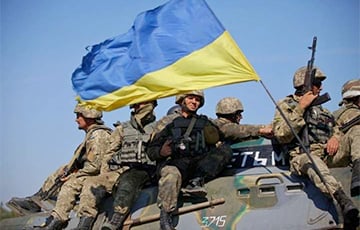
Ukraine has a chance for its biggest breakthrough in two years.
Ukrainian forces were able to make their biggest territorial gains in more than two years after Russian forces lost access to Starlink satellite internet service owned by SpaceX Ilon Musk, writes The Wall Street Journal.
Suddenly-on-the-offensive-with-help-from-elon-musk-ea6ee661?mod=world_lead_story.
In February, SpaceX restricted access to Starlink through a "whitelist" system: the Ukrainian military was granted confirmed access, while the Russian military was denied it.
This had an immediate impact on the situation on the battlefield.
"Without Starlink, they were actually thrown back to the level of Cold War communications," said a Ukrainian military officer with the call sign "Konosh".
According to analysts, Ukraine has since regained about 380 square kilometers of territory in the Zaporizhzhya and Dnipropetrovsk regions.
The loss of communications has drastically reduced the effectiveness of Russian drones. Bratstvo unit commander Alexei Serdyuk says:
"Before, if the enemy spotted our group, they threw everything they could at it. Now this interval between detection and strike has become critical."
Because of the lack of rapid coordination, the Russians could not quickly transfer target coordinates between units.
Interception and chaos in Russian forces
After the loss of Starlink, the Russians were forced to switch to radio communications, which Ukrainian forces began to actively intercept.
"We began to hear direct instructions on the radio ... sometimes even a day in advance," said a radio intelligence specialist.
The Ukrainian military used this for counterattacks, particularly in small groups behind enemy lines.
"We were able to exploit weaknesses when their control system was destabilized," said a commander with the call sign "Luna."
Loss of control over troops
Starlink also played a key role in the internal control of Russian units. A fighter with the call sign "Sivir" says the Russian Federation used to tightly control Ukrainian units thanks to Starlink. Now that control is gone.
He says Russian soldiers often acted in isolation and did not understand the situation around them.
After losing access, Russian forces try to restore communication by:
laying cables between positions;
using local wireless networks;
turning to other satellite services.
But the effectiveness of such solutions is much lower. "Starlink was a cheap and effective solution," explained analyst Michael Kofman.
The Ukrainian military estimates that the level of coordination of Russian forces has only recovered to about 60 percent.
An additional problem is created by an internal conflict over communications systems. The Kremlin restricts the use of the popular messenger Telegram, promoting the state-run Max system, but the military does not trust it.
"Problems will arise with coordination at the platoon and battalion level," said Ukrainian Defense Ministry adviser Sergei Beskrestnov.
Although Russia still has a numerical advantage, the Ukrainian gains have been a major breakthrough after a long period of stagnation on the front.

Bank's name: Bank Millennium S.A.
Address: ul. Stanislawa Zaryna, 2A, 02-593, Warszawa
IBAN: PL97116022020000000216711123
SWIFT: BIGBPLPW
Name of the account holder: Fundacja “KARTA ‘97”
Purpose/title of payment: Donation for statuary aims
You can contact us by the e-mail [email protected]