

Expert: Iran Loses Key War Advantage
- 20.03.2026, 10:45
- 6,680
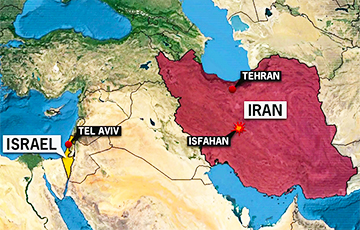
The attack on the South Pars gas field was a turning point.
Military expert, retired Israeli Army Lieutenant Colonel Amit Yagur believes that the current stage of the confrontation around Iran may become a turning point and destroy the strategy of protracted attrition, on which Tehran has staked. According to his assessment, sometimes it is not containment, but expansion of the scale of action that is necessary to end a conflict - exactly the approach he believes Israel and the United States have demonstrated.
About this writes "Maariv".
The matter in question is a strike on the world's largest gas field, South Pars, located in Iran's Bushehr province. This facility provides about 70% of the country's domestic gas consumption, so the attack affected not only the energy sector, but also the overall stability of the economy. According to Yagur, the strike damaged processing facilities, started fires and halted gas supplies, including to Iraq.
Analyst emphasizes that this is the first time since the beginning of the current campaign that it was Iran's production infrastructure that came under direct attack. He argues that the operation was carried out in coordination with the US, which significantly increases its political significance. In response, the Islamic Revolutionary Guard Corps called the attack a "war crime" and outlined potential targets for retaliatory strikes in the Persian Gulf region.
Yagur believes the attack is multi-layered. First, it creates domestic pressure on Iran because gas is a key source of energy for power plants, and disruptions could cause power problems in major cities. Second, strikes on the petrochemical sector could paralyze industry and intensify the economic crisis.
Separately, he draws attention to a geopolitical signal: if Tehran tries to restrict freedom of navigation in the Strait of Hormuz, the response is pressure on its own energy infrastructure. In fact, according to his logic, the message is that if the world market does not receive energy because of Iran's actions, Iran itself may lose access to its resources.
In addition, Jagur believes that the strike puts the Persian Gulf countries in a difficult position, forcing them to decide on the side of the conflict. He calls the reaction of Qatar, which condemned the attack on the Ras Laffan facilities, particularly revealing, but has so far limited itself to statements. At the same time, he emphasizes an important fact: Iran's South Pars and Qatari fields are in fact a single geological reservoir.
In a broader context, Yagur notes, Iran's attempt to use energy as an instrument of pressure may turn against itself. Rather than forcing its adversaries to back down, it has the effect of widening the conflict. He explicitly points out that such actions signal the willingness of Israel and the US to go "all the way," including strikes on critical infrastructure.
So, in Yagur's estimation, what is happening may signal a transition to a new phase of confrontation, where the previous strategy of attrition loses effectiveness. The strike on South Pars not only causes economic damage, but also changes the rules of the game, pushing the region toward a more violent confrontation and reducing the space for neutrality.

Bank's name: Bank Millennium S.A.
Address: ul. Stanislawa Zaryna, 2A, 02-593, Warszawa
IBAN: PL97116022020000000216711123
SWIFT: BIGBPLPW
Name of the account holder: Fundacja “KARTA ‘97”
Purpose/title of payment: Donation for statuary aims
You can contact us by the e-mail [email protected]