


Russia Again Faces A Severe Shortage Of Yuan
1- 19.03.2026, 20:49
- 1,038
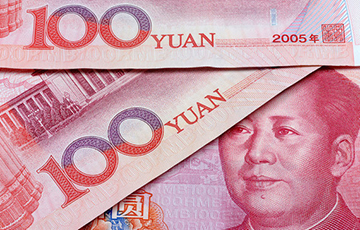
It is de facto the only foreign currency available for international trade of the Russian Federation without restrictions.
The Russian banking system is facing an acute shortage of Chinese yuan, the de facto only foreign currency available for international trade without restrictions, reports The Moscow Times.
On Thursday, rates on overnight yuan loans on the Moscow Exchange soared to 44% per annum - the amount banks were willing to pay each other to borrow the Chinese currency. All last year and at the beginning of the year, yuan rates were kept around zero. In February they unexpectedly jumped to 10%, in early March they rolled back to 6% per annum, and since the beginning of the current week they have again rushed up sharply: 14% on Tuesday, 20% on Wednesday.
The yuan deficit was the result of a reduction in the inflow of export earnings due to the fall in oil prices at the end of last year, as well as the Ministry of Finance's refusal to sell foreign currency from the National Wealth Fund, explains economist Egor Susin. As a result, "the market is torn", he states.
Because of the growing shortage of yuan, banks have been applying for yuan loans to the Central Bank almost daily since the beginning of February, borrowing currency through swap operations. Last year the demand for such loans was zero, and by March 18 credit institutions had chosen the entire limit of the Central Bank - 5 billion yuan, according to its statistics.
"Unlike dollars and euros, which could be freely borrowed in the Western financial system, Russian companies receive yuan mainly from trade, as Chinese banks practically do not provide yuan to Russian companies", - says the chief analyst of Sovcombank Mikhail Vasiliev. But there is significantly less currency from trade on the market: in February, the largest exporters sold only $3.5 billion on the exchange - three times less than in the same month a year ago.
The decision of the Ministry of Finance to stop selling yuan from the National Wealth Fund in order to save the rest of the liquid assets of the fund, deprived the market of yuan supply for another $3 billion a month, estimates leading analyst of Finam Alexander Potavin.
The yuan deficit has become the main reason for the sharp fall of the ruble, points out analyst of Alor Broker Igor Sokolov. Since the beginning of the week the exchange rate of the yuan against the ruble jumped by 7% and on Thursday updated the maximum since February last year - 12.65 rubles per yuan. The dollar for the first time in a year cost more than 86 rubles, and the euro for the first time in six months came close to the 100 mark (99.5 rubles per euro on the interbank market).
"In fact, the market has been functioning for a month at the current oil price of about $45 per barrel, which implies a rather low inflow of proceeds from exports; the proceeds from the current prices of $80-100 per barrel will enter the economy with decent lags, and there is no one to balance the market in the current situation," says Susin.
To balance the market, the Central Bank may need to increase the provision of yuan swaps to banks, and the Ministry of Finance - to start placing free yuan on the market, the expert suggests.

Bank's name: Bank Millennium S.A.
Address: ul. Stanislawa Zaryna, 2A, 02-593, Warszawa
IBAN: PL97116022020000000216711123
SWIFT: BIGBPLPW
Name of the account holder: Fundacja “KARTA ‘97”
Purpose/title of payment: Donation for statuary aims
You can contact us by the e-mail [email protected]