

Who started the Belarusian revolution?
10- Mikalai Statkevich
- 17.03.2026, 14:48
- 17,948
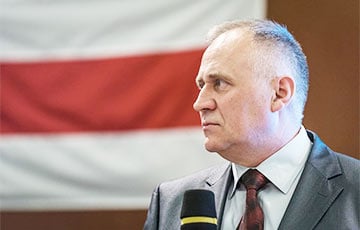
Mikalai Statkevich Spoke About His Strategy In 2020.
The leader of the Belarusian opposition, released political prisoner Mikalai Statkevich published in his Telegram channel an answer to the question about his strategy of protests in 2020:
- Former activists of Narodnaya Hramada, who are now outside Belarus, have passed several questions to me, which people are most interested in. I will answer them here. Here is the first of them:
- We remember the press conference in Warsaw on February 27, 2019, in which you participated together with Andrei Sannikov and Vladimir Nekliaev. At it, you were announced as the presidential candidate of the Belarusian National Congress for possible elections. Later, your strategy of "protest candidates" was supported, which worked well in 2020. Remind me what is the essence of this strategy and how do you assess the 2020 protests?
- I am very grateful to my BNC colleagues for their trust, I hope that I did not fail and they did not have to regret their decision. But I would like to explain the reasons why the BNC chose this strategy. Those who say that the "old" could not organize the revolution and the "new" came along and organized it are wrong. Revolution cannot be simply organized if society is not ready for change. But it can be directed and led if people are ready for it.
The presence of such readiness was called a "revolutionary situation" by Lenin, which included the following conditions (remember, you know it):
1) The grassroots do not want to live the old way.
2) The authorities cannot govern the old way.
3) Exacerbation of contradictions in society beyond the usual.
The first condition was already present somewhere in 2017. The increase in the retirement age, the employment crisis in the regions, when every night dozens of minibuses from eastern cities with "gastarbeiters" traveled to Moscow, and, finally, the decree on taxes on the unemployed, later called the decree on "deadbeats." Social tension was growing, we felt it. The feeling turned into confidence when Dzmitry Bandarenka called me and informed me that the number of visits to the website "Charter'97" by Natallia Radzina, which was considered among Belarusians (and still is) the voice of democracy, had increased dramatically over the last month. Therefore, the BNC scheduled an unauthorized rally in February 2017 in Minsk's Kastrychnitskaya Square against this decree. About 5 thousand people came out to it, and the stream from it on "Radio "Svaboda" was watched by about two million people. After that, spontaneous rallies against the decree started all over the country. It became obvious to us that the Belarusians want changes and are ready to fight for them.
The second condition is about the "tops". They will not be able to govern in the old way if the power vertical breaks down. This happens when the state disintegrates or when the executors sabotage. The latter happens when there is a large number of protesters on the streets for a long time (researchers say about 3.5% of the country's population), which convinces officials that they are on the wrong side and instead of money, positions, various benefits, they may find themselves as defendants for the actions of the authorities.
The third condition is fulfilled by itself when the cynical inaction of the authorities during COVID causes a negative reaction among people.
But from the very beginning there was a question how to gather people for a prolonged protest in such a large number, if there was only one thing that could be done to make it happen. In fact, there was only one possibility for this - to gather people during the election campaign on pickets to collect signatures for nominating candidates in the "elections", which was not prohibited by the laws, about which there was even a corresponding clarification of the constitutional "court".
To test this approach we began in the fall of 2019 during the parliamentary "elections". I traveled to dozens of cities where I held meetings aimed at finding regional organizers, potential protest leaders. Then we nominated about 40 candidates in these cities by collecting signatures. I joined the initiative groups to collect signatures for the nomination of each of these candidates. Then, after preliminary announcements, we traveled to picket each of the protest candidates. We worked as a small team, which besides me included the deputy chairman of Narodnai Hramada Valentin Trokski and the general secretary of the party Sergei Sparish. We put up stands with bold but legally correct posters, turned on sound-amplifying equipment and held rallies. We "broke people's fear".
By the way, I started "breaking it" back in the fall of 2015, a month after my release, when I started holding unsanctioned rallies in the center of Minsk, because during the four previous years of my imprisonment there had not been a single "opposition" rally there. Some kind of political graveyard was created...
There were attempts on the part of the authorities to prevent us from holding picket rallies, but already in 2020 in prison, when there were still letters from people from freedom and information from the Internet and regional newspapers, I noticed a complete correlation between the number of people on our pickets in specific cities, their boldness and the number and persistence of protesters in the same cities in 2020.
We in the BNC simultaneously tested several strategies in those "elections" and helped each other to implement them. For example, "European Belarus", which is headed by Andrei Sannikov and Dzmitry Bandarenka, registered their candidates through the BPF party and used the time allotted to them for campaigning. And we used the refusal to register Irina Khalip, nominated by collecting signatures, to hold protests in the center of Minsk. Then we applied the accumulated experience in the Strategy for the Return of Real Elections, adopted by the BNC before the 2020 presidential elections. We were preparing, but the other side was also looking for new methods to fight the protests.
On the eve of the key protest against the "decree on the unemployed" on March 25, 2017, all its potential leaders were arrested. For example, Yauhen Afnagel was taken on the ring road, I was not at home to avoid preventive arrest, but I was figured out and taken the day before the action. Uladzimir Niakliaeu, who, when it became known about the arrests, went directly from Warsaw to Minsk to lead the action, was detained by OMON in Brest so harshly that it almost cost him his life. As a result, the action on March 25 was not managed and was dispersed by the authorities. But people came out en masse and showed that they were ready to protest.
In 2020, we again applied the strategy of protest candidates. The first action of 2020 was an unauthorized rally on the steps of the Government House on May 14 after my initiative group and part of the groups of protest candidates filed for registration. Then I declared that "today we light the flame of protest here" and called people to the first rally at the picket of protest candidates on May 24 in Minsk, near Komarovka. After this rally it became clear - Belarus is rising. On May 31, picket meetings were scheduled in all regional cities, where tens of thousands of people came out.
Our regional organizers had sound-amplifying equipment, we sent promoters from Minsk to such rallies in regional centers. On June 7, I had already announced in advance, apart from Minsk and regional centers, rallies in about 10 largest district cities (I tried to launch the protest throughout the country while I was still free).
When the number of participants in the rallies began to grow rapidly, the authorities again preventively arrested potential protest leaders. First administratively, like Pavel Severinets, me, Valentin Troksky, Veronika Mishchenko, and then in criminal cases. Including Yauhen Afnagel, head of the Rada Commission of the BNC, the activist of "European Belarus" (its other leaders - note Charter97.org). Later, the heads of the BNC Rada commissions Hennadii Fedinich, Vasili Beresnev, Vatslau Oreshko, who is still in prison, and the general secretary of Narodnaia Hramada Siarhei Sparish were convicted in criminal cases. All this shows that the authorities understood perfectly well who was really behind the preparation of society for the protests.
But we had already carried out a colossal analytical, organizational and propaganda work, which, by the way, was constantly covered on the web. It was very important to broadcast our actions to the entire society in order to channel its discontent into the direction of readiness for protests. Bloggers and independent journalists played a big role in this. The most important function here was performed by the Charter'97 website, headed by Natallia Radzina, which provided systematic information support for our events. We also made extensive use of social networks.
That's why, when in 2020 opinions and statements about the "unexpectedness of the protests" came to me, I wanted to answer: "You just didn't read my accounts. They should still be available now, by the way, although I can't use them.

Bank's name: Bank Millennium S.A.
Address: ul. Stanislawa Zaryna, 2A, 02-593, Warszawa
IBAN: PL97116022020000000216711123
SWIFT: BIGBPLPW
Name of the account holder: Fundacja “KARTA ‘97”
Purpose/title of payment: Donation for statuary aims
You can contact us by the e-mail [email protected]