
U.S. Allows Russia To Sell Oil From Tankers Within A Month
28- 13.03.2026, 8:34
- 4,468
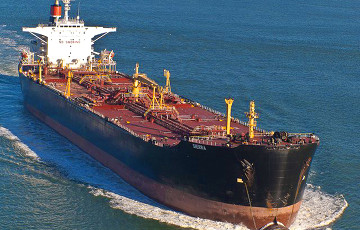
The permit will remain in effect until April 12.
The United States has temporarily exempted from sanctions the sale of Russian oil and oil products that were loaded on ships before March 12. The corresponding license was issued. U.S. Treasury Department's Office of Foreign Assets Control (OFAC).
The permit will be valid for one month - until April 12. U.S. Treasury Secretary Scott Bessent stated that the purpose of the measure is to strengthen stability in global energy markets. He also emphasized that the temporary lifting of sanctions "will not bring significant financial benefits to the Russian government, which receives most of its energy revenues from taxes levied at the production site."
The lifting of restrictions will affect about 100 million barrels of fuel, said Kirill Dmitriev, the Russian president's special envoy for investment and economic cooperation with foreign countries and head of RDIF Kirill Dmitriev. At the same time, about 124 million barrels of Russian-origin oil are in transit, according to Fox News. "Against the backdrop of the growing energy crisis, further easing of restrictions on Russian energy resources looks increasingly inevitable," Dmitriev wrote in his Telegram channel.
Last week, the US temporarily allowed India to buy Russian oil sitting offshore. After speaking with Vladimir Putin, US President Donald Trump said he planned to lift sanctions against the oil sector of several countries to stabilize the energy market. This was followed by Dmitriev's meeting with the US president's special envoy Steve Whitkoff and his son-in-law Jared Kushner in Florida. Following the talks, Dimitri said the US is "beginning to better understand the key, systemically important role of Russian oil and gas in ensuring the stability of the global economy."
The US and Israeli military operation against Iran has led to disruptions in oil supplies and a spike in fuel prices. In particular, Tehran has blocked the Strait of Hormuz, through which about 20 percent of the world's oil supply and up to 30 percent of liquefied natural gas (LNG) enters the global market. The Islamic Revolutionary Guard Corps (IRGC) threatened to prevent the export of "not a single liter of oil" from the Middle East if the US and Israel continue to strike Iran.
With this background, global oil prices rose above $100 per barrel for the first time since 2022. On March 12, more than 30 member countries of the International Energy Agency (IEA) decided to release 400 million barrels of oil from the strategic reserve to curb prices.

Bank's name: Bank Millennium S.A.
Address: ul. Stanislawa Zaryna, 2A, 02-593, Warszawa
IBAN: PL97116022020000000216711123
SWIFT: BIGBPLPW
Name of the account holder: Fundacja “KARTA ‘97”
Purpose/title of payment: Donation for statuary aims
You can contact us by the e-mail [email protected]