

Media: Gulf States Face A Historic Choice
- 12.03.2026, 13:36
- 7,494
A new geopolitical reality is taking shape.
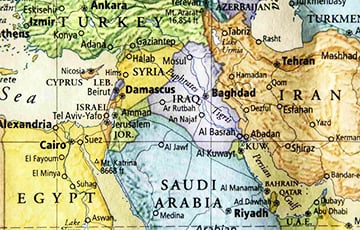
Iranian missile and drone attacks on Gulf states have shattered Tehran's deterrence strategy and are forcing states to reconsider their alliances.
The attacks, which have affected civilian infrastructure in the United Arab Emirates, Bahrain, Qatar and Oman, have shown that Tehran's previous policy of deterrence and attempts to reduce tensions no longer provide the expected protection.
According to "Maariv".
As a result, the gulf states were faced with a historic choice to change their foreign policy line and reconsider relations with both world powers and Israel.
According to experts, the new situation was the outcome of broader geopolitical changes that began more than a decade ago. After Washington began shifting its strategic focus to the Pacific in 2011, a vacuum of influence emerged in the Middle East. This was quickly exploited by Beijing. China launched the "One Belt, One Road" initiative and began to actively strengthen economic ties with Arab countries, viewing the region as an important hub for transportation and energy routes.
With the intensifying rivalry between the United States and China, the Gulf states found themselves caught between two centers of power. In response, they have begun to employ a strategy of so-called "hedging" - balancing between the powers. In the area of security, the states of the region have continued to rely heavily on the United States, which retains an overwhelming advantage in the supply of modern weaponry. At the same time, economic and technological ties were gradually expanding with China, allowing the gulf states to benefit from cooperation with both sides and avoid hard choices.
A parallel relationship with Israel was also gradually forming in the region. These relations began long before the signing of the Abrahamic Accords and were linked not only to security issues but also to economic interests. Many gulf states are seeking to reduce their dependence on oil and move to a knowledge and technology-based economy. To do so, they need innovation, digital infrastructure, cybersecurity and modern resource management systems - areas in which Israel has considerable experience.
But this model of cooperation has created a dual situation for the countries of the region. On the one hand, they need Israeli technology and investment, and on the other hand, they fear increased Israeli military activity in the Middle East, which could lead to new security risks.
At the same time, the Gulf states have long tried to manage the Iranian threat through containment policies and diplomatic contacts. After reducing direct military confrontation with Tehran's allies, such as during Saudi Arabia and the UAE's withdrawal from the conflict in Yemen, the bet was on tension reduction and dialog.
The latest Iranian attacks, however, have shattered these calculations. Missile and drone strikes on cities in the region have shown that the policy of "buying peace" has not yielded the expected results. Iran, analysts believe, has demonstrated its willingness to act directly and use conventional weapons against neighboring states.
With the ongoing conflict, the US and Israel are seeking to significantly weaken the influence of the Islamic Revolutionary Guard Corps. According to sources, in closed-door meetings, Gulf leaders are making it clear to allies that they believe it is necessary to bring the campaign to an end. As noted, many in the region fear that if pressure on Iran eases, it is the Gulf states that will be on the front lines of a possible long-term confrontation.
A new geopolitical reality is emerging. The traditional strategy of balancing between world powers is gradually losing its effectiveness in the face of direct military threats. The failure of appeasement and containment policies is pushing regional states to seek a more active security model based on strengthening alliances and creating a system of regional deterrence.

Bank's name: Bank Millennium S.A.
Address: ul. Stanislawa Zaryna, 2A, 02-593, Warszawa
IBAN: PL97116022020000000216711123
SWIFT: BIGBPLPW
Name of the account holder: Fundacja “KARTA ‘97”
Purpose/title of payment: Donation for statuary aims
You can contact us by the e-mail [email protected]