

ISW: Ukraine's Successful Strike Splits Russian Propaganda And Z-wonkors
7- 12.03.2026, 12:03
- 11,328
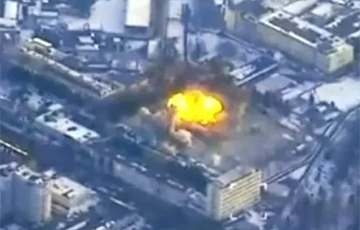
The Kremlin tried to downplay the significance of the Ukrainian strike.
Ukraine's March 10 strike on Russia's Silicon El plant in Bryansk, a critical microchip manufacturer, provoked a violent reaction in Russia. While Russian propaganda has attempted to downplay the significance of the strike, the Russian pro-war camp has indignantly criticized such attempts.
A new report by the US-based Institute for the Study of War (ISW) is about this.
The ISW reminds that according to an official report by the AFU General Staff, the plant was hit by Storm Shadow cruise missiles, and the strike significantly damaged the plant's production facilities.
Ukraine's 413th Independent Battalion of Unmanned Systems "Raid" said that the attack was Ukraine's first strike against a strategic facility of the Russian defense-industrial complex, when the Ukrainian military was able to engage a drone for real-time fire correction. This allowed the Ukrainian Defense Forces to strike effectively with a relatively small number of missiles. And Ukrainian OSINT channel CyberBoroshno, analyzing satellite imagery after the hit, confirmed 5 missiles hit Hull 4. "With the existing damage, restoration of the workshop without complete reconstruction is unlikely, which actually means decommissioning of the facility," CyberBoroshno analysts said.
The ISW recalls that the Silicon El plant emphasized that it is "the second largest in Russia in the production of microelectronics products for the Russian Defense Ministry." The plant has supplied Russian state defense conglomerate Almaz-Antey, which makes air defense systems, and the state-owned Tactical Missile Armament Corporation. The latter produces cruise missiles, notably the Kh-59, Kh-69, Kh-101 and Kh-555, which Russia is using to strike Ukraine.
As ISW analysts emphasize, the Kremlin has attempted to downplay the significance of the Ukrainian strike on the Silicon El plant. The Russian Foreign Ministry said on March 11 that the strike was allegedly aimed at civilians and that Ukraine, it was said, could not carry out such strikes without sharing intelligence with Britain and other NATO countries. The Russian Foreign Ministry also tried to frame the strike as an attempt by Britain and other Western countries to disrupt trilateral talks between the United States, Ukraine and Russia. Kremlin spokesman Dmitri Peskov, Russian Foreign Ministry spokeswoman Maria Zakharova and other Russian officials and State Duma deputies repeated the FCO's accusations of British involvement. These Russian accusations and attempts to claim an attack on civilians are attempts to downplay Ukrainian long-range strike capabilities and distract attention from Russia's intransigence in the peace process, particularly by accusing the UK of sharing intelligence with Ukraine, notes the Institute for the Study of War.
The Kremlin's attempts to downplay and distort information about the Ukrainian strike on the Silicon El plant, however, have provoked negative reactions among Russian ultranationalist "war correspondents" and pubs Russian "war correspondents" rejected contradictory efforts by state propaganda and Russian officials to downplay the significance of the strike and criticized the Russian Defense Ministry's failure to protect one of the largest and most important facilities of the Russian defense industry.
Some of the "war correspondents" also criticized Russia's weak air defense and electronic warfare (EW) capabilities, noting that "no one asked" how many missiles Russia managed to shoot down. ISW views such statements as criticism of Russian authorities for failing to release transparent reports about the Ukrainian strike on the plant and the performance of Russian air defense systems.
Russian "war correspondents" noted that the Silicon El plant was a major producer of high-frequency transistors needed for Russian military communications systems, as well as of REB devices and components for intercontinental ballistic missile (ICBM) systems, including the Yars, Bulava, and Topol-M." The pro-war publics also voiced the assumption that Russia would find it difficult to replace the "specialists" who were destroyed during the strike on the plant. In addition, "war correspondents" complained about the shortage of Russian missiles, insufficient electronic warfare capabilities, the inability to disable Ukrainian airfields from which Storm Shadow-equipped Ukrainian planes take off, and Russia's inability to repair damaged air defense systems due to sanctions.

Bank's name: Bank Millennium S.A.
Address: ul. Stanislawa Zaryna, 2A, 02-593, Warszawa
IBAN: PL97116022020000000216711123
SWIFT: BIGBPLPW
Name of the account holder: Fundacja “KARTA ‘97”
Purpose/title of payment: Donation for statuary aims
You can contact us by the e-mail [email protected]