
Frédéric Petit: Putin Fails To Understand The Most Important Thing About Ukrainians
21- 12.03.2026, 16:26
- 18,798
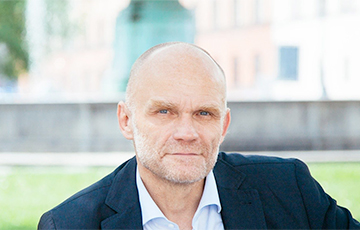
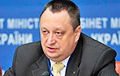
Photo: francaisaletranger.fr
He is not facing subjects, but citizens.
Will Ukraine stand? How can Europe help Ukrainians at this difficult moment in the war? How long will the U.S. and Israeli operation in the Middle East last? Could Aliaksandr Lukashenka face an “Iranian scenario”?
Charter97.org discussed these and other questions with Frédéric Petit, a member of the French National Assembly.
— Could you share with our readers your impressions about your recent visit to Ukraine?
— I think that Ukraine is even more resilient. It was my second visit since the beginning of the hard targeting by the Russians on the civilians. To remind, "civilian" and "citizen" have the same etymology. By bombing civilians, Putin is bombing citizens, and the citizens are on the front. They will not give up — I could feel that.
Of course, it was very hard. I was in Brovary, visited the bombed central heating power plant. The civilians are also on the front — Putin does not understand what a citizen is. He has no citizens, he has only subjects. These bombings of the civilians can be seen from afar as they will increase the fatigue — my sense is the opposite: the civilians are more and more citizens and more and more resilient.
It is clear that the resistance of Ukraine is not only a military one — it is also a citizen resistance. When you see people remaining in their apartments, not wanting to go away, waiting for the time to become better — I think this kind of philosophy cannot be understood by the Kremlin. It is helping the front — to see that, as we said during the First World War in France "the home will hold". For me, it's very important because I think it represents very concrete and deep European value that politics has to be connected with the society, with the citizenship — not that on one side you have politicians with their words, and on the other hand you have the society, as we see in some democracies now in the world.
— Is that so?
— Yes, that's what I saw: there are traffic jams in the morning because everybody is going to work, to school, and so on.
— It is amazing, when you follow the developments in Ukraine online, you get an impression that the civil society in Ukraine is totally thriving: there are conferences, meetings, new books releases, exhibitions.
— During one of my previous visits last year I wanted to meet a friend on Sunday (on Sundays it is more difficult to have working meetings), and she said, "No, I'm not free on Sunday, but come — I have a meeting at a literature club." I went there, and there was a discussion for 2 hours with 50 people about the impact of Nietzsche at the beginning of the 20th century on Ukrainian literature. And on the wall, the photos of the hero of the association who died at the front in the war.
— How would you evaluate the strength of the American contribution to European security today?
— For me, the United States is a big democracy. I think the present government of the United States is non-democratic. And I'm even afraid that we have somebody who does not have the competence "to drive this truck".
I think that the United States is really still an ally. But I cannot understand — and maybe sometimes I cannot stand — the attitude, the words of the president of the United States. And it's been like that from the very beginning.
— Would you agree with the proposition that the Russian war in Ukraine is becoming more and more a European story rather than a transatlantic story? Over the course of the last year, the American financial contribution to the military efforts have been zero, and the main contributor for the Ukrainian military is Germany, who buys the munitions from the United States and gives them to Ukraine.
— I think there is something true in this. I will also add something. The earth is round. Greenland, for me, is a border zone between the US and Russia. This issue is for me also an opportunity — that Europe is not just something "in-between". It means that it's up to us to take things in hand.
I think it will also be an opportunity for the decades to come in our relation with Africa, because we are in the same zone “aside”, “no more in the middle”. I think that the tensions between America and China are leaving out the European territories. And it's a problem because we are not ready. We are preparing ourselves, but we are not ready. But it's also an opportunity to gain force.
I often travel through France, not in Paris and I talk to citizens. I feel that people are deeply understanding what we are talking about now.
— In that context, what are, in your view, the responsibilities of France with regard to Ukraine?
— Close the sky. I think we have to do more in order to protect the civilians. We can make it clear that it's not escalatory, but we cannot accept that they are bombing civilians, that they are bombing hospitals. And I think we have to make one step more in this direction now — not just something after a ceasefire. I know that discussions are under way on that.
I think there are a lot of territories that we can now protect better, without big decisions and big breakdowns in our attitude. And it will be understood by the Kremlin. Don't close your eyes — close the sky.
— Maduro was arrested, Khamenei was eliminated. Do you see any repercussions of these events for Alexander Lukashenka?
— Well, I am not clearly in line with this way of dealing with things. For me, you cannot defend international law by breaking international law. That's what I would say about the American government.
I think Lukashenka is more careful. He is putting thousands of people in prison — he's not firing tanks on crowds. Lukashenka is a cruel guy, of course, but he does not have exactly the same internal situation as in Iran. Inside Belarus, he has an organization.
I think that it's not a way to demonstrate democracy — to kill people from the outside. I'm not sure it would work in Iran. We are still not sure that it will be for the sake of democracy in Venezuela. I am sure that it would not be the right way in Belarus.
— Do you have any feelings, how long the active bombing campaign in the Middle East might last?
— I don't know. I think it is linked also to the industrial capabilities, which are now on the brink. I think there will be some steps from China that we don't know exactly yet. I don't believe we have to be afraid of the Iran–Russia axis — I think it's opportunistic and not solid. I am afraid that we have a guy in charge who is not clearly understanding what he's doing. For me, it's linked to the duration of this conflict — because if somebody wakes up, it will be finished the next day.

Bank's name: Bank Millennium S.A.
Address: ul. Stanislawa Zaryna, 2A, 02-593, Warszawa
IBAN: PL97116022020000000216711123
SWIFT: BIGBPLPW
Name of the account holder: Fundacja “KARTA ‘97”
Purpose/title of payment: Donation for statuary aims
You can contact us by the e-mail [email protected]