

Volodymyr Fesenko: There Are Two Scenarios For Ending The War In Iran
5- 10.03.2026, 22:01
- 14,694

Trump is taking a big risk.
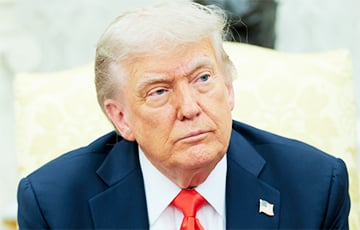
US President Donald Trump has said that the war with Iran is almost over. Is it really so?
For a comment, Charter97.org turned to Vladimir Fesenko, a well-known Ukrainian political scientist and head of the Penta Center for Applied Political Research:
- In this case, Trump's statements are aimed at reassuring the American public and partly his partners. The main impression that many people had after the first week of the war was that the war was dragging on, that the United States was stuck, and it was unclear when and how they would get out of the war. In addition, the negative consequences had already manifested themselves. First of all - the rise in the price of oil and, accordingly, the price of petroleum products. The price of gasoline and diesel fuel in the United States is rising, and the price of a gallon of gasoline in the United States is always the main indicator of the pre-election situation. There is such a note in American politics: if the price of a gallon of gasoline rises in an election year, it means that the ruling party will lose the election.
So this is a big risk for Trump, he understands it, so he calms the public. This is the first most logical explanation, because realistically there is no question of any war winning at the moment, unfortunately for the US. Iran continues to shell both Israel, the Arab Emirates, and a number of other countries, and so far there are no clear, objective signs of the end of the war. So Trump is most likely wishful thinking.
The second explanation is that Trump's advisers recommend that he still find an option to end the war quickly enough. The easiest way is to declare victory, as he did, incidentally, last year. Back then, Israel and the US announced that they had achieved their goal. Iran's nuclear program was supposedly destroyed, which turned out to be not quite true. But they declared that they had achieved their goals. They stopped bombing, Iran stopped bombing too, and that was the end of the war.
I think that's the option Trump is being offered now. That is, to bomb Iran a little more, to exterminate it to the maximum extent possible, and that is the end of the war. However, this is unlikely to work unilaterally. The situation is quite different, not like last year. For one simple reason - too much has happened. First of all, the assassination of Khamenei. The strikes against Iran were very large-scale, brutal. And already many of Iran's spiritual leaders have said that they will retaliate and fight the Americans further. This will be the main obstacle to ending the war.
I note that most of the oil that is produced and sold from the Persian Gulf countries goes to China, India, and Asian countries. China is interested in ending the war.
So I would still consider the scenario of the end of active hostilities (hot phase) by the end of March or early April. It is quite likely. If the Chinese persuade Iran to give up active military actions and the blockade of the Strait of Hormuz, then it is possible. If the position of vengeance, holy war, jihad against the Americans will dominate in the Iranian leadership, then military action may continue, despite all of Trump's statements.
- What consequences for the ayatollahs' regime and the entire Middle East can be borne by this special operation of the United States and Israel? Again, this is, of course, a very serious blow to the entire oil supply system, to the supply of oil to the Asian continent. Half of this oil went to China and India, and there is also Japan and a number of other countries. Of course, this is also the risk of a crisis in the world economy, a sharp rise in oil prices, which has been happening almost all the last few days.
Now the price of oil has fallen, but let's see what happens next. If the rise in oil prices resumes and the war drags on, then these are the risks of inflationary processes, global recession, worldwide economic crisis. And the Persian Gulf, previously one of the richest and most prosperous regions of the world, will be in a very deep economic crisis.
That is, the consequences will be negative for Iran, which was already in an economic crisis. Now the situation may worsen, because the destruction that is now taking place in Iran, all of this will require reconstruction. And at the expense of what? Russia doesn't have enough money for its own war. China can theoretically give money, but it won't just help. China can buy Iran's oil fields and take control of some infrastructure, but it will not help Tehran.
That is why Iran has almost no allies. North Korea has no money either. That's why Iran had the worst economic situation before the war. There are water problems there too, which can be aggravated now because of the war. In my opinion, Iran can wage a long war, but only by inertia.
The question that military experts are now discussing is whether Iran has enough missiles and drones for the war. It clearly looks like Iran is already saving money. There are no longer the intense missile strikes that there were in the early days. They are launching several times less. Probably trying to save money. I've heard estimates that Iran will have enough missiles for a large-scale war for a month. Then something will remain, but of course it will be more like single strikes. There are more drones, but the Americans are destroying launchers and will monitor the launch sites, will destroy drone stocks and launch sites.
There, too, Iran's capabilities for air warfare will be limited. There is another, of course, huge risk. If Iran does not agree to a cessation of hostilities, the Americans will simply start an economic blockade of the sea.
It will be possible to supply goods from Russia, but the blockade, i.e. the economic strangulation of Iran, is also a huge risk. Iran will be able to exist somehow, and the regime will be able to stay, but it will be half-destroyed. It will be able to defend itself, but it will not be able to attack. So one scenario for the end of the war is spontaneous, because of Iran's exhaustion of resources for air warfare. But the other scenario I mentioned is under pressure from China, mediated by a number of Arab countries. The Americans and Iran could secretly agree to cease active hostilities. This scenario, I think, is quite possible.
Formally they will talk about jihad and so on, but de facto the war will gradually stop, because Iran will not have much opportunity to continue it. Trump also needs to end it, so that there are not already large negative consequences in the economy for the United States, as well as political consequences for him as president.
- What does this special operation mean for Putin?
- Putin received certain bonuses associated with the rise in the price of oil. But these bonuses are temporary and limited. Even the very fact that Putin is perceived as at least a formal ally of Iran does not add to American confidence in him.
Even the discussion that Russia provided intelligence to Iran shows that there is a certain distrust of Russia on the part of Americans. Just like in Russia: the strike on Iran caused a very big upsurge of anti-American sentiment and an increase in distrust of Trump.
That is, mutual distrust has certainly increased here. But in any case, I think that negotiations on the US-Russia line will continue.

Bank's name: Bank Millennium S.A.
Address: ul. Stanislawa Zaryna, 2A, 02-593, Warszawa
IBAN: PL97116022020000000216711123
SWIFT: BIGBPLPW
Name of the account holder: Fundacja “KARTA ‘97”
Purpose/title of payment: Donation for statuary aims
You can contact us by the e-mail [email protected]