

The EU Called For Urgent Search For An Alternative To Visa And Mastercard
12- 9.02.2026, 21:38
- 6,604
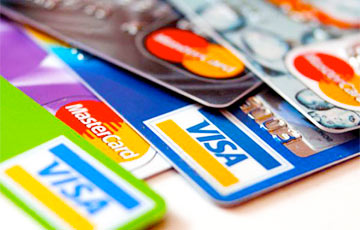
The EU intends to reduce its dependence on US payment systems.
The EU needs to urgently reduce its dependence on the US payment systems Visa and Mastercard, said the head of one of the key banking associations Martina Weimert. In her view, US dominance in the payments sphere could be used as a pressure tool in case of a serious deterioration in relations, reports Financial Times.
"We are highly dependent on international payment solutions," said Martina Weimert, director general of the European Payments Initiative (EPI). The consortium she heads unites 16 European banks and financial companies.
According to the financier, Europe has "good national assets", including domestic payment systems, but lacks a truly cross-border solution covering several countries at once.
"If we say that independence is critical, and everyone realizes that it is a matter of time, it means that we need to act urgently," Weimert stressed.
According to the European Central Bank, Visa and Mastercard accounted for almost two-thirds of all card transactions in the eurozone in 2022. Meanwhile, 13 eurozone member countries have no national alternatives to U.S. payment systems at all. Even where their own schemes still exist, their use is gradually declining.
With the share of cash payments declining, officials in the EU are increasingly concerned that the influence of U.S. payment systems could turn into a weapon, i.e. be used as a political or economic lever in the event of a serious conflict between the EU and the U.S.
The European Payments Initiative, which includes BNP Paribas and Deutsche Bank, among others, launched its own alternative to Apple Pay called Wero in 2024. This digital payment system, EPI claims, already has around 48.5 million users in Belgium, France and Germany. It plans to expand its reach to online and in-store payments by 2027.
Weimert said banks and merchants generally recognize the need for a pan-European cross-border payment network, but it is the current geopolitical situation that has made the topic truly "mainstream."
The European Central Bank acknowledges that previous private sector initiatives, including EPI's early attempts to create a U.S.-competitive payment system, have shown how difficult it is to scale such projects. An ECB spokesman noted that it is difficult for market participants to agree on common standards.
With this background, the ECB is promoting the digital euro project, a government initiative designed to enable cashless payments across the eurozone and strengthen the EU's monetary sovereignty. Admittedly, it is causing considerable controversy among European politicians - some banks are actively lobbying against it, arguing that it could undermine private sector efforts.
According to the ECB's plans, retail outlets in the eurozone will be required to accept the digital euro both offline and online by 2029, when the regulator begins issuing it.
The head of the European Parliament's economic committee, Aurora Laluc, said the digital euro could be the foundation on which a counterpart to "a European Visa or Mastercard" could eventually be created.
Martina Weimert, however, warns that with the geopolitical environment deteriorating, the digital euro may come too late:
"The problem with the digital euro is that it will appear a couple of years later - perhaps already after the end of US President Donald Trump's mandate. I think we're a little bit out of time in terms of timing," she concluded.

Bank's name: Bank Millennium S.A.
Address: ul. Stanislawa Zaryna, 2A, 02-593, Warszawa
IBAN: PL97116022020000000216711123
SWIFT: BIGBPLPW
Name of the account holder: Fundacja “KARTA ‘97”
Purpose/title of payment: Donation for statuary aims
You can contact us by the e-mail [email protected]