


Russia Offered China Record Discounts On Oil After Sales To India Plunge
- 5.02.2026, 20:48
- 2,120
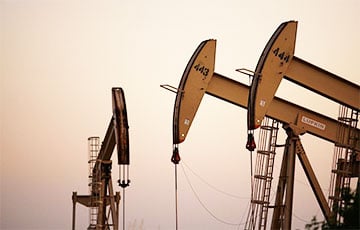
The discount for Urals grade reached $12 per barrel.
The discount at which Russian suppliers are selling their oil to China has grown to record levels after Donald Trump announced on Monday a trade deal with India to reject crude from Russia. Indian refineries have been cutting their purchases for months, and Chinese refineries are taking advantage: some shipments are being diverted to China, but sellers are having to make price concessions.
Discounts on ESPO grade delivered from the Pacific port of Kozmino increased this week at Chinese ports to nearly $9 a barrel against benchmark Brent, Reuters reported, citing traders. Such discounts have ranged between $7 and $8 in recent months. The discount for Urals, which has been traveling from Russia's western ports mainly to India but is now being partially diverted to China, has reached $12 a barrel. Brent is trading in a range of $65.8-69.8 a barrel this week.
Discounts have hit record highs and could rise even further, especially for Urals, Reuters sources said. "Chinese buyers have been capitalizing on discounts on Russian crude in recent months, leading some to even cut purchases of Iranian crude to import more Russian crude," said Vortexa analyst Emma Li. - This trend is likely to continue in the near term, given India's [continued] reduction in purchases, which is likely to lead to even bigger discounts."
These are discounts on the price at importers' ports, which includes transportation costs. In Russian ports, where oil is shipped for export, prices are much lower and discounts are bigger.
Last week, when a barrel of Brent was trading at $65.3-70.5, ESPO at Kozmino was sold at an average of $48.65, while Urals was sold at $40.34 in Baltic ports and $37.84 in Black Sea ports, Bloomberg wrote, citing data from Argus Media. That is, the discounts amounted to about $20-30 per barrel.
The spillover of Russian supplies from India to China is clearly visible in monthly data. In 2025 through November, India's average daily purchases ranged from 1.4 million to 2 million barrels and China's from 1 million to 1.3 million.However, in January 2026, the former purchased only 1.1 million and the latter 1.65 million.For China, this was the largest purchase since March 2024 and the second largest since the start of Russia's invasion of Ukraine in 2022.
JPMorgan analysts estimate that after the trade deal with the United States, India will buy from 0.8 to 1 million barrels of Russian oil per day.
On the part of China, the scale of increase in demand is limited, unless state-owned companies join the purchases. Independent refineries, the main buyers of sanctioned oil, are unable to take all of Russia's surplus, analysts say. Amid rising inventories in Chinese onshore storage facilities, "we expect offshore supplies from Russia to China to decline from March after higher levels in January-February," Song Jianan, senior analyst at Energy Aspects, told Reuters.

Bank's name: Bank Millennium S.A.
Address: ul. Stanislawa Zaryna, 2A, 02-593, Warszawa
IBAN: PL97116022020000000216711123
SWIFT: BIGBPLPW
Name of the account holder: Fundacja “KARTA ‘97”
Purpose/title of payment: Donation for statuary aims
You can contact us by the e-mail [email protected]