

Executive Director of the George W. Bush Institute: Belarus Should Be in NATO
5- 26.02.2026, 21:13
- 8,792
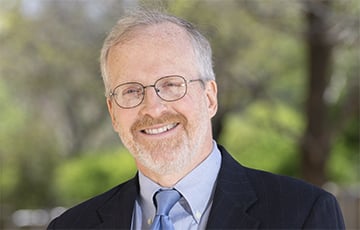
Photo: bushcenter.org
A window of opportunity may soon open for Belarusians.
Why is NATO the best prospect for Belarus? What could actually force Putin to end the war against Ukraine? And what awaits Belarusians once Russia’s aggression against the Ukrainian people comes to an end?
The website Charter97.org discussed these questions with David J. Kramer, Executive Director of the George W. Bush Institute, former U.S. Assistant Secretary of State for Democracy, Human Rights, and Labor in the George W. Bush administration, and former Director of Freedom House.
— What were your expectations when Russia launched this so-called "special military operation"?
— I was of mixed views on whether Putin would actually go ahead and do it. To a rational Western way of thinking, it made no sense whatsoever. The problem is that isn't how Putin thinks. He doesn't think in rational ways, not according to Western norms. He operates based on what is in his best interest (not necessarily even what's in Russia's best interest). He also operates based on information that he receives, which is terribly flawed. It was a reminder that Russia, in a way, follows and understands the United States better than it follows and understands the countries closest to its borders. I think Russia has a terrible understanding of Ukraine, Belarus and other countries in the region.
Putin expected that Russian forces would be welcomed by Ukrainians, as Russian forces would "liberate" Ukraine of the "Nazi regime" (even though Ukraine has a Jewish president) and that it would be over in a matter of days or weeks at most.
It was, I think, a reflection of the fact that Putin just doesn't get Ukraine. He didn't learn from his mistakes in 2014 where Russia encountered a significant resistance after moving in without any problems in Crimea (and he certainly didn't learn anything in 2022).
The US Central Intelligence Agency was absolutely right that Putin was going to invade Ukraine, but it was also very wrong about how that invasion would play out. It, along with many others, expected Russia would win and take over Ukraine in a matter of days or weeks, and instead, here we are now entering the fifth year, and Ukraine has regained more than fifty percent of the territory Russia initially seized. It has inflicted more than 1.2 million casualties on the Russian side, maybe 350-400 thousand of those killed. I think there was too much of a tendency to look at how Russia would act rather than how Ukraine would respond. Ukraine has proven to be one of the most effective militaries in Europe and has shown tremendous courage, as have all the Ukrainian people, in confronting this threat.
— Before waging this full-scale war of aggression, Putin issued a preposterous and unattainable ultimatum demanding NATO to roll back to pre-1997 borders. What do you think are Putin's true ambitions towards NATO today?
— He has not abandoned that goal of rolling back NATO enlargement. He and Russian officials want to return to 1997, when Russia and NATO signed the NATO-Russia Founding Act and no enlargement took place up at that point until 1999, when the first tranche occurred. Putin wants to undermine NATO and expose it as a weak and feckless institution. He wants to challenge NATO. While he has not sent Russian tanks and troops across the border into a NATO member state, there have been drones that have violated NATO member states' airspace. There have been missiles that landed in Poland. We see the hybrid warfare tactics against NATO member states, including the United States, and very little response from NATO.
So, on the one hand, Putin wants to weaken NATO, show that it is not a major force, and on the other hand, he holds it up as a major threat to Russia. He blames NATO for the cause of this war. He accuses NATO enlargement of violating some understanding back in 1990, when the United States and the Soviet leadership were discussing and debating German reunification. Mikhail Gorbachev, the Soviet leader then in 1990, had subsequently said there were no promises made by the United States that there would be no NATO enlargement.
I think what we see today is that countries like Latvia, Lithuania, Estonia, Poland, and others are safer today than they were before they were brought into NATO. On the other hand, look at the countries that have been left in the gray zone: Belarus, Ukraine, and Georgia. Belarus has essentially been taken over by Russia because Lukashenka has allowed that to happen. Ukraine invaded twice. Georgia invaded in 2008, where Russia still occupies 20% of Georgian territory. The benefits of joining NATO mean that NATO member states have not been invaded by Russia.
— From the long-term perspective, the safest arrangement for Belarus would be to join NATO eventually?
— The safest place for Belarus, for Ukraine, for Georgia, Armenia — for all of those countries, would be to join NATO. Originally, I think, for, say, the Czech Republic and Hungary, Poland, Slovakia — it was less that they were worried about a Russian invasion of their countries. It was a sense of belonging, of returning to Europe. The Baltic States, I think, have different interests. They constantly worry that Russia will launch some attack against them. Their interest in joining NATO was not just for a sense of belonging and return to Europe, but also out of real security interests and concerns that they had about a revanchist Russian threat.
I think, for Belarus, Lukashenka is dependent on Russia for staying in power. He recognizes that he is not able to push back and try to restore Belarus' full independence, sovereignty, and territorial integrity. I think, once Lukashenka is gone, if there is a democratic force that replaces him in power in Belarus, then Belarus could consider joining NATO one day.
Ukraine has sought NATO membership for a number of years. Ukraine and Georgia, back in 2008, requested a membership action plan, which was not joining NATO, but a step toward it. Germany and France opposed that and came up with an alternative solution that said in the NATO communiqué that Georgia and Ukraine would become members of NATO, without saying how or without saying when. That was then followed a few months later by Russia's invasion of Georgia. Then, in 2014 we see in the immediate aftermath of Euromaidan, the Revolution of Dignity in Ukraine, Russian forces take over Crimea and then move into the Donbas.
So, in a way, the worst position to be for Belarus, for Ukraine, for Georgia, is to be neither in NATO nor taken over by Russia. The countries that are in that position wound up being attacked by Russia, either overtly or more covertly in the case of Belarus. There hasn't been a physical assault on Belarus by Russian forces, but Russian forces are there, and Lukashenka remains in power only because of Putin's support.
— Thousands of Belarusian political prisoners can attest that being, so to speak, within Russia's reach, it's not a good place to be.
— Absolutely. It's a very dangerous place to be, in fact — deadly.
— The war has been ongoing for 4 years; Russia's dependence on China is growing. How do you see the future dynamics of Russia-China relationship?
— It is a very unbalanced relationship, where China very much is in the driver's seat. China is taking advantage of Russia's weaker position. It has been able to negotiate significantly reduced prices for Russian energy, for example. And yet China also does provide essential military and dual-use technology for Russia's military campaign. So, there are people who believe that China would like the war to continue because it weakens Russia even more.
One of the goals, I think, of US and European policy should be to pressure the Chinese to stop its support for Russia's military campaign. There have been efforts to work with the Indian government, with Prime Minister Modi, on reducing Indian imports of Russian energy. There are conflicting reports about whether India is returning to importing cheaper Russian energy now or not but there has not been similar pressure applied to Beijing — and I think that's important to do.
I think there are also people in Moscow who are very worried about Russia's dependence on China. There are Russians who look across into Asia and are very nervous about China. China looks across the border into Russia and sees lots of land and opportunity. The population close to the border with China is not very big, maybe less than 100 million Russians, compared to more than 100 million Chinese along the Russian-Chinese border. I think this dependence that Russia has on China makes a lot of Russians nervous.
— Russia has sustained 1.2 million casualties in this war. When could it be too much for them?
— It's a very hard question to answer. I do think that there is the possibility that Russians on the front lines at some point will say, "Enough is enough." They are treated like cannon fodder. Russian regions have had to increase, once again, the signing bonuses for Russians who join the military. We have seen Russia resort to foreign fighters: not just North Koreans, but others as well. So, we are seeing that Russia is having difficulty putting people on the front lines. In January and December, the Ukrainians claimed that they killed more Russians on the front lines than Russia was able to recruit for its military campaign.
The assumption has been, since the full-scale invasion started, that Russia, with its much bigger population (about three and a half times as many as Ukraine) has an endless supply of troops.
I don't think that's true. When the point might come, I don't know. But there are communication channels that get leaked or picked up, that express tremendous frustration by Russian forces on the front lines with their commanders, who are terribly corrupt, who don't care about them, who send them off to get killed. You see the difficulty in recruiting. Russian prisons were almost emptied out by making offers to prisoners that they couldn't refuse, in a way: "You will secure your freedom if you go to the front lines and if you survive". The challenge has been that a lot of the Russian troops are coming from poor areas in Russia. That means that joining the military has become an income generator for a lot of families. The bonuses that are paid, then the compensation if the father or husband is killed in action. Russia has been reliant on the poor regions for sending troops to the area. Moscow and St. Petersburg families there are not paying the same price. As long as Putin has troops he can send in, he will continue this war.
Putin, in my view, has no interest in ending this war. He wouldn't know what to do if he ended the war. But what might end the war is when the Ukrainians inflict enough damage and harm on the Russian forces to the point where they said, "You know what? We've had enough." I think that is one of the only serious ways of ending this war.
— One way or another, but there will come a day when the largest war in Europe since World War II will be over. Where is the place of Belarus in the new world configuration?
— It depends on how the war ends. If Ukraine is able to defeat Russia on the battlefield, that can open up possibilities for the people of Belarus to finally secure their freedom from Lukashenka. I think, if there is some negotiated settlement that is in Moscow's favor — that reduces the likelihood that the people of Belarus will be able to secure their freedom sooner, at least, rather than later. So, I think, what happens in Ukraine, how the war ends, will have a huge impact for the people of Belarus. We have seen brave people in Belarus block shipments of war material from Belarus. We have seen them try to disrupt efforts by Russia to send in more forces.
I think the future of Belarus, and Sviatlana Tsikhanouskaya has said this herself, depends to a large extent on what happens in Ukraine. That's why it's important when we talk about helping Ukraine, it also is a help to the people of Belarus and to the democratic forces.
There are major implications of how this war ends. It could have implications for Georgia as well, where there is a pro-Russian government and the Georgian Dream. If Ukraine is able to defeat the Russian forces in Ukraine, that could have spillover effects. Will Russia be able to sustain its occupying forces on Georgian territory? The stakes here are enormous. In the past year, there's been too much pressure, in my opinion, on Ukraine and not enough on Russia. I think continued support for Ukraine and pressure on Moscow will also be to the advantage of the people of Belarus. It will help achieve the mission of George H.W. Bush of a Europe whole, free, and at peace. It won't be complete until Belarus and Ukraine are part of that solution.

Bank's name: Bank Millennium S.A.
Address: ul. Stanislawa Zaryna, 2A, 02-593, Warszawa
IBAN: PL97116022020000000216711123
SWIFT: BIGBPLPW
Name of the account holder: Fundacja “KARTA ‘97”
Purpose/title of payment: Donation for statuary aims
You can contact us by the e-mail [email protected]