Fitzo And Orban Are Trapping Their Countries In A Trap
6- Petro Oleshchuk
- 24.02.2026, 11:54
- 8,886
Ukraine certainly doesn't look like the culprit in this story.
On the eve of the 4th anniversary of the start of Russia's full-scale invasion of Ukraine, two European Union countries (Hungary and Slovakia) made tough claims against Kiev, accusing Ukraine of "stopping the transit" of Russian oil and thus allegedly jeopardizing their energy security. They threatened to stop exporting diesel fuel and electricity to Ukraine, block new sanctions against Russia and even a European loan package for Kiev. In their rhetoric, a simple but very convenient formula sounded: "Ukraine is to blame for our lack of Russian oil."
If, however, we move away from emotions and carefully analyze the chain of events, it becomes clear that the claims against Ukraine are not just groundless, they hide a much deeper problem. The voluntary dependence of Bratislava and Budapest on Russian oil.
The starting point of the current crisis was Russia's attack on Ukraine's infrastructure. In late January 2026, a Russian missile and drone strike on facilities in western Ukraine damaged a section of the Druzhba oil pipeline. After the strike, pumping was halted. It was physically impossible to continue transit through the damaged pipe. In other words, we are talking about a classic force majeure. Nevertheless, it was Ukraine that turned out to be designated "guilty" in the words of the leaders of Hungary and Slovakia.
Hungarian and Slovakian authorities announced the cessation of diesel exports to the Ukrainian market, directly linking this to the stoppage of Russian oil supplies via Druzhba. Slovak Prime Minister Robert Fitzo went even further and issued an ultimatum. If transit is not restored as soon as possible, Slovakia will stop supplying electricity to Ukraine. Against this background, Hungarian Prime Minister Viktor Orban announced his intention to block a new package of EU sanctions against Russia and the allocation of a large loan package for Ukraine until Russian oil flows through the pipeline again.
In official statements, these steps are presented as forced measures. They say that Ukraine is "delaying repairs," deliberately slowing down the restoration of transit and thus playing with the energy security of its neighbors. However, the facts tell a different story. The oil pipeline was damaged not as a result of some unilateral decision of Ukraine, but as a result of a Russian strike. Repairing infrastructure in an area that is regularly shelled is not just a technical task, but a matter of human safety and guarantees that the repaired section will not be destroyed by the next missile. In such conditions, any timeframe for reconstruction work is inevitably stretched, and no responsible operator will make political promises ignoring the war factor.
In parallel, Slovakia itself is already talking about reorienting to alternative supplies via other routes, including the Croatian terminal on the Adriatic. The authorities say they are ready to temporarily use strategic reserves and switch to new logistics chains. This means that if Bratislava wants to and has the political will, it has the opportunity to reduce dependence on Druzhba without turning Ukraine into an instrument of pressure.
The European Commission, assessing the situation, saw no immediate threat to the energy security of the two countries and made it clear that it is not going to put pressure on Kiev to impose accelerated repair of the pipeline at the cost of security. From a moral point of view, the claims of Hungary and Slovakia look even more dubious. Almost all EU countries have radically reduced or stopped importing Russian energy in recent years, a difficult but conscious choice in favor of strategic security and solidarity with a state that has been the victim of aggression.
Budapest and Bratislava have persistently sought exceptions for themselves, maintaining their dependence on Druzhba and continuing to buy oil from a country that is waging a war of annihilation against their neighbor and formal EU partner. When Russia itself struck the pipe, these governments did not direct their anger at the Kremlin, but unleashed it on Kiev.
This approach is not only immoral, it fits perfectly into the Kremlin's strategy, which has been trying to quarrel allies within the EU for years.
But the story of Druzhba is not just about justice or injustice toward Ukraine. It's a story about two countries deliberately walking into an energy and political trap. While most European states were gradually reducing their dependence on Russian resources, Hungary and Slovakia kept betting on cheap oil from Russia, gaining short-term economic advantages but making their energy industry hostage to a single source. Any failure (technical, military or political) automatically turns into a crisis for them.
Now, instead of recognizing this strategic mistake and making a leap towards real diversification, their governments are spending political capital on blackmailing their own EU partners and pressuring Ukraine. This line of behavior inevitably leads to isolation within the European Union itself. Economically, this strategy also looks like a loser. Even if Druzhba can be repaired, the general trend will remain unchanged. The EU will continue to reject Russian energy, companies will remain cautious about investing in countries with too close ties to Moscow, and each new crisis will gradually push the Hungarian and Slovak economies toward a more painful and abrupt break with "cheap" oil.
The paradox is that a country that is living in a full-scale war for the fourth year is demonstrating readiness for energy transformation and integration into the pan-European security policy, while some of its partners in the C It is the transit country through whose territory the war is going on, the country that offers solutions and suffers the greatest losses. But the governments of Hungary and Slovakia are really trapping their countries.
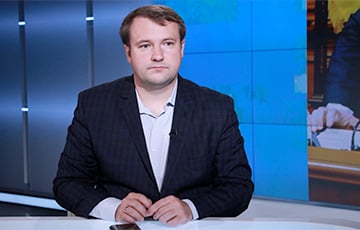
Petr Oleshchuk, professor at Taras Shevchenko National University of Kyiv, specially for Charter97.org.

Bank's name: Bank Millennium S.A.
Address: ul. Stanislawa Zaryna, 2A, 02-593, Warszawa
IBAN: PL97116022020000000216711123
SWIFT: BIGBPLPW
Name of the account holder: Fundacja “KARTA ‘97”
Purpose/title of payment: Donation for statuary aims
You can contact us by the e-mail [email protected]