

Statkiewicz Is Back
9- Irina Khalip
- 20.02.2026, 13:59
- 13,790
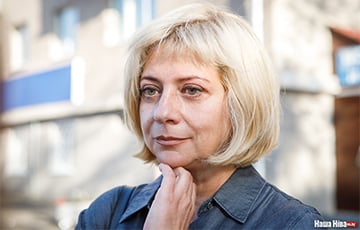
Photo: "Nasha Niva"
Forcible removal is another criminal offense of the regime.
Nikolai Statkevich, who was tried for deportation last September, told his wife during a single phone call, "They're trying to take us out, but I won't let them." And he didn't let them. Yesterday, Nikolai returned home - with a stroke, after a month of doctors fighting for his life. He won. At the cost of his own health, actually sacrificing himself, but - he won. Statkevich broke the Lukashists' game. They could not deport him, unarmed and gaunt, after five years in the punishment cell, with all his weapons and personnel.
The word "deportation" has been an ugly and terrible word for many years. In the same February days more than 80 years ago, Stalin deported Chechens and Ingush from their native places to Kazakhstan and Central Asia - at night, under escort. They were not the only ones deported, however. The first deported people were Karachais - they were deported in November 1943. In December 1944 - Kalmyks, in March - Balkars, in May - Crimean Tatars. Many of them were fighting at that time and did not understand why their families stopped writing them letters to the front. And wives, children, parents were sitting in cold calf wagons and going to unknown places. Many didn't make it. The dead were simply thrown off the trains by convoys during stops.
Warring men were then also recalled from the fronts and sent not to their wives in exile, but to camps to build socialist economic facilities. War heroes were stripped of their awards and declared traitors to their homeland. And even though later, years later, the survivors were able to return to their native lands, the deportation became one of the most tragic events in the history of many peoples.
And now, in this century, when globalization and technological progress are all around, we are witnessing the deportation of Belarusians. When in June, after the first big batch of political prisoners taken out of the country, I wrote about it in Novaya Gazeta, my colleagues told me: no, you can't use the word "deportation" in this context, it is a legal term, expulsion of a person or a group of persons by the state from its sovereign territory; such a term can't be applied to the citizens of the country. Yeah, right. Let's go flea fishing and refute the Chechens' right to call what happened to them in February 1944 a deportation. They weren't even thrown out of the USSR - they were simply moved. They were moved with their belongings to a new place of residence - at state expense, by the way. And let's see how the Chechens respond to this. I would prefer to be far away at this time.
So the Belarusians are being deported, whoever calls it that. When we see them in photos without handcuffs and prison robes, we feel instant euphoria, happiness, delight and turn off the "brakes". We shout: hurray, they have been released! We write joyful posts on social networks, open champagne. And only then do we suddenly realize the price of this "liberation".
The other day I read an interview with Galina Derbysh. This is the same pensioner from the village of Obukhovo in Grodno region, who ended up behind bars because once Nikolai Autukhovich spent the night in her house. The result of the sleepover - 20 years in prison on charges of terrorism. Galina lived safely with her husband in the agro-town, helped homeless animals, for which she was called Mother Teresa (only her own cats she had 16), engaged in gardening. She could not let a tired traveler stay overnight. And here - the sentence, five years in the camps, deportation with a certificate. And now Galina, who left five years of life and health in Gomel colony, and her husband - in Obukhovo, sits in Bialystok apartment and sews beds for animals from the shelter. Yes, she immediately found a shelter for homeless dogs and cats in Bialystok and became a volunteer: it helps to live. When the future is unclear, the former life is torn to shreds, the date of meeting her husband is lost in a vague prospect, you need to hold on to something. A warm cat's fur, a needle and thread, the sleeve of a volunteer who can't pass by an abandoned dog. Galina Derbysh is holding on. And two hundred other deportees like her.
We, of course, can't give up moments of happiness at the sight of people who just yesterday were sitting in prisons with huge sentences, and today can eat ice cream. But calling things by their proper names is our responsibility. And if we don't say loudly and publicly that what is happening is not a release, not a pardon, but a forced deportation, which is another criminal offense of the regime, then in the end Belarusians will be taken simply from the streets and thrown out of the country. However, perhaps, for the regime this is just the way out. After all, the only thing that hinders the prosperity of Lukashenko's state is the Belarusian people.
Irina Khalip, especially for Charter97.org.

Bank's name: Bank Millennium S.A.
Address: ul. Stanislawa Zaryna, 2A, 02-593, Warszawa
IBAN: PL97116022020000000216711123
SWIFT: BIGBPLPW
Name of the account holder: Fundacja “KARTA ‘97”
Purpose/title of payment: Donation for statuary aims
You can contact us by the e-mail [email protected]