

Military Expert: Moscow May Plunge Into Blackout
7- 17.02.2026, 21:48
- 14,570
The pressure on RF infrastructure will only increase.
The situation in southern Ukraine is changing markedly: the VSU is seizing the initiative, and the pace of Russian troop advances has fallen to its lowest level in months.
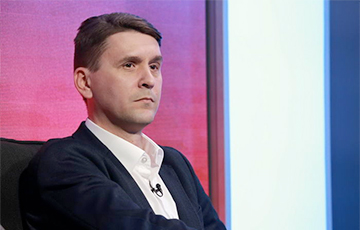
What key successes have Ukrainian forces achieved in recent days? The website Charter97.org talked to Ukrainian military and political observer of the group "Information Resistance" Alexander Kovalenko about it:
- The main task that was set was to stop Russian troops on Gulyaypol, Zaporizhzhya and Pokrovka directions. About 100 thousand Russian troops were concentrated there - several general armies: the 5th, 29th, 35th, 36th and the 68th Army Corps. Their task was to capture the town of Gulyaypole as quickly as possible, go to Pokrovskoye, capture Pokrovskoye, force the Gaichul River, reach the right bank and further advance deep into Zaporizhzhya region along the right bank of the Gaichul River. For the 58th General Army, which is located in the area of Stepnogorsk, i.e. in the Zaporizhzhya direction, the task was to take full control of the Stepnogorsk bridgehead.
Today the Ukrainian troops have slowed down this movement of the occupants in a number of areas, and in some areas it has been completely stopped. At the same time, there are locations where the Ukrainian Armed Forces have indeed turned to counterattack actions. The success lies in the fact that in the area of Stepnogorsk the enemy was pushed back from Primorsky, in the area of Lukyanivske, in the area of Stepnogorsk itself, as well as Stepnogorsk relief and landscape reserve. Here our positions were improved.
In Gulyaipol direction along the river Gaichul the enemy was pushed back from Ternovatoye, from Kosovtsev, and in general we can say that counterattack actions were carried out along the whole right bank of this river. The enemy was pushed back to the left bank, and in some locations on the left bank there are already fixed positions of the Ukrainian Defense Forces.
The third location where counterattack actions were carried out is Pokrovskoye direction, Novoalexandrovka area, near Verbovoye, Volchya-Vorona interfluve. Here the enemy was also pushed back: he lost his positions in the area of Vishnevoye, in the area of Egorovka, in the area of Verbovoye. All this has led to the fact that the Russians as of today have a worsened situation in Zaporizhzhya region in these locations.
It should be understood that these are exclusively tactical level counterattack actions. This is not some kind of global large-scale counteroffensive. First of all, these counterattacks are now constraining and slowing down the enemy and significantly worsening his tactical position along the battle line. We are not talking about something bigger, something large-scale - a breakthrough, a deep defense and so on, a counter-offensive tens of kilometers deep - at the moment. We can't talk about this, because now an operation of a completely different format is being conducted.
- Russian troops have been restricted access to Starlink. How much has this hit the Russian army's control and is the latest success of the AFU related to this?"
- Of course, the loss of a communication tool like Starlink has affected the Russian troops' communications. The occupants now have to either return to the old general military communication, or try to find some - not exactly analogs, but at least temporary substitutes for Starlink. And there are no appropriate technologies that could match the level of Starlink in Russia.
That is why the Russian occupiers, of course, are now in a much worse position than in the presence of "gray" Starlink terminals, which they had previously. They are limited in most operations - from operations involving the deployment of attack and reconnaissance drones deep into the Ukrainian rear to tactical operations at the level of assault.
Above all, not only Starlink, but also the slowdown of Telegram and then its possible further blocking, which I am more than sure of, will lead to a loss of communication between Russian units, even at the level of command staff. Their command staff has been communicating mostly via Telegram and Discord. Thus, a double blow has been dealt to Russian forces, and it will continue. Russian supervisors are preparing to slow down and block other systems and messengers as well - the same WhatsApp, Discord will also be reached.
All this has affected the Russian troops, weakened their communication, weakened interaction. And in conditions of loss of communication and loss of interaction, of course, the initiative on the battlefield is lost and the effectiveness of both offensive and defense operations is reduced. That is, to some extent, Russian troops have returned to the level of 2022-2023 - roughly to this point.
- The Russian Army is suffering colossal losses and, according to experts, does not have time to make up for them with new recruits. What can this lead to in the short term?
- Unless some kind of general open mobilization or even a hybrid, closed mobilization, such as the one that was carried out in 2022 and called "partial mobilization," is carried out on the territory of Russia, the Russian Federation, if such a level of losses and such a rate of monthly mobilization is maintained, will come to a state where it will be unable to advance or even hold defenses.
Russian troops now fight primarily with infantry. Infantry is their main fighting unit today. Not tanks, not armored fighting vehicles, not artillery, not even drones - their main offensive potential lies in the infantry component. As soon as this infantry component will be depleted and will no longer meet the requirements of the command, of course, their offensive potential will be lost.
Already now we can see, for example, from the statistics for January and the first half of February, how much the rate of capturing the territory of Ukraine is decreasing compared to the same 2025. The reduction is about 2-2.5 times in monthly terms, while the losses remain the same. That is, the occupiers are advancing, storming and dying in the same numbers, but they are capturing 2-2.5 times less territory. Russian troops are now in a state where they are simply exhausted. We can characterize this breakdown in capabilities in this way. It seems as if there are still people and they can attack, but this offensive is no longer having the effect that it had even in 2025. Therefore, the situation will only worsen, and the Russian command will, of course, have a choice: either to make more and more inconvenient decisions over time, or to declare a general mobilization in Russia.
The possible blocking of messengers and the transfer of the Rosgvardia under the patronage of the Ministry of Defense are just the bells that point to preparations for a general mobilization. In order not to create protest moods, all this is being prepared in advance to suppress - both in the information field and physically, on the streets.
- Ukrainian drones have already actually left Belgorod - the most important rear hub for attacks on Ukraine - without electricity. The strikes continue on the Bryansk region and Russian refineries. What facilities could be the next priority targets for the AFU to maximally weaken Russia's war machine and economy?"
- I think we will not change tradition. The AFU will retain the classic complex of strikes on oil refineries, on enterprises of the military-industrial complex - and on all enterprises that are in one way or another involved in the military-industrial complex.
If an enterprise, for example, produces cotton pulp or nitrocellulose, it automatically turns into an enterprise that contributes to the production of gunpowder. If it is a chemical enterprise that makes chemical reagents for children's coloring books, but at the same time these same reagents are used for the production of aviation fuel, then such an enterprise is considered not as a "coloring book producer", but as an element of aviation fuel production. And appropriate work will be carried out on such a complex of enterprises included in the military-industrial complex. That is, it is oil refining, it is the enterprises of the military-industrial complex, and it is the energy sector. We will not give up pressure on the energy sector. Moreover, I think that the goal of the AFU during 2026 will be almost complete disconnection of all border regions of Russia on the border with Ukraine from power supply. These are Bryansk, Kursk, Belgorod, and possibly even Rostov regions - not just Belgorod.
This is a security buffer for Ukraine, because if the region is de-energized, the maintenance and conduct of operations against Ukraine on its territory will be significantly complicated. We should not forget that on the territory of these regions there are groupings of Russian troops: groups of troops "North", as well as groupings in Belgorod, Kursk and Bryansk regions totaling more than 90 thousand personnel - about 11 thousand in Bryansk region, about 40 thousand in Kursk region and about 40-45 thousand in Belgorod region. These groups take an active part in the fighting in Kharkiv and Sumy regions. Thus, de-energizing Belgorod, Kursk and Bryansk regions is a priority for Ukraine even from a military point of view.
In addition, I think that 2026 will be the year when Ukraine will start using its own ballistic weapons more actively. The first tests in real combat conditions will be conducted this year - I do not even doubt it.
The pressure will gradually increase on Moscow itself. The purpose of this pressure is to de-energize the capital. That is movement from the particular to the general. We are saying that, starting separately from each region of the Russian Federation, we will gradually move towards the center, de-energizing, which is extremely important, the transit nodes of energy flow from the regions to the capital. At some point, of course, Moscow will face a serious power shortage.
Even an imbalance of energy oversupply, which is not supplied to other regions, can have a negative impact on grid overloading. We have already seen such examples many times at the turn of 2025-2026 in the Moscow region, near Ramenskoye, where it was not even necessary to launch a missile strike - everything burned out on its own due to power surges. Because, somewhere on the outskirts of the Russian Federation, for example in the Belgorod region, a city of about 200,000 people suddenly went out, Moscow was affected. There were overloads, and equipment burned out in Ramenskoye. A chain reaction started, which one energy cell in the Moscow region could not withstand. And if there are more such cells, Moscow, even without direct blows to its own energy infrastructure, will gradually plunge into a blackout, simply because of overloads and related consequences.

Bank's name: Bank Millennium S.A.
Address: ul. Stanislawa Zaryna, 2A, 02-593, Warszawa
IBAN: PL97116022020000000216711123
SWIFT: BIGBPLPW
Name of the account holder: Fundacja “KARTA ‘97”
Purpose/title of payment: Donation for statuary aims
You can contact us by the e-mail [email protected]