

Politico: EU Countries Discuss 'European Nuclear Button'
1- 15.02.2026, 10:39
- 1,398
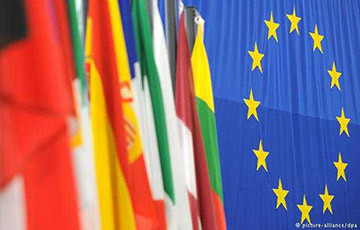
As an adjunct to NATO's defense role.
Many European countries are publicly backing talks to build their own nuclear deterrent to complement U.S. atomic weapons. This comes amid falling confidence in the United States under Donald Trump.
Senior officials from the two Baltic states told Politico that while they still see NATO as the cornerstone of nuclear deterrence, they are now ready to discuss the role of Europe itself.
This gave new impetus to the debate in both public speeches and private conversations at the Munich Security Conference. The growing pressure to start a serious conversation about nuclear weapons in Europe is a response to shaken confidence that the US will repel a Russian attack.
These doubts were not dispelled even after US Secretary of State Marco Rubio's speech, which was couched in a relatively conciliatory tone, media reports said. Estonia has not ruled out participating in talks on a unified nuclear deterrent in Europe at an early stage, Deputy Defense Minister Tuuli Duneton said in an interview. "We are always open to discussions with partners," she said, while emphasizing that the U.S. remains "committed to providing a nuclear deterrent for allied countries."
Latvian Prime Minister Evika Silinja echoed that sentiment. "Nuclear deterrence can give us new opportunities. Why not?" she said, warning, however, that any moves must be in line with "international obligations."
Trump has questioned Article 5 of the NATO Charter on collective defense, ridiculed allied contributions to the US-led war in Afghanistan, and repeatedly called for the annexation of Greenland, which belongs to Denmark (a NATO member). This is reportedly forcing Europe to seek what officials call another layer of "insurance" against Moscow.
French Factor
In practice, this means turning to France and Britain, Europe's only nuclear powers. Unlike London, Paris is not a member of NATO's Nuclear Planning Group, which discusses the use of nuclear force within the alliance. French presidents have repeatedly emphasized that France's national interests have a European dimension, but have insisted that any launch decision rests solely with Paris.
Both German Chancellor Friedrich Merz and French President Emmanuel Macron touched on the topic of a European nuclear deterrent in their speeches in Munich. But not everyone agrees with this course of action. Spanish Prime Minister Pedro Sanchez acknowledged that Europe must become stronger to deter Russia, but said, "I firmly believe that nuclear rearmament is the wrong way to go."
U.S. Deputy Defense Secretary Elbridge Colby said America is not removing its nuclear umbrella from the continent, although Washington wants Europe to step up and do more for conventional defense.
Critical Mass
Nuclear talks between France, Germany and other countries, including Sweden, are at a very early stage. Macron recently mentioned the need to "rethink nuclear deterrence" to also consider conventional weapons such as deep-strike missiles. He is scheduled to give a landmark speech in early March on France's approach to its nuclear doctrine.
Talks on France's atomic weapons with European allies "are important because it is a way to articulate nuclear deterrence in a holistic approach to defense and security," he said.
According to nuclear expert Bruno Tertre, deputy director of the Fondation pour la Recherche Stratégique (a French security think tank), it signals a slight change: France sees more interaction between conventional and nuclear deterrence.
A new paper presented on the sidelines of the conference assesses six different nuclear options for the continent: doubling down on U.S. deterrence; strengthening the role of France and Britain; developing a supranational "euro deterrent"; acquiring new independent arsenals; and focusing on conventional (non-nuclear) deterrence.
Two senior European government officials said Western capitals could theoretically help support France's nuclear deterrent by providing an overview of France's nuclear capabilities. Paris could also consider increasing its nuclear arsenal with subsidies from other countries, added the officials, who were granted anonymity to speak freely.
Some countries have urged France to join NATO's formal nuclear planning process, arguing that it would link the French arsenal more closely to European security. Paris has no intention of doing so.
"I think any discussion in Europe ensuring that collectively we become even stronger in the face of nuclear threats is fine. But no one in Europe is proposing to do it as ... a replacement for the nuclear umbrella of the United States," said NATO Secretary General Mark Rutte.
Now the next step is Macron's speech in March, and he is under pressure to move beyond words.
"After years of French attempts to develop a common strategic approach to deterrence in Europe, often at odds with the interests of our allies, the geopolitical context now makes it possible to harmonize positions," said Héloïse Faye, a researcher at the French Institute of International Relations.
"We must now translate these words into concrete actions and proposals to strengthen European deterrence in the face of the Russian threat and American instability," she added.

Bank's name: Bank Millennium S.A.
Address: ul. Stanislawa Zaryna, 2A, 02-593, Warszawa
IBAN: PL97116022020000000216711123
SWIFT: BIGBPLPW
Name of the account holder: Fundacja “KARTA ‘97”
Purpose/title of payment: Donation for statuary aims
You can contact us by the e-mail [email protected]