

WSJ: The Black Sea Has Become The Deadliest Shipping Route In The World
- 12.11.2026, 15:09
It's even safer in the Strait of Hormuz.
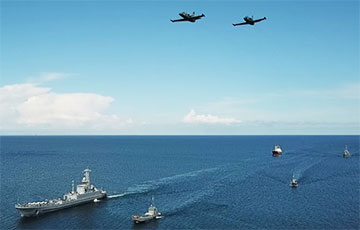
In the Strait of Hormuz, Iran is constantly firing on oil tankers and laying mines along their routes, while the U.S. Navy is trying to protect them. But the greatest damage to commercial shipping this year was not caused by missiles, mines, or artillery in the Middle East, but by drones in the Black Sea. First, Ukrainian drones cut off the routes of Russian ships, attacking both the ships themselves and the ports with their terminals. Then, through its shelling, Russia left the ports of Odessa without ships and began attacking vessels off the coasts of NATO countries such as Romania and Bulgaria with drones.
According to Ambrey, a maritime security firm, there have been more than 300 attacks in the Black Sea this year, writes The Wall Street Journal. As a result, more than 30 sailors have been killed, and more than 20 are listed as missing, according to data from the Turkish Shipowners’ Association, MarineTraffic, and reports from local authorities.
Meanwhile, since the start of the military conflict between the U.S. and Iran in late February, there have been approximately 130 attacks in the Strait of Hormuz and the Middle East as a whole, resulting in the deaths of 25 sailors, according to the United Nations International Maritime Organization.
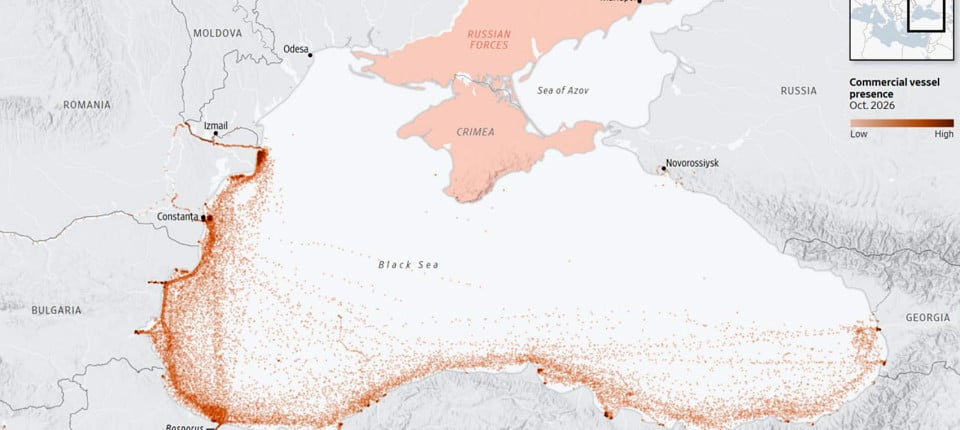
This fall, the northern and central parts of the Black Sea have turned into a sort of maritime desert. Ships from Russia are not sailing there. Those heading to Ukraine (only as far as the Danube on the border with Romania), to Romania itself, as well as to Bulgaria, Turkey, and Georgia—and from those countries—generally stick close to the coastline to protect themselves as much as possible from Russian attacks.
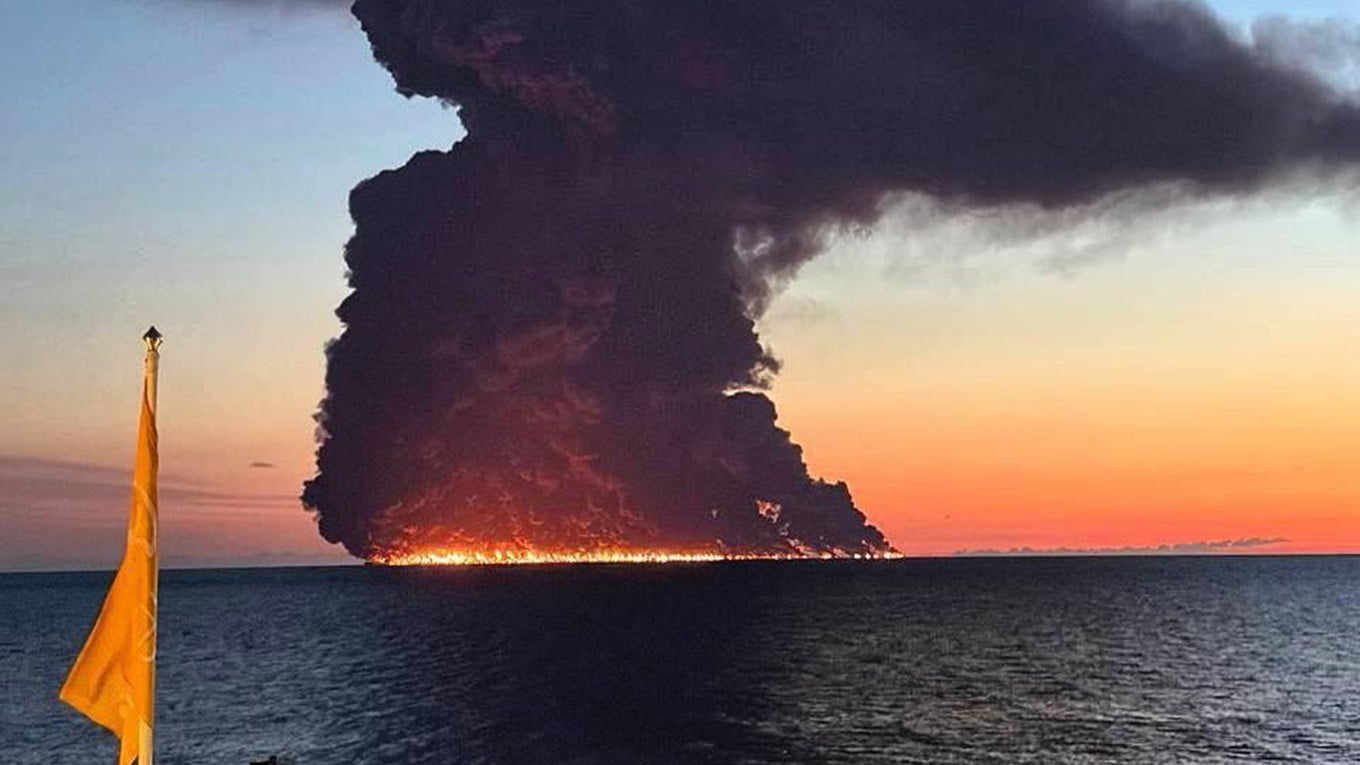
In October, eight merchant ships were targeted by drones while in the territorial waters (12 nautical miles, or 22.2 km, from the coast) or the contiguous zone (usually another 12 nautical miles) of Romania and Bulgaria. Two more vessels were attacked near Bulgaria’s contiguous zone, within its exclusive economic zone, and one was attacked in the Danube port of Izmail after sailing along the Bulgarian and Romanian coasts. In nearly half of the cases, this resulted in the deaths of sailors, injuries, or people going missing.
Russia denies any involvement in these attacks. But Bulgarian Prime Minister Rumen Radev stated in Brussels, as well as to Russian Ambassador Eleonora Mitrofanova, whom he summoned after one of the incidents: “We do not believe that Ukraine could have attacked its own ships and crews. There is no logic to that. Thus, the circumstances of this attack point to Russia.”
The armed escalation has led to a sharp decline in commercial activity in the Black Sea. According to the nongovernmental organization Global Fishing Watch, in October, the number of vessels entering the Black Sea through the Bosphorus Strait fell by 41% compared to the same month in 2025. And the number of voyages in both directions during the same period fell by 38%.

Bank's name: Bank Millennium S.A.
Address: ul. Stanislawa Zaryna, 2A, 02-593, Warszawa
IBAN: PL97116022020000000216711123
SWIFT: BIGBPLPW
Name of the account holder: Fundacja “KARTA ‘97”
Purpose/title of payment: Donation for statuary aims
You can contact us by the e-mail [email protected]