
Checkmate Iran
2- Mikhail Krutikhin
- 9.01.2026, 16:11
- 8,480
The U.S. has some work to do to work through its mistakes.
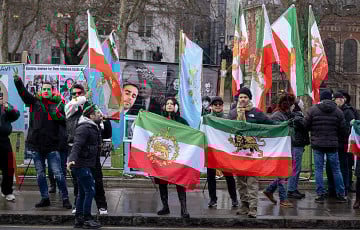
The unrest on the streets of Iranian cities is still on the rise, and observers have yet to see the protesters tiring or retreating under the pressure of government forces. It is too early to predict the outcome of the current protests: previous protests in 2009, 2017, 2019, and 2022 have fizzled out relatively quickly.
New conditions favor the continuation and even intensification of the protests: first, the regime is weakened after its defeat in June's 12-day war with Israel; and second, the population is experiencing gigantic - if not unbearable - problems due to the deteriorating economic situation and crises in the supply of water, electricity, and gas.
And the Internet has been cut off and mobile communications have almost stopped working.
If the popular movement develops into a revolutionary overthrow of the Shiite clergy (and there is a chance of such a development), the question arises about the goals of the uprising and its ideological orientation. There is no organized opposition in the form of political parties and revolutionary groups in present-day Iran; everything is developing spontaneously, and observers have to be guided by the slogans under which the protesters are speaking.
This war of protests began on December 28 with strikes and rallies of the small and medium trade bourgeoisie - the so-called "bazari" - who were outraged not even by inflation, but by the increase in the official dollar exchange rate from 42,025 rials to 42,125 rials (the "black" rate jumped to 1.45 million rials per dollar). The instantaneous rise in the price of imports, as well as the increase in the price of gasoline and diesel fuel, brought the traders to the streets.
And then the students and, of course, unemployed youth, and other segments of the population joined them, and it began... The economic slogans were instantly joined by calls directed against the head of state, "Death to the dictator!" and "Death to Khamenei!"
And then, with an unprecedented scale, came powerful monarchist slogans. Demonstrators began chanting "The Shah is eternal!" and calling for the return to power of the Pahlavi dynasty, which was overthrown in 1979. This is a radical new element of the situation, and it poses a threat to those figures in the Islamic Republic who, seeing the scale of the street protests, were planning reforms along the path of liberalization in order to save the state system bequeathed by Khomeini from collapse, even at the cost of changing the supreme leader.
The return of the Shah's system was not part of the reformers' calculations.
Another notable new element of the mass movement was the protests not just against the government, but specifically against the power of the Shiite clergy. There were calls to return to the cultural and historical values of the great Iranian civilization and timid hints that it would be good for the heirs of ancient kings and heroes to do away with the religion imposed on the country by Arab invaders and occupiers, i.e. Islam. In the eyes of many Iranians, the ideology of Khomeinism, i.e. the spread of the Shiite form of Islam through terrorist organizations throughout the Middle East and the genocide of the Jews, which underlies the activities of the Islamic Republic, has become the cause of the country's current woes.
It should be noted that the participants in the current movement do not want to repeat the mistakes of those who overthrew the Shah 47 years ago and brought Khomeini to power. The revolutionary forces of that period received the contemptuous nickname "fifty-seveners" from the educated Iranians of the new time (according to the Iranian calendar, the overthrow of the Shah took place in 1357), and one of the popular speeches at rallies was: "Death to the three scoundrels: the mullah, the leftist and the mujahidin!". The Mojahedin are members of the Mojahedin of the People organization, whose ideologists tried to cross Islam with Marxism and eventually turned into a terrorist group with a long bloody trail.
In general, it seems that the leading ideological direction of the current protests is the call to replace the Islamic system with a monarchy.
And here, it seems that both the Americans and the Israelis will have to reconsider their attitude to the sentiments of the Iranian people. Until recently, Jerusalem and Washington did not want to take seriously the monarchist sympathies of the Iranian "street". Two scenarios were taken into account.
One of them would bring to power in Tehran more accommodating reformers who would curtail nuclear and missile programs, renounce support for terrorism, and establish normal relations with regional neighbors and the West (a variant of the Trump "deal").
Another scenario would see the jihadist-Khomeinists overthrown, and a new constitution would establish a kind of democratic republic in Iran.
In neither case was the restoration of the monarchy envisioned. When the U.S. sponsored events of the Iranian emigrant opposition were held, the main participants were not monarchists, but the very mujahideen, who have long since lost all credibility in Iran.
Now that both inside Iran and abroad the son of the deposed Shah Reza Pahlavi is gaining more and more power and influence as the recognized leader of the opposition, the U.S. and Israeli policy towards this country must undergo a radical revision. The mistakes made in Iran in 1978-1979 by the Carter administration, which contributed to the fall of the Pahlavi dynasty and the establishment of the Khomeinist regime, cannot be repeated. Especially since the participants in the Iranian people's movement are pinning their hopes of achieving their goals on the armed assistance of Israel and the United States in overthrowing the Islamists.
Mikhail Krutikhin, The Moscow Times

Bank's name: Bank Millennium S.A.
Address: ul. Stanislawa Zaryna, 2A, 02-593, Warszawa
IBAN: PL97116022020000000216711123
SWIFT: BIGBPLPW
Name of the account holder: Fundacja “KARTA ‘97”
Purpose/title of payment: Donation for statuary aims
You can contact us by the e-mail [email protected]