


The SBU Has Blown Up One Of Putin's Main Arsenals
3- 8.01.2026, 15:34
- 22,904
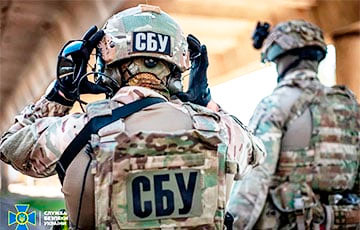
It became known what was stored there and the extent of the consequences.
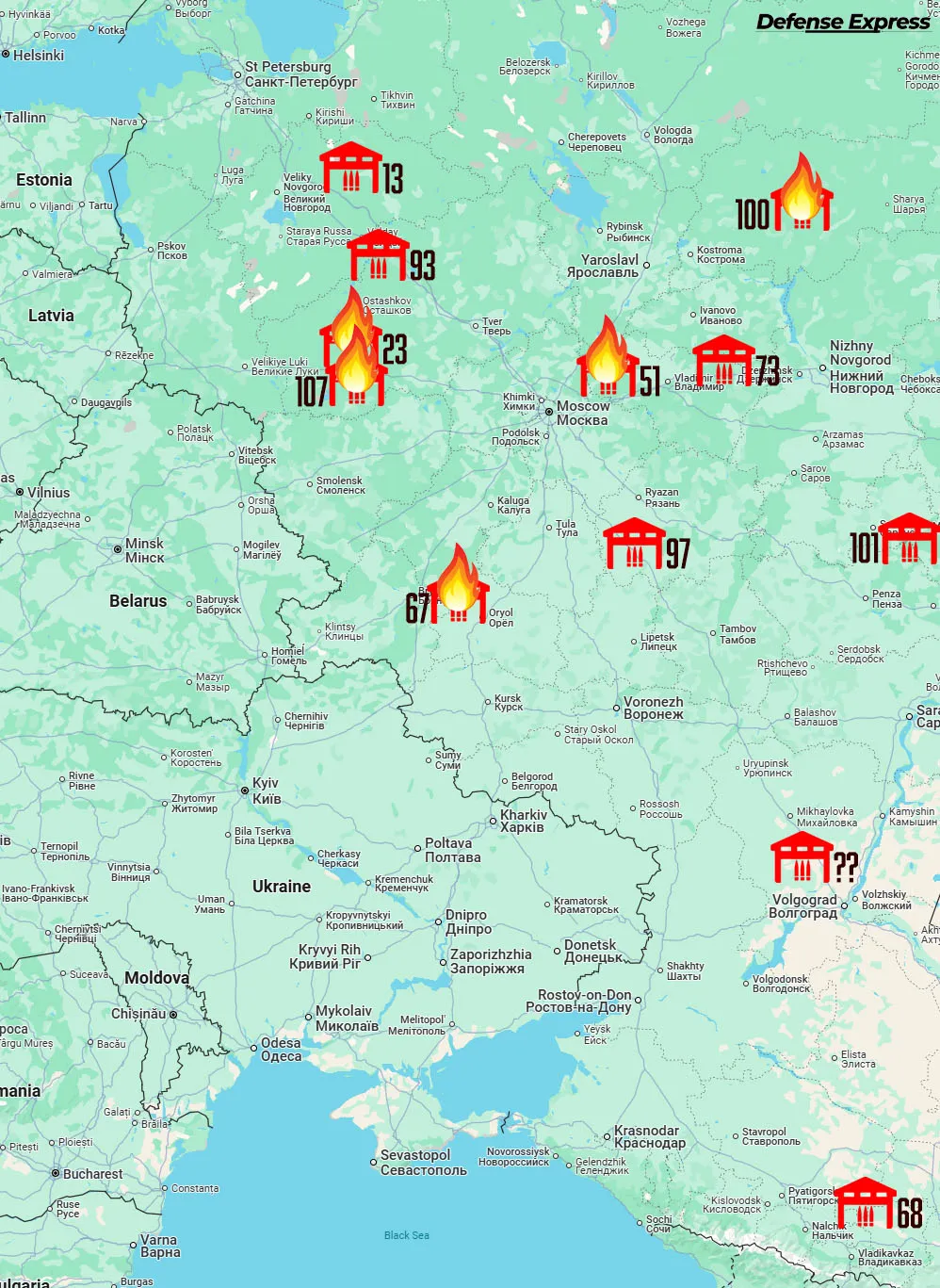
Long-range drones of the SBU attacked the arsenal No. 100 of the Main Rocket and Artillery Directorate, which is located 900 kilometers from the border with Ukraine - in the Neisky district of the Kostroma region. At the moment, this is the deepest blow to the rear of the enemy.
The detonation of shells at the GRAU arsenal resulted in a large-scale fire. Local authorities even announced an evacuation of nearby settlements. Experts analyzed what Russia stored at the GRAU arsenal and how its defeat will affect the war against Ukraine - especially for "24 Kanal".
What was stored at the GRAU arsenal?
This is not the first GRAU arsenal to be hit by SBU drones, but this one is definitely the most remote. Previously, arsenal No. 51 near Moscow was hit. The GRAU arsenals are priority targets, because they are warehouses of supplies flying along the front. Chairman of the Ukrainian Center for Security and Cooperation Sergey Kuzan noted that arsenal #100 was an important supply hub because smaller depots closer to the battle line were filled from it.
Defense Express Editor-in-Chief Oleh Katkov explained that the GRAU is responsible for supplying, developing, and supplying troops with artillery and other ammunition. Russia has plenty of them. Ukraine has already hit 5 GRAU arsenals, not counting other large ammunition depots.
What concerns the device of such arsenals, there is open storage, which formally should not be there. There are conditionally weather-protected facilities. Also deepened and objects of high protection class, located underground. The way ammunition is stored depends on its value.
How much ammunition could have been destroyed?
Russia does not disclose information about the stockpiles at the arsenal, but the design capacity can be estimated from the area of the facility. Taking into account the known characteristics of other affected arsenals, in particular the 51st, and taking into account the area of the 100th, according to Oleg Katkov, the design capacity of the latter is about 150,000 tons of ammunition.
"This is a very conventional figure, which gives only a general idea of the possible storage volumes. In fact, there could be more, since satellite images show that the Russians do not adhere to the storage standards established back in Soviet times," the expert explained.
At the same time, the actual stockpiles could be much smaller. Thus, satellite images show that the arsenal could not be completely destroyed, as there was no instant chain detonation of the entire facility. This could have happened because the arsenal was not fully filled or because the Russian defense system was improved.
How Russia failed to defend the arsenal?
According to Sergei Kuzan, a separate important point in this attack is the work of the Russian air defense, as it did not work as it should have. This points to the vulnerability of even the most defensible targets deep behind Russia's lines. A strike on such a depot should have been one of the most difficult, as such arsenals are more carefully covered than other military installations. In this case, however, Russian air defenses failed.
This also points to the Russians' priorities in defending the facilities. It is likely, Kuzan noted, that Moscow is now more heavily covered than key ammunition depots that directly affect frontline supply. And it is precisely such failures by the Russians that create an opportunity for Ukraine to hit logistics and stockpiles, not just weapons production.

Bank's name: Bank Millennium S.A.
Address: ul. Stanislawa Zaryna, 2A, 02-593, Warszawa
IBAN: PL97116022020000000216711123
SWIFT: BIGBPLPW
Name of the account holder: Fundacja “KARTA ‘97”
Purpose/title of payment: Donation for statuary aims
You can contact us by the e-mail [email protected]