


Trump Is Preparing A Major Oil Strike Against Russia
16- 8.01.2026, 21:05
- 15,592
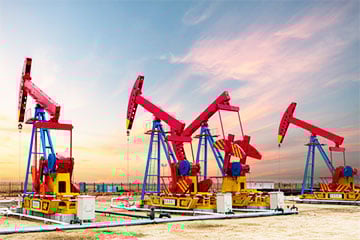
Oil prices could fall to $50 a barrel at the expense of Venezuela.
Donald Trump and his advisers plan to ensure the United States dominates Venezuela's oil industry for years to come, and the president has told aides that he believes it will help drive oil prices down to his desired $50 a barrel level, people familiar with the matter told The Wall Street Journal. The plan being prepared at the White House calls for partial control of the state oil company Petroleos de Venezuela, including the acquisition and sale of most of the oil it produces.
Trump repeatedly made mutually exclusive statements during the campaign. On the one hand, he supported the oil industry, which needs high oil prices to make good profits and long-term investments. On the other hand, he has advocated lower prices, which would please consumers but would hit oil producers. The control over Venezuela's oil sector that Washington envisioned after the arrest of Nicolas Maduro could go some way toward achieving those goals.
Almost immediately after Maduro's capture, the White House began privately discussing with Venezuela's new authorities gaining control of oil supplies and the U.S. role in boosting production in the country, WSJ sources said. Since Venezuela has the largest oil reserves on Earth, the U.S. would thus be able to gain control of most of the reserves in the Western Hemisphere, given its own fields and those where U.S. companies operate. It would also help drive Russia and China out of Venezuela and lower prices for American consumers.
Trump has already said that the US will receive up to 50 million barrels from Venezuela, with the proceeds of their sale at market prices to be managed by him personally "for the benefit of the peoples" of the two countries. Energy Secretary Chris Wright explained that after that, the US will sell the oil produced in Venezuela for an "indefinite period of time".
The decision to take control of the Venezuelan oil industry may seem strange in light of the fact that the shale revolution that began more than a decade and a half ago in the US has turned it into the largest oil-producing country and one of the world's major oil exporters. However, the issue here is the technical characteristics of the oil grades.
The refineries located in Texas and on the Gulf Coast were designed decades ago to handle heavy crudes with high sulfur content. They have a higher proportion of fractions that allow the production of diesel and a number of other petroleum products.
Heavy crude is produced in Venezuelan fields, and it has long been the main feedstock (and one of the cheapest, given their proximity) for U.S. refineries. Because of sanctions against Caracas and reduced supplies from Mexico, another heavy oil producer, U.S. oil producers have had to increase purchases of more expensive grades from Canada and other parts of the world.
At the same time, U.S.-produced light crude is heavily exported.
Heavier grades of crude provide the most capacity for about 70% of U.S. refining capacity, according to the American Fuel & Petrochemical Manufacturers Association. Nine of the country's 10 largest refineries are located on the Gulf Coast, where they can easily and quickly obtain Venezuelan crude. Secretary of State Marco Rubio said on Sunday:
"Our Gulf Coast refineries are the best in the world at processing this heavy oil, and there is a shortage of heavy oil in the world, so I think there will be a huge demand and interest from the private sector if given the opportunity."
Cheap Venezuelan oil would reduce refining costs, the price of gasoline, diesel and a number of other petroleum products. Trump has repeatedly raised the need to bring oil prices down to $50 dollars a barrel, the most preferred level for him, two senior administration officials told the WSJ.
The price in question is the price of the U.S. benchmark WTI grade, which is now about $4 cheaper than Mediterranean Brent. In afternoon trading on Thursday, they are quoted at $56.7 and $60.7 a barrel, respectively.
The increase in supplies from Venezuela, which would also free up additional volumes for U.S. crude exports, could drive prices even lower at a time when the International Energy Agency is already predicting a record global market glut in 2026.
The depreciation of WTI to $50 could lead to a drop in Brent (if the spread is maintained) to $54 per barrel. In this case, Russian Urals (again, if the current spread with Brent is maintained) could fall in value to about $30 per barrel.
"Unlike refiners, U.S. producers are disadvantaged by such low prices. Many see $50 a barrel as the break-even point, and a prolonged stay at or below that level could undermine the prospects for the sector that so strongly supported Trump during his election campaign. Shareholders in oil producers "don't care about energy dominance, they care about energy dividends," said Clay Siegle, a senior fellow at the Center for Strategic and International Studies.
But Trump wants to open up new horizons for extractive companies in Venezuela. The White House is talking to their executives about opportunities to work in the country - which, though, will need tens if not hundreds of billions of dollars in investment to rebuild an industry that was cornered by Maduro and his predecessor, Ugo Chavez. At its peak in 1998, when Chavez won the election, Venezuela was producing 3.4 million barrels per day; now it's less than 1 million barrels.

Bank's name: Bank Millennium S.A.
Address: ul. Stanislawa Zaryna, 2A, 02-593, Warszawa
IBAN: PL97116022020000000216711123
SWIFT: BIGBPLPW
Name of the account holder: Fundacja “KARTA ‘97”
Purpose/title of payment: Donation for statuary aims
You can contact us by the e-mail [email protected]