


Bloomberg: The Hunt For Tankers Of The "shadow Fleet" Of The Russian Federation Has Turned Into A Spectacular Action
- 31.01.2026, 15:36
- 5,062
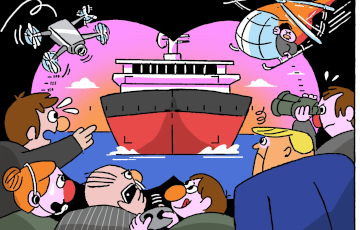
Private tracking companies are becoming key players.
The chase for the oil tanker Bella-1, which tried to escape the U.S. off the coast of Venezuela in December, turned into a spectacular drama watched for weeks by traders and analysts around the world, writes Bloomberg (translated by Charter97.org).
The vessel turned off transponders, changed its name, repainted its board and hoisted a Russian flag before being detained off the coast of Iceland on Jan. 7. But even in the middle of the Atlantic, it remained "on the radar," thanks to modern technology and the rapidly growing tanker tracking industry.
Ship monitoring services were once a niche tool for traders. Today, companies like Vortexa, Kpler and TankerTrackers.com have become an important part of the global security and analytics infrastructure. Their data is used not only by trading houses, but also by hedge funds and government agencies amid increasing sanctions pressure and geopolitical instability. The maritime analytics market is forecast to grow by more than 40% by 2030 to $4.26 billion.
Modern tracking systems are built on mandatory AIS sensors, satellite imagery and analysis of large data sets. However, many tankers use clever tricks to hide: they turn off the signal, "fake" routes, redraw names and flags. In such cases, analysts have to turn to old methods, from manually matching images to sending covert photographers to ports.
Companies are seeing increased demand from governments, especially the US. After downsizing at federal agencies and the EIA temporarily stopped publishing data, private trackers have become almost the only source of accurate information. Kpler says the largest part of its growth today is due to government customers.
But the industry's rise is also drawing criticism. Experts fear that vital information about oil supplies is falling into the hands of private players, whose data costs tens of thousands of dollars a year. And theoretically, anyone can get such access - except for frankly "dirty" clients, whom companies promise not to serve.

Bank's name: Bank Millennium S.A.
Address: ul. Stanislawa Zaryna, 2A, 02-593, Warszawa
IBAN: PL97116022020000000216711123
SWIFT: BIGBPLPW
Name of the account holder: Fundacja “KARTA ‘97”
Purpose/title of payment: Donation for statuary aims
You can contact us by the e-mail [email protected]