

Russia's Largest State Bank Has Predicted The Full Exhaustion Of The National Wealth Fund In A Year's Time
3- 29.01.2026, 22:14
- 5,322
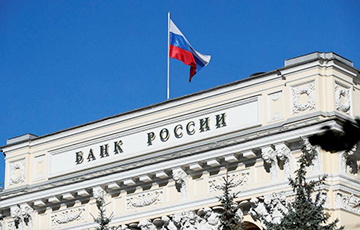
Putin spent the assets of the sovereign wealth fund on war.
The liquid assets of the National Welfare Fund, which the government uses to compensate for the shortfall in oil and gas budget revenues, may be fully exhausted in a little more than a year if the current oil prices remain unchanged, experts of the Center for Economic Forecasting of Gazprombank, the third largest state-owned bank in Russia by asset size, predict.
At the beginning of the year, the National Welfare Fund had 4.1 trillion rubles of unspent funds - currency and gold on the Central Bank's accounts. The speed of spending the reserves depends on the duration and decline in oil prices, the CES experts remind: now the fund is spent if the cost of a barrel falls below $59.
With oil prices around $40, the remaining money of the National Wealth Fund will be spent in a little more than a year, according to estimates of the CES GPB. And if prices fall to $30-35 - the fund may be zero by the end of this year. With oil at $50, the reserves of the National Oil Fund will be enough for 2.5 years.
The "spending of the National Oil Fund for other purposes" also plays a role, the analysts of GPB note: for example, the current budget for 2026-28 provides for investments in infrastructure projects at the expense of the fund for 1 trillion rubles.
"Approaching the date of expected exhaustion of the liquid part of the National Oil Fund to 1 year will probably require revision of the "cut-off price below $59," - the bank's experts write. And this will entail a revision of federal budget expenditures or sources of its revenues.
Before the start of the war, $113 billion of liquid assets, or 6.5% of GDP, were in the Federal National Bank, which had been accumulated for years at the expense of oil super-profits. By the beginning of 2026, this amount had fallen 2.5 times to $52 billion, and in relative terms - 3.5 times, to 1.9% of GDP.
After large-scale spending on megaprojects and patching budget holes, gold reserves in the fund fell by 71% - from 554 to 160 tons. And of the currency reserves, only Chinese yuans worth about $30 billion remain - the minimum since the creation of the National Wealth Fund in 2008.
The Ministry of Finance initially planned zero expenditures from the fund in the 2026 budget, expecting to keep the fund's balances and cover the budget deficit with debt. But the collapse in prices for Russian oil, which after the sanctions of the Donald Trump administration is sold at record discounts since the beginning of the war, forced the government to "print" the fund: from January 16 to February 5, the Ministry of Finance will sell currency and gold for 192.1 billion rubles to compensate for the shortfall in raw material revenues.
According to Bloomberg, at the end of January, the Urals grade was sold abroad at $36-38 per barrel, while the budgeted $59. Analysts at Alfa Bank predict that this will mean a shortfall of Br3 trillion in oil and gas revenues and a deficit higher than planned.

Bank's name: Bank Millennium S.A.
Address: ul. Stanislawa Zaryna, 2A, 02-593, Warszawa
IBAN: PL97116022020000000216711123
SWIFT: BIGBPLPW
Name of the account holder: Fundacja “KARTA ‘97”
Purpose/title of payment: Donation for statuary aims
You can contact us by the e-mail [email protected]