

MART Recognized The Failure Of One Of Lukashenko's Plans
2- 23.01.2026, 10:14
- 7,928
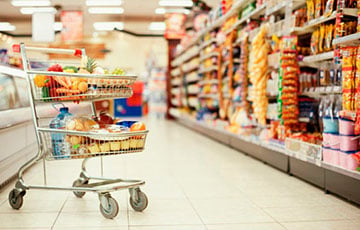
It was not possible to fulfill the plan to increase the share of domestic goods.
By the end of 2030, the share of domestically produced goods in the retail turnover of Belarus should be at least 60%. This was reminded by Deputy Minister of Antimonopoly Regulation and Trade Svetlana Korotkevich, speaking at a seminar on increasing sales of Belarusian products in the domestic market, reports "Belsat".
The Ministry of Antimonopoly Regulation and Trade of Belarus reported that the preliminary results of 2025 failed to fulfill the task to increase the share of domestic goods. At the same time, according to Svetlana Korotkevich, the measures taken jointly with retail chains allowed to "significantly slow down the decline in the index.
Deputy Minister emphasized that the achieved steps are not enough, and it's impossible to ensure the growth of the index without close cooperation between manufacturers and trade. According to her, it is the trade that best understands the structure of consumer demand - what goods, in what volume and at what price consumers are ready to buy, and this information should be directly used in the formation of the range of Belarusian products.
Svetlana Korotkevich also noted that the task to increase the share of domestic goods is complicated against the background of active development of Internet trade. However, according to her, Belarusian manufacturers already have new products, which have been developed in cooperation with retail chains and are able to compete for customer demand.
We recall, according to the National Statistics Committee of Belarus, the share of domestically produced goods in retail turnover amounted to 54.9% in January-September 2025. This means that a little more than half of all retail purchases were made by Belarusian products.
The dynamics of the indicator remains negative. Compared to the first half of 2025, the share of domestic goods increased by only 0.3 percentage points, which indicates a very weak effect of the measures taken. In annual terms, the indicator, on the contrary, decreased by 2.8 percentage points, which indicates that Belarusian goods are being displaced by imports.
The most noticeable decline was recorded in the segment of non-food products, which is the key target of import substitution programs. Their share in retail turnover decreased to 35.1%, which is 3.2 p.p. less than a year earlier. We are talking primarily about furniture, household appliances, electronics, clothing and other durable goods.
The decrease occurred despite the existing programs of preferential lending, under which Belarusian non-food products can be purchased at a rate of 4% per annum.

Bank's name: Bank Millennium S.A.
Address: ul. Stanislawa Zaryna, 2A, 02-593, Warszawa
IBAN: PL97116022020000000216711123
SWIFT: BIGBPLPW
Name of the account holder: Fundacja “KARTA ‘97”
Purpose/title of payment: Donation for statuary aims
You can contact us by the e-mail [email protected]