
Another Country Releases Political Prisoners Under US Pressure
12- 11.01.2026, 16:02
- 17,214
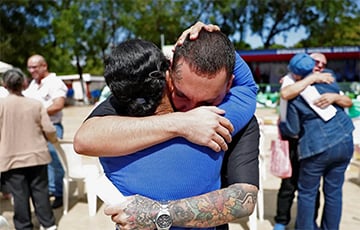
The country's government has waged an ongoing campaign of repression since the crackdown on mass protests.
Nicaraguan authorities said they are releasing prisoners after pressure from the US. This is according to Associated Press.
The release comes amid increased U.S. pressure on the country's President Daniel Ortega.
The U.S. Embassy in Nicaragua said Jan. 9 that Venezuela has taken an important step toward peace by releasing political prisoners. At the same time, the U.S. diplomatic mission regretted that in Nicaragua "more than 60 people remain illegally detained or missing, including pastors, religious workers, the sick and the elderly."
Already on January 10, Nicaragua's Interior Ministry reported that "dozens of people held in the National Penitentiary System are returning to their homes and families." It is still unclear exactly who has been released and under what conditions.
The country's government has been waging an ongoing campaign of repression since 2018, when massive social protests were brutally crushed. Nicaraguan authorities jailed opponents, religious figures, journalists and others and then expelled them from the country, stripping hundreds of people of Nicaraguan citizenship and property. Since 2018, more than 5,000 organizations, mostly religious, have been shut down and thousands of people have been forced to flee the country. Nicaragua's government has often accused critics and opponents of plotting against the government.
In recent years, the government has released hundreds of imprisoned political opponents, critics and activists. They have been stripped of their Nicaraguan citizenship and sent to other countries such as the U.S. and Guatemala. Observers called this an attempt to "flush out" the opposition and mollify international human rights criticism. Many of these Nicaraguans have found themselves in a state of de facto "statelessness."
The U.S. State Department's Bureau of Western Hemisphere Affairs again sharply criticized the Nicaraguan government on January 10 on social network X.
"Nicaraguans voted for a president in 2006, not an illegitimate lifetime dynasty. Rewriting the Constitution and suppressing dissent will not erase Nicaraguans' desire to live free from tyranny," the bureau said.
Danny Ramirez-Ayerdis, executive secretary of the Nicaraguan human rights organization CADILH, said he had mixed feelings about the announced release.
"On the one hand, I am glad. All political prisoners are subjected to some form of torture. But on the other hand, I know that these people will continue to be persecuted, they will be monitored and watched by the police, and the same will happen to their families," the human rights activist said.
The release of the prisoners was a response to pressure from the United States, Ramirez-Ayerdis said.
"Inside the regime, there is no doubt that there is a serious fear that the United States can completely dismantle it," he said.
Reminder, on January 8, the Venezuelan National Government announced the beginning of the process of releasing "a significant number of Venezuelan and foreign citizens" from prisons. The very next day people began to be released from prisons.
According to human rights activists, as of December 29 last year, 863 political prisoners, including 86 foreigners, were held in Venezuela's detention centers.

Bank's name: Bank Millennium S.A.
Address: ul. Stanislawa Zaryna, 2A, 02-593, Warszawa
IBAN: PL97116022020000000216711123
SWIFT: BIGBPLPW
Name of the account holder: Fundacja “KARTA ‘97”
Purpose/title of payment: Donation for statuary aims
You can contact us by the e-mail [email protected]