U.S. State Department And Intelligence Suggested That Trump Should End The Maduro Regime
17- 30.09.2025, 19:22
- 15,354
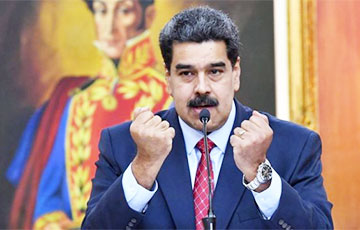
Clouds are gathering over "Lukashenko's friend".
Advisers to Donald Trump have stepped up discussions of options to force Venezuelan dictator Nicolas Maduro from power, The New York Times reports. According to the publication's sources, the campaign is being overseen by State Department chief Marco Rubio, who also serves as national security adviser.
Officially, the White House has not commented on the information.
Rubio's premise is that Maduro is the illegitimate head of Venezuela, is involved in drug trafficking and actually heads a criminal terrorist group that poses a threat to the United States. He relies on CIA intelligence and a 2020 DOJ indictment for drug trafficking. Rubio's ideas are backed by CIA Director John Ratcliffe and domestic policy adviser Steven Miller.
For Rubio, the son of Cuban immigrants, regime change in Venezuela has special personal significance - removing Maduro from power would weaken its close ally, the Cuban government. That, in turn, would win him votes in Florida, where there are many Cuban and Venezuelan migrants.
The U.S. State Department has already increased the reward to $50 million for any information leading to the arrest of Venezuela's president. "Maduro is not the legitimate leader of Venezuela; he is a fugitive from American justice, undermining regional security and poisoning Americans, and we want him brought to justice," State Department deputy spokesman Tommy Pigott commented.
According to NYT sources, the Pentagon is considering military scenarios against Venezuela, but there is no final approval from the administration yet.
Although Trump is already talking openly about a new military campaign in the Caribbean. "We have begun to use the might of the U.S. military to destroy Venezuelan terrorists and drug trafficking networks led by Nicolas Maduro," he said, speaking at the U.N. General Assembly.
In July, Trump signed a secret executive order authorizing the use of force against drug cartels. The Pentagon has already increased its troops in the region by 6,500 and assembled a flotilla of ships in the Caribbean Sea. In recent weeks, the U.S. military has been striking boats allegedly linked to Venezuelan drug trafficking. Three such operations have been announced since Sept. 2, in which at least 17 people have been killed.
In parallel, the U.S. has begun preparing a political replacement for the Maduro regime. In May, Rubio met with Venezuelan opposition figures, including prominent activist Maria Corina Machado. Her adviser Pedro Urruchurtu said a detailed action plan has already been drawn up for the first 100 hours after Maduro's departure, including a transfer of power to Edmundo Gonzalez, a presidential candidate in the 2024 election. During his first term, Trump unsuccessfully supported Venezuelan opposition attempts to oust Maduro and imposed sanctions on Venezuela.
In terms of international law, intervening without the consent of a country's authorities or authorization from the UN Security Council is considered illegal. However, the U.S. under the Biden administration has recognized Gonzalez as the legitimate winner of the presidential election. If he seeks help, the Trump administration could use that as a legal justification for military action. A senior U.S. official speaking to the NYT compared a possible forceful change of power in Venezuela to the 1989 operation in Panama, when the U.S. military captured President Manuel Noriega.

Bank's name: Bank Millennium S.A.
Address: ul. Stanislawa Zaryna, 2A, 02-593, Warszawa
IBAN: PL97116022020000000216711123
SWIFT: BIGBPLPW
Name of the account holder: Fundacja “KARTA ‘97”
Purpose/title of payment: Donation for statuary aims
You can contact us by the e-mail [email protected]