"This Is One Of Moscow's Biggest Geopolitical Defeats In Recent Times"
10- 30.09.2025, 20:00
- 19,656
Russia is rapidly losing influence in the post-Soviet space.
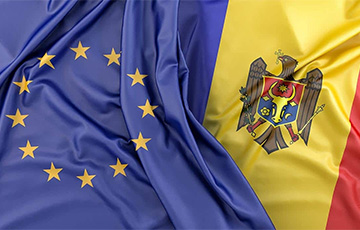
The ruling pro-European party of Maya Sandu won the parliamentary elections in Moldova on September 28.
Is this a big defeat for the Kremlin? This is the question Charter97.org asked Ukrainian political scientist, professor at Taras Shevchenko National University of Kyiv Petr Oleshchuk:
- Judging by the resources that the Kremlin invested in this situation, I think that yes, it is a significant defeat. It is obvious that in Moldova the hybrid warfare technologies used by Russia in the post-Soviet space (and already in Europe) did not work. Although serious efforts were made, huge resources were allocated.
There was a powerful information war with the use of any means, including Internet communications, even by the Moscow Patriarchate as a tool for spreading disinformation that the European vector would mean some catastrophic results for Moldova.
So yes, this is one of the biggest geopolitical defeats of Moscow in recent times. It fits quite well with the recent trend, when Russia is rapidly losing influence in the post-Soviet space, spending all its resources on the war against Ukraine.
Moscow has already lost its influence on Armenia, Azerbaijan. In Central Asia too, to put it mildly, everything is not so simple, although formally local leaders and regimes demonstrate loyalty, but nevertheless we see them moving away from Moscow more and more rapidly.
It was the last attempt to leave Moldova in Moscow's sphere of influence. Now Moldova, like Ukraine, will move towards joining the European Union. At this stage, we can say that Moscow has lost Moldova.
- How soon can Chisinau join the EU?
- The main problem here is the following. Both Moldova and Ukraine have come to the stage of opening clusters of negotiations. Six clusters, they are opened, negotiations are conducted gradually. After that, there remains actually only the vote on the country's accession to the European Union. I mean the ratification of the relevant agreement by all members of the European Union. Hungary is blocking the opening of clusters for Ukraine, but at the same time Ukraine and Moldova are moving and have been moving earlier in parallel towards joining the European Union. There is a rather delicate moment here, because European bureaucrats insist that Ukraine and Moldova should move together in the future.
To avoid separating Moldova into a separate case, so that Ukraine would not be left somewhere behind because of Hungary's positions. That's why the tools are being developed now, so that it would be possible to bypass Hungary somewhere. I don't know what will come out of it, but in any case the procedure is as follows: opening of clusters, negotiations, voting, joining.
I should note that I didn't expect that there would be such a confident victory of Sandu.
I still thought that there might be some need to form a coalition. It's always a drag, it's always complicated and so on. To be honest, I did not expect a mono-majority.
But it is obvious that all these Russian technologies are not working as well as the Kremlin thinks. The Russians threw away a lot of money. But it didn't work.

Bank's name: Bank Millennium S.A.
Address: ul. Stanislawa Zaryna, 2A, 02-593, Warszawa
IBAN: PL97116022020000000216711123
SWIFT: BIGBPLPW
Name of the account holder: Fundacja “KARTA ‘97”
Purpose/title of payment: Donation for statuary aims
You can contact us by the e-mail [email protected]