Reuters: Russia's $350 Billion In Frozen Assets Will Be Used For Reparations To Ukraine
6- 23.09.2025, 9:59
- 6,142
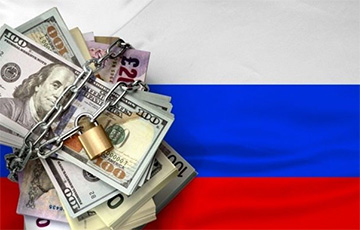
The EU is preparing a new aid mechanism for Kiev.
The EU is preparing a new mechanism of assistance to Ukraine at the expense of Russian assets. It is about a reparation loan, which will be returned only after payments from the Russian Federation.
This is reported by Reuters.
Frozen Russian assets
After Russia invaded Ukraine in 2022, the United States and its allies banned transactions with the Russian Central Bank and the Finance Ministry. As a result, up to $250 billion in assets were frozen in the European Union.
The Russian Central Bank previously confirmed that about $300-350 billion in total had been blocked. These funds include foreign currency reserves, gold and government bonds, about half of which were held in the West.
The majority of the assets are concentrated in Europe, many of which have already been converted into cash and are held at the Belgian depository Euroclear. The Russian Central Bank did not publish exact data on the structure of the frozen funds.
Russian Currencies and Investments
As of early 2022, the Russian Central Bank held about $207 billion worth of assets in euros, $67 billion in US dollars and $37 billion in sterling.
In addition, it held 36 billion yen, 19 billion Canadian dollars, 6 billion Australian dollars and 1.8 billion Singapore dollars in reserves.
Also held approximately 1 billion Swiss francs. These assets were placed in securities, deposits and correspondent accounts. The largest investments were in sovereign bonds of China, Germany, France, the UK, Austria and Canada.
Russia held foreign exchange reserves domestically. Its yuan investments are held in China.
The European Union
EU is discussing the idea of using frozen Russian assets to provide Ukraine with a "reparation loan." This loan would be repaid only after Ukraine receives compensation from Russia.
The scheme envisages replacing Russian assets with bonds without a coupon issued by the European Commission. Such a mechanism could be implemented by a coalition of individual EU countries to avoid a possible veto by Hungary.
The interest from the assets was previously used to service a $50 billion loan to Ukraine. However, the amount of interest accrued has begun to decline.
According to Euroclear, it held 194 billion euros of Russian assets as of June 30, generating 2.7 billion euros of interest for the first half of 2025. By comparison, it earned 3.4 billion euros of interest from 173 billion assets in the same period in 2024.
Red bankers have warned that the precedent of sovereign asset confiscation could undermine confidence in Western government bonds. Belgian authorities also pointed out that it could lead to legal action against Euroclear and even cause a financial crisis.
Euroclear said it was aware of the European Commission's proposal and was awaiting further information.

Bank's name: Bank Millennium S.A.
Address: ul. Stanislawa Zaryna, 2A, 02-593, Warszawa
IBAN: PL97116022020000000216711123
SWIFT: BIGBPLPW
Name of the account holder: Fundacja “KARTA ‘97”
Purpose/title of payment: Donation for statuary aims
You can contact us by the e-mail [email protected]