

Forbes Explained What Europe Can Shoot Down Russian UAVs With
6- 11.09.2025, 9:47
- 5,688
Such incidents are likely to continue.
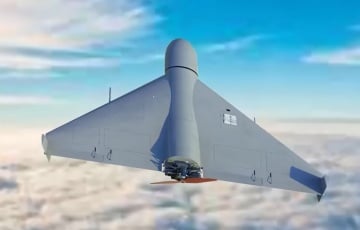
On the night of September 10, Russia attacked Ukraine with more than 400 "Shaheds", many of which flew through Polish airspace, and one of them hit a house in Wyrzyki (Wlodawa County) at all. As Forbes writes, such incidents are likely to continue, so any future war will continue with even more waves of drone attacks.
The piece reminded that the DSEI defense industry exhibition opened in London, where the topic of defending Europe against drones attracted a lot of attention, and many anti-drone guns were presented there.
At the same time, the CEO of German arms manufacturer Rheinmetall Armin Papperger expects an order worth several billion euros from the German government for hundreds of Skyranger anti-drone guns. Such an amount is one of the reasons why governments are not as quick to procure urgently needed anti-drone assets.
In turn, as Forbes writes, Ukraine is using weapons that cost 100 times less to shoot down Shaheds, suggesting that Europe's defense procurement is in trouble.
According to Dr. Jack Watling of the British defense think tank RUSI, European defense equipment is "quite universally overpriced," but the reasons for this are complex and harder to solve than one might think.
"Existing air defense missile systems cannot deal with the threat of small drones. Expensive, high-performance surface-to-air missiles like Patriot can easily deal with fast airplanes, helicopters and cruise missiles, but they are bought in small quantities. The U.S. produces only 650 PAC-3 Patriot missiles in an entire year, while Russia can launch more Shaheds overnight, which would instantly deplete its stockpile. Hence the renewed interest in old-fashioned anti-aircraft guns with lots of ammunition," the piece analyzes.
It is known that Shaheds are easier to shoot down alone, but stopping hundreds of such drones overnight is a difficult task. Forbes emphasizes that Gepard self-propelled anti-aircraft guns, made in Germany in the 1970s, have been particularly effective in this matter.
"Ukraine has purchased about 120 Gepards from Germany and the United States via Jordan, although the last one was decommissioned by the Bundeswehr in 2012. "Cheetahs have found new life on the front lines against Shaheds: slow drones traveling in a straight line are easy targets. "Cheetahs are now adorned with rows of tags about downed targets, and one gunner claims to have already shot down 28 Shaheds," the piece said.
In the meantime, Germany stopped producing Cheetahs in 1980 and replaced them with the Skyranger, a dual 30mm radar-guided gun turret manufactured by Rheinmetall.
"The weapon system costs about $12 million, and Papperger, speaking in August, envisioned an order for about 500 units, which could bring the company $6 billion," the piece adds.
In addition, Ukraine is bolstering its air defense against Shahed with domestically produced Sky Sentinel turrets. The Sky Sentinel is a self-contained trailer that carries multiple machine guns with cameras and artificial intelligence software. Each Sky Sentinel costs $100,000, or about 1 percent of the cost of the Skyranger.
Watling added that the two systems cannot be compared, as the Skyranger is designed for mobile warfare with expeditionary forces, not homeland defense, while Ukraine has other advantages.
"The cost difference reflects relative labor costs, compliance costs, and the fact that the Ukrainian company does not charge a large markup," the expert explained.
He said that because the Sky Sentinel is part of a nested defense system with radars and other sensors, it does not need all of the Skyranger's capabilities.
Watling said the difference between the two systems is less than it appears, but he stressed that "European defense equipment is quite expensive."
"Reasons for this include regulatory hurdles and the fact that suppliers, unsure whether orders will continue after the political situation changes, want to recoup costs quickly rather than rely on long-term arrangements. There is also the simple motive of wanting to make as much profit as possible," Forbes explained.

Bank's name: Bank Millennium S.A.
Address: ul. Stanislawa Zaryna, 2A, 02-593, Warszawa
IBAN: PL97116022020000000216711123
SWIFT: BIGBPLPW
Name of the account holder: Fundacja “KARTA ‘97”
Purpose/title of payment: Donation for statuary aims
You can contact us by the e-mail [email protected]