

Politico: What Was Putin Trying To Say With His Drone Attack On Poland?
16- 11.09.2025, 9:11
- 11,814
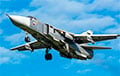
This is the first time NATO forces have interacted directly with Russia.
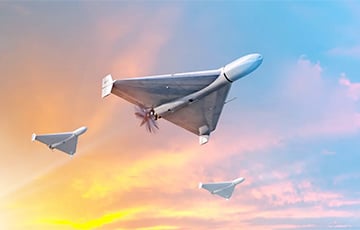
Russian drones in Poland marked an escalation of hostilities with Europe. However, the question remains what Russian dictator Vladimir Putin wanted to achieve by doing so.
As Politico writes, Prime Minister Donald Tusk said 19 drones flew into Polish airspace, four of which were shot down. Warsaw was clear on who was to blame. "There is no doubt about Russia's aggressive intentions," Tusk said.
The publication recalled that this was the first time so many drones had been spotted over a NATO country, and the first time they had been shot down.
Polish Foreign Minister Radoslaw Sikorski said, "According to the assessment of the Polish and NATO air forces, they did not deviate from their course, but deliberately attacked."
This view was echoed by other NATO countries:
"There is no reason to believe that it was a course correction error or anything like that," German Defense Minister Boris Pistorius said.
Fabian Hoffman, a missile and nuclear strategy expert at the University of Oslo, said the incident had all the hallmarks of deliberate action. "Judging by the flight path, these drones were following a controlled trajectory, so it looks like Russia did it deliberately," he said.
But there were a few reservations.
British Defense Minister John Healey said, "There are conflicting reports and there is no clear assessment yet of what was behind the drone attacks or what their intentions were. Whatever their intentions, they were dangerous and reckless, and they violated Poland's and NATO's sovereign airspace."
"This is Moscow's message that it is not interested in the peace provided by Western support forces, nor is it interested in a cease-fire," wrote Timothy Ash, an economist who covers Central Europe.
"Russia has no respect for Europe. And the reality is that things are not going well for Russia, especially economically. That's why the Kremlin has decided to escalate now - it sees a window of opportunity," Hoffmann said.
The publication also pointed out that from 19 drones, NATO's military was only able to shoot down four.
"This is not a resounding success for Poland and NATO," the publication wrote.
It also shows that throughout the war in Ukraine, NATO has not done enough to prepare for a Russian attack, which analysts have consistently warned is a real threat, said Phillips O'Brien, a professor of strategic studies at the University of St. Andrews:
"Yesterday's 'training' attack by the Russians on Poland (which was exactly that) shows that the alliance states have not bothered to properly prepare not only for future war, but for the war that is staring them in the face right now," he said.
The publication wondered, how might NATO respond? And the first thing that comes to mind is a serious strengthening of the air defenses of the Alliance countries.
There is also a need for large-scale multinational air defense exercises for proper coordination in all border states.

Bank's name: Bank Millennium S.A.
Address: ul. Stanislawa Zaryna, 2A, 02-593, Warszawa
IBAN: PL97116022020000000216711123
SWIFT: BIGBPLPW
Name of the account holder: Fundacja “KARTA ‘97”
Purpose/title of payment: Donation for statuary aims
You can contact us by the e-mail [email protected]