


Putin's Commodity Economy Is Cracking At The Seams
2- 30.08.2025, 14:29
- 5,536
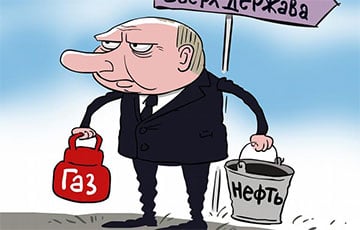
All of Russia's largest oil companies have reported a collapse in profits.
Falling oil prices, a new wave of sanctions and a strong ruble have hit the Russian economy in the raw materials heart.
All of the country's largest oil companies have seen their profits fall 2-3 times by the end of the first half of 2025, according to reports published last week, writes The Moscow Times.
Rosneft, which accounts for every second barrel extracted from the subsurface, reported a threefold drop in profits attributable to shareholders, from 773 billion rubles to 245 billion rubles.
The OPEC countries actively increased production, which dropped global prices, and in addition, "there was a widening of discounts on Russian oil in connection with the tightening of sanctions restrictions of the EU and the United States," explained the situation, the head of the company Igor Sechin.
Lukoil, which ranks second in oil production, lost half of its profit: it amounted to 287 billion rubles against 590 billion a year earlier. The company's revenue fell by 17%, EBITDA - by 1.6 times.
Gazprom Neft's profit fell by 54%, to 150 billion rubles, and revenue fell by 12%, despite the fact that the company increased production by 5% and increased oil refining by 4%.
Surgutneftegaz, which ranks fourth in terms of production, became unprofitable: it lost 452.7 billion rubles in six months. Surgut's finances were hit by the strengthening of the ruble, which devalued the company's giant "currency cushion" of about $70 billion.
Tatneft's profit almost tripled, to 54.2 billion rubles, and Russneft's - 3.2 times, to 11.8 billion.
The Russian oil and gas sector, on which every third ruble in the budget depends, lost 50.4% of its profits, according to Rosstat data: its balanced financial result for six months fell to 1.264 trillion rubles. At the same time, 45% of companies ended the half-year with a loss - by 749.5 billion rubles.
In Khanty-Mansiysk Autonomous District, the main oil region, which provides 40% of the country's total production, the oil industry has become unprofitable: companies worked in the minus by 506.3 billion rubles, according to Tyumenstat data for January-May.
"The results of companies in the oil and gas sector remain under pressure from the strong ruble and low oil prices," - wrote analysts "Tsifra Broker". A barrel of Urals, which cost almost $70 at the beginning of the year, fell in price to $52.1 by May and cost $59.8 in June. Its ruble price for 6 months collapsed almost 30%, to 4.7 thousand rubles per barrel.
Additional barriers to the production and export of energy resources creates tougher sanctions against the Russian fuel and energy sector, says Elena Galeyeva, a researcher at the laboratory of sectoral markets and infrastructure of the Gaidar Institute. There is an embargo of G7 countries against "oil"; sanctions have been imposed on shipping and logistics by blocking the "shadow fleet"; technological embargo and financial restrictions in the form of blocking settlements in dollars are in force; pressure on the banks of third countries is increasing, Maltseva lists.
This year, the relations between oil producers and importers have been destabilized by the threat of secondary sanctions - as a result, the oil sector has faced restrictions on sales, experts at the Gaidar Institute say: exports to China in the first half of the year fell by 11% in physical volume, and in money - by 24%.
Besides Asian countries, where more than 80% of exports go, almost no one buys Russian crude oil. But it is difficult to increase flows in the eastern direction: there are not enough tankers, and ports are overloaded, experts say.
"The decrease in oil companies' income is primarily due to the fall in the cost of oil on the world market and the strengthening of the ruble," explains leading analyst of the National Energy Security Fund Igor Yushkov. - Because of this, export revenues have fallen: companies have begun to earn less by selling the same volume of products abroad.

Bank's name: Bank Millennium S.A.
Address: ul. Stanislawa Zaryna, 2A, 02-593, Warszawa
IBAN: PL97116022020000000216711123
SWIFT: BIGBPLPW
Name of the account holder: Fundacja “KARTA ‘97”
Purpose/title of payment: Donation for statuary aims
You can contact us by the e-mail [email protected]