

"'Friendship' Could Hit Fitzo"
4- 28.08.2025, 12:10
- 3,860

Dependence on Russia and Hungary makes Slovakia vulnerable.
Ukrainian drones are increasingly disrupting nodes of Russia's Druzhba oil pipeline, which remains vital for Hungary and Slovakia.
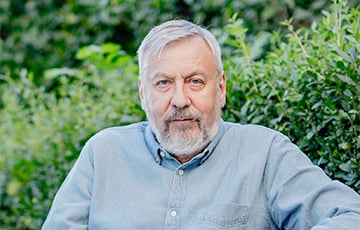
What do the disruptions and possible complete cessation of oil supplies via Druzhba mean for Slovakia? The website Charter97.org talked to Slovak political scientist and president of the Institute of Social Problems (IVO) (Bratislava) Grigory Mesejnikov about this:
- At the beginning of this year Slovakia got into a serious conflict with Ukraine. More precisely, we are talking about the position of Prime Minister Robert Fitzo. He sharply criticized Kiev, accused it of undermining Slovakia's economic stability and so on. So far, in the issue of Slovakia's dependence on Russian energy resources, we see a common situation with Hungary. The main oil refinery in Bratislava, Slovnaft, is owned by a Hungarian concern. Therefore, of course, there is dependence. But so far, frankly speaking, I have not registered such critical reactions as were heard at the beginning of this year in connection with the termination of Russian gas supplies through Ukraine.
There, however, the situation was somewhat different: Ukraine warned in advance that from January 1, 2025 Russian gas would not be supplied to Europe, including Slovakia and Central Europe. Here is a different story. As far as I know, in Hungary this topic has caused quite tough and critical discussions.
Hungarian Foreign Minister Peter Szijjártó claimed that Ukraine was shelling the oil pipeline on Russian territory, thus depriving Hungary of access to fuel. This is a typical position of politicians who are not on Ukraine's side. Robert Fitzo is also siding with Russia in interpreting the causes of the war. But so far, watching the situation, I have not noticed any indignant reactions in Slovakia to Ukraine's actions: they say it is undermining the economic stability of our country. My assumption is that perhaps there is a kind of "division of labor" at the moment: Hungary is reacting, while Slovakia is waiting and will join in if necessary.
- How realistic is the prospect of a complete halt to Russian oil supplies via the southern branch of Druzhba and what alternatives do Slovakia and Hungary have?
- Of course, it is not a hundred percent dependence. There are alternative sources, there is just no political will, as far as I understand, to look for them.
Infrastructure exists: oil and gas pipelines are laid in Europe. But the current Slovak government has wasted time instead of looking for alternatives. It hoped that with Russia "everything will somehow be sorted out". I don't know how much these people even realize that what is going on to the east of Slovakia is not a short-term crisis, but a full-scale war. A war of a state that has entered into confrontation not only with Ukraine, but with the whole world - with the EU, NATO, and the West. This is a conflict with long-term and severe consequences.
The Slovak government does not realize this, and the opposition criticizes Robert Fitzo for this whole "gas scam" at the beginning of the year: the experts warned, but you did nothing. But here everything is still complicated by the dependence on Hungary: the key asset is in the hands of the Hungarian concern. Even if Slovakia decided to give up Russian oil, it would cause serious difficulties without the agreement of the Hungarian owner.
- Could the oil crisis change politics in Slovakia and Hungary?
- To be honest, I don't think so. This is not the kind of issue that determines electoral preferences. I admit that Robert Fitzo will use every opportunity to hold on to his stagnant and even falling popularity. Therefore, a "second series" of attacks on Ukraine is possible: first there was a "gas scam", now there may be an "oil scam". But this will not lead to a change of policy regarding the Russian-Ukrainian war.
On the contrary, it may increase criticism of Ukraine and, indirectly, increase support for Russia. They say, "Ukraine is punishing us," "we had Russian oil by agreement," and so on. Slovakia's position in the war is unlikely to change. And it will not lead to a change of power either.
Yes, there may be economic consequences: rising gasoline prices, fuel shortages, but they will only complicate the government's position. The situation in Slovakia is already difficult: the ruling coalition cannot agree on the consolidation of public finances - the state budget and the budgets of local governments. The negative consequences of the crisis only aggravate these problems.
But the key factor will remain political: the government's policy of tightening the regime and restricting civil liberties. At the same time, part of the coalition's electorate expects the authorities to pursue a generous social policy. This may hit the rating, but Fitzo has his own "damage control" - he will blame everything on Ukraine.
If gasoline prices rise or there is a shortage of fuel, Ukraine will be blamed.

Bank's name: Bank Millennium S.A.
Address: ul. Stanislawa Zaryna, 2A, 02-593, Warszawa
IBAN: PL97116022020000000216711123
SWIFT: BIGBPLPW
Name of the account holder: Fundacja “KARTA ‘97”
Purpose/title of payment: Donation for statuary aims
You can contact us by the e-mail [email protected]