

On The Side Of The Road
2- 22.08.2025, 18:28
- 8,552
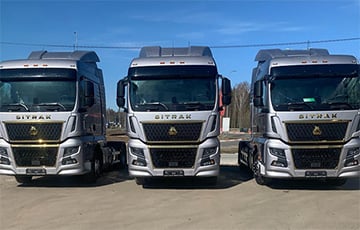
How and why the truck market in Russia has collapsed.
The Russian truck equipment market is experiencing a serious crisis. After an abnormal surge in 2023, when sales grew by 71%, the industry is experiencing a sharp, even precipitous decline. Already in 2024 the sales of new trucks decreased by 19%, and in the first half of 2025 - collapsed: 56% of vehicles sold. The segment of long-haul tractors suffered particularly badly, where the decline reached 70%.
At first glance, it may seem that the industry is simply returning to "normal" after overheating. However, real sales have already fallen below the average annual values of the last ten years (70-80 thousand cars). Back in May, market forecasts under the pessimistic scenario assumed the market decline to 60 thousand trucks, and in 2025, now even this benchmark seems overstated. Recently, Kamaz published its own estimate: according to their new, already optimistic scenario, the market may be limited to only 45 thousand vehicles.
The severe contraction of demand has already forced the largest Russian manufacturers of trucks and buses to revise their production plans. "Kamaz, Gorky Automobile Plant (GAZ) and Pavlovsk Bus Plant (PAZ) have reduced their working week to four days or completely stopped the assembly line. Thousands of unsold vehicles are piling up in warehouses: according to the general director of Kamaz, "it is possible to produce nothing at all." The problem is protracted, and there are no factors on the horizon that could quickly change the situation.
Import substitution in reverse
After the withdrawal from the Russian market of the leading European truck manufacturers (Scania, MAN, Volvo Trucks, Daimler Trucks, DAF, Iveco and Renault Trucks), many people thought that this would open up opportunities for Russian companies to restore and strengthen their positions. However, the situation developed in the opposite direction: the vacated niche was almost immediately occupied by Chinese brands - Shacman, Sinotruk (Sitrak and Howo brands), FAW, Dongfeng, JAC and others. These companies took advantage of the infrastructure left behind by the Europeans: they quickly integrated into logistics chains, took over dealerships and service centers, and established direct deliveries. But the main thing is that they did not build factories and localize production, but relied on mass import of finished trucks from Chinese factories.
This model proved to be effective in the situation of equipment shortage in 2022-2023. But with falling demand and declining freight transportation, it quickly led to a logical result: the market was oversaturated. Chinese manufacturers not only replaced the departed Europeans, but also began to squeeze Russian players. "Kamaz found itself in a vulnerable position, losing out on price, truck equipment and leasing terms. The market has overheated, and the oversupply is putting pressure on everyone - both Chinese importers and local manufacturers.
In response to the increasing Chineseization of the industry, Kamaz has sought intervention at the state level. Earlier this year, Rosstandart withdrew the vehicle type approval (VTA) of one of the best-selling models, the Shacman SX3258 dump truck, effectively banning its import. The Chinese side's losses are estimated at about 115 billion rubles. The ban was followed by other models: the extended list includes trucks of Dongfeng, Foton, FAW and Sitrak brands. Formally, the restrictions were introduced due to violations of safety requirements, but in fact - in the interests of protecting domestic manufacturers.
But the real impact of protectionist measures remains limited. Under the conditions of sanctions pressure, confrontation with the West and growing technological dependence on China, from where the bulk of automotive components and spare parts are imported, one cannot expect full-scale localization of Chinese production in Russia in the foreseeable future.
Demand under pressure
The rapid decline in demand for trucks in Russia is due to a combination of factors, among which Chinese imports are only part of a broader problem. At least three systemic factors are exacerbating the situation:
The cost of leasing. The high key rate of the Bank of Russia has significantly increased the cost of lease financing. According to industry experts, monthly payments have increased by 25-30%, which makes fleet renewal financially unaffordable for the majority of transportation companies. Many operators have started to return vehicles to leasing companies en masse. In the first five months of 2025, the number of new truck leasing transactions more than halved (to about 3,000 vehicles), while returns reached 1,200 vehicles per month. Lessors themselves are also having difficulty selling the released equipment.
Decrease in business activity. The economic slowdown and falling demand in key sectors - construction, metallurgy, coal mining and a number of manufacturing industries - led to a 12-15% drop in freight transportation tariffs in the first quarter of 2025. Recovery is extremely slow. And the cost of transportation continues to rise: the utilization fee has been raised, the cost of repair and maintenance of vehicles is growing, and fines in some regions for damage to roadbeds have increased. According to various estimates, up to 30% of trucks are idle, carriers incur record losses and are forced to lease vehicles to at least partially cover costs.
Failure to renew and expand the fleet. Under the current market conditions investments in purchase of new equipment become economically inexpedient. A new long-haul tractor with a semi-trailer requires monthly expenses, which cannot be recouped at current transportation tariffs. More and more companies prefer to extend the service life of the existing equipment, betting on repair and maintenance of the fleet, refusing to invest in the purchase of new vehicles.
The industry as a mirror
The situation in the trucking industry is not an isolated episode, but a clear reflection of the structural distortions faced by the Russian economy in the new geopolitical conditions. The departure of Western companies has left behind not only a technological void, but also an institutional vacuum that Russian manufacturers have been unable to fill. Instead, the resulting niche was quickly occupied by Chinese brands - but not through localization, but through direct imports and hard, uncontrolled expansion.
Russian manufacturers, already under the pressure of sanctions, found themselves in a double vulnerability: on the one hand - technological dependence on Chinese components and parts, on the other - growing competition from Chinese manufacturers in their own market. Under such conditions, strategic initiatives such as import substitution lose their sustainability: without access to advanced technologies, capital and stable demand, industries stall.
The authorities have less and less room for maneuver. Protective measures - from a ban on imports of Chinese machinery to subsidizing local manufacturers - have only a temporary effect and may provoke retaliatory steps by Beijing, including restrictions on the supply of critical components from China. These measures require more and more budgetary resources, but are unable to solve the fundamental problems of the industry caused by the withdrawal of European partners and sanctions.
The trucking industry has become a mirror of these processes. It shows that in the conditions of prolonged economic isolation the reliance on "quick replacement" of Western companies by Eastern partners leads neither to modernization nor to sustainable growth. China comes not to build but to sell, and it does so without regard for the interests of Russian producers, displacing them even in the domestic market.
Vakhtang Partzvania, The Moscow Times

Bank's name: Bank Millennium S.A.
Address: ul. Stanislawa Zaryna, 2A, 02-593, Warszawa
IBAN: PL97116022020000000216711123
SWIFT: BIGBPLPW
Name of the account holder: Fundacja “KARTA ‘97”
Purpose/title of payment: Donation for statuary aims
You can contact us by the e-mail [email protected]