


Russia May Permanently Lose Several Large Refineries
13- 22.08.2025, 17:41
- 9,562
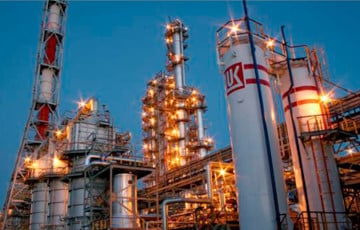
Ukrainian drone strikes have crippled Russian oil refining.
Ukrainian drone strikes on Russian oil refineries, which resumed in August and affected at least 7 major refineries, could cause irreparable damage to Russian oil refining, warns Sergey Vakulenko, a senior fellow at the Carnegie Endowment for International Peace.
Since the beginning of the month, the Syzran, Novokuibyshevsk, Saratov and Volgograd refineries in Russia have been completely shut down due to UAV attacks. Rosneft's Ryazan refinery, which supplies fuel to Moscow and the region, shut down half of its capacity. The Slavyansk, Afipsky and Novoshakhtinsky refineries were also attacked by drones.
These refineries could be put out of operation for a long time or "even permanently," Vakulenko told Financial Times.
Last year, Ukrainian drone strikes had already dropped oil refining in Russia to a 12-year low of 267 million tons. But then the strikes were numerous but scattered and affected, as a rule, one refinery at a time, Vakulenko notes. Now, he points out, the campaign is aimed at all refineries in the key regions of consumption and refining and may lead to "unprecedented" consequences for the fuel market.
The UAV strikes hit the refineries that are among the top largest in the country - Volgograd (Lukoil, 14.8 million tons per year) and Ryazan (Rosneft, 13.8 million tons per year). As a result, in just over two weeks, at least 10% of refining capacity has been knocked out, estimates Finam analyst Sergey Kaufman.
To cover the shortage, the government has imposed a complete ban on the export of gasoline from Russia. This should add about 150,000 tons of fuel to gas stations. "However, even with the export ban, domestic demand is not fully satisfied," Kaufman states.
The gasoline shortage has emerged in Crimea, where authorities have returned to the Soviet practice of selling fuel on coupons. Gasoline has disappeared from gas stations in Transbaikalia, the Kurils and Primorye, where drivers have to stand in lines for hours to fill up. Exchange prices for gasoline have jumped by 40-50% since the beginning of the year and have been rewriting historical records throughout August: the cost of Ai-92 reached 72.6 thousand rubles per ton, and Ai-95 - 82.2 thousand.
The situation is aggravated by the fact that no one knows how much gasoline is actually produced in Russia, Kaufman points out: last year the government classified statistics on refineries.
Problems at the refineries are also connected with sanctions, which prevent their normal repair, the head of the Ministry of Energy Sergey Tsivilev admitted in July.
Almost all major Russian refineries were built and modernized with the participation of European and American companies. However, Western equipment for refineries immediately fell under sanctions - as part of the first package for the invasion of Ukraine in February 2022. In the 2000s, foreign design solutions accounted for 80% of oil refining equipment, and even during the Soviet era, refinery technologies were purchased from the West, in particular catalytic reforming units, noted earlier Sergey Kondratyev, deputy head of the economic department at the Institute of Energy and Finance.
The refineries have not been able to switch to domestic products despite the government's import substitution policy. Kondratyev estimates that by 2024, only 45% of refinery pumping equipment, 40% of compressors and only 30% of reactors and coke chambers were domestic.

Bank's name: Bank Millennium S.A.
Address: ul. Stanislawa Zaryna, 2A, 02-593, Warszawa
IBAN: PL97116022020000000216711123
SWIFT: BIGBPLPW
Name of the account holder: Fundacja “KARTA ‘97”
Purpose/title of payment: Donation for statuary aims
You can contact us by the e-mail [email protected]