

Putin Goes To Alaska: What To Expect From This Meeting
5- 12.08.2025, 16:02
- 6,110
Will there be a "big breakthrough"?
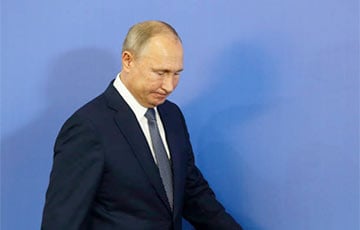
U.S. President Donald Trump has announced that he will meet with Putin on Friday, August 15, in Alaska.
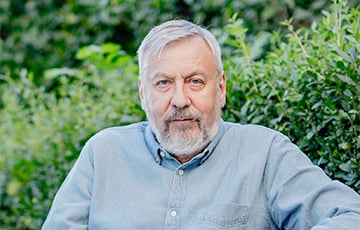
What can we expect from this meeting? This is the question Charter97.org asked Alexander Shulga, a doctor of sociology and director of the Ukrainian Institute for Conflict and Russian Analysis (ICAR):
- This will be a summit that may be just an opportunity for dialog. If some important practical decisions will be taken there, they may determine not only the future of Ukraine, but also of Europe as a whole, as well as new rules of the game.
If events follow a negative scenario, it will seriously worsen the overall security in the world. I don't think we should expect a big breakthrough or a "Munich Conspiracy" because the circumstances are different.
Everybody realizes that Putin is going to this summit without clearly worked out preconditions. Everything is happening quite spontaneously, so I don't think there will be any major changes. He is going there with the same maximalist demands that he put forward a year ago, six months ago, a month ago.
His position remains the same: the exchange of Ukrainian territories for Ukrainian territories is not a reduction in demands, but a continuation of the previous course.
This is the same boorish and completely unrealistic attitude, aimed not so much at seizing territory as at changing the balance of power and legitimizing the idea that aggression pays off and is rewarded.
The aggressor gets everything he wants: territory, a way out of international isolation, and a relaxation of sanctions - albeit with some costs. I do not think that such "rules of the game" will be accepted by Ukraine and Europe, not even from a moral point of view, but from the point of view of practical consequences. After all, this is happening in Europe, at the very borders of the EU, and will definitely not increase the security of either Ukraine or the EU.
The formula "nothing about Ukraine without Ukraine" is 100% valid here. No matter how much someone would like to "reshape" the world map, it will not be possible to do so. Of course, the summit may have negative consequences for Ukraine and Europe. For example, Trump may swing toward the rhetoric that Ukraine is an obstacle to peace: they say it does not want to negotiate, and therefore should be punished - by freezing the transfer of intelligence, banning the sale of American weapons.
I repeat, judging by open sources and available leaks, this summit has no breakthrough basis. Putin is traveling with the same demands. The only thing that has changed is that Trump, perhaps emboldened by his success in mediating between Armenia and Azerbaijan in signing the treaty of intentions, has decided to try to repeat the "success" here as well. Everything else - the reasons for aggression, the attempt to redraw international law - remains the same and remains unacceptable.
That is why I do not expect epochal events as a result of this meeting. Yes, there may be negative consequences, but there will definitely not be a situation that "everything has been decided and the war is over". Perhaps a freezing of the front in exchange for the lifting or easing of sanctions is being discussed, but so far everything looks the same as it did months ago.
- What do Ukrainians and Russians expect from the summit in Alaska?
- Ukrainians, of course, would like peace to come: to stop terrorizing cities, to stop killing men and women on the front. This is absolutely normal, because Ukraine did not start this war, it is a peace-loving nation, and the full, one hundred percent blame for it lies with the Russian people and society as a whole, not just Putin.
As for Russians, they too would like the war to end - but for pragmatic, not moral reasons. If we divide Russian society into four main groups in relation to the war, the largest is the politically amorphous mass that does not condemn the war as aggressive and invasive, but does not want to experience the discomforts: mass mobilization, a sharp deterioration in living standards, forced deployment to the front, the risk of death, the expansion of the conflict beyond Ukraine to the regional level.
Russian society wants the war to stop not for the sake of peace, but for its own convenience. If Putin had decided to "subfreeze" the war (rather than stop it - after all, it would have continued in various forms and could have entered an active phase again), most Russians would have been relieved.

Bank's name: Bank Millennium S.A.
Address: ul. Stanislawa Zaryna, 2A, 02-593, Warszawa
IBAN: PL97116022020000000216711123
SWIFT: BIGBPLPW
Name of the account holder: Fundacja “KARTA ‘97”
Purpose/title of payment: Donation for statuary aims
You can contact us by the e-mail [email protected]