

Alexander Kovalenko: Russia Will Suffocate In Unsold Oil
20- 1.08.2025, 21:37
- 20,636
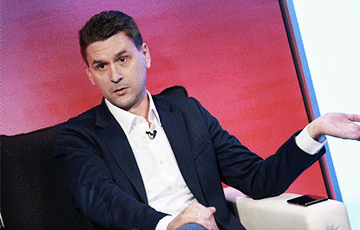
The ability to wage war will be compromised in a few months.
US President Donald Trump has promised to impose tough sanctions against Russia after the expiration of a shortened ultimatum of just 10 days to stop its aggression against Ukraine. The reason for the harsh rhetoric was another bloody strike on Kiev that killed 31 people.
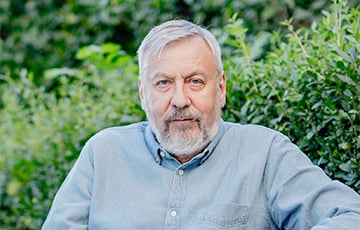
How serious is Trump about implementing his ultimatum? Charter97.org spoke to Ukrainian political-military columnist for the Information Resistance group Alexander Kovalenko about this:
- Donald Trump has repeatedly given Putin the opportunity to reduce violence and terror in Ukraine. His policy was, in a sense, consistent: so that in a historical context, no matter what Trump subsequently did, there would be no claim against him that he did not give Russia a chance for a peaceful resolution. These six months of calls for peace cannot be overlooked - it was a real attempt to give Russia a chance to settle things peacefully.
In the beginning, Donald Trump was sure that he would succeed - it was felt in his statements, actions and rhetoric. But gradually he began to realize that in Russia he is simply, roughly speaking, being screwed. He was being manipulated. And Trump is not a man who can be manipulated and will forgive it.
We witnessed how he first gave Russia an ultimatum of 50 days and then reduced it to 10. This proves once again that Trump is becoming increasingly frustrated with Russia's actions and his rhetoric against Putin, the Kremlin and the Russian military is getting harsher. He is taking personalities, even using profanity and non-politically correct language when talking about Russia. This shows his emotional tension and clear intention to pressure Moscow by all available means.
That is why I think that the current threats of sanctions and tariffs that the White House is voicing will be realized - just after the 10-day deadline.
- Yesterday, India instantly reacted to Trump's threat of 100 percent duties: state-owned refineries refused to buy Russian oil. How do you assess this fact?"
- India is one of the major buyers of Russian oil. It was a serious addition to Russia's budget at the expense of Indian rupees. But India acted quite prudently: it did not argue with the United States, since a significant part of its economy, including exports, depends on supplies to the EU and the United States.
Today, India's economy resembles China's in the 1990s and early 2000s, when huge quantities of cheap goods, consumer goods, were sold en masse to Europe and America. Now India's economy is about 30 years behind China's. China is already going through a period where its products are becoming more expensive and inferior to India's. India is certainly not allowed to get into a confrontation with the US.
Duties from the US if it continues to buy Russian oil would be a far more serious blow to India than giving up cheap Russian oil and switching to more expensive sources. But in the end, India would still be on the plus side. This is a reasonable step.
What concerns China is a separate issue. It should not be perceived as an absolutely monolithic and unshakable economy. American tariffs are also a sensitive blow to Beijing. It will be interesting to see how China will behave when it comes to purchasing Russian energy.
- How will the introduction of 100% duties against Russia and countries that buy its oil affect the Kremlin's military capabilities? The budget will not receive funds to continue the war. It won't happen the next day, but it's a progressive process. And in the short term - we're not talking years - we will see a real impact on Russia's ability to wage war with the same intensity. It may take a few months.
Russia's budget depends almost entirely on oil and gas exports. Even under sanctions, the oil and gas sector provides about 40% of revenues. This is a critical dependence. It is at the expense of these revenues that the war in Ukraine is financed.
In addition, there is another important point: if Russia is going to have a daily surplus of oil - millions of barrels, thousands of tons - they need to be stored somewhere. And when reservoirs and storage facilities run out, there is a crisis. Russia may face a situation where it simply has nowhere to store oil.
There will be two options: either to use tankers as storage facilities - which will drift out to sea and create potential emergencies - or to shut down the fields.
But this is also a problem. About 70% of Russia's fields are old facilities developed back in the USSR. Their closure will lead to flooding by underground water. Such fields cannot be restored. This means that Russia may find itself in a deep energy dilemma - both financial and production.

Bank's name: Bank Millennium S.A.
Address: ul. Stanislawa Zaryna, 2A, 02-593, Warszawa
IBAN: PL97116022020000000216711123
SWIFT: BIGBPLPW
Name of the account holder: Fundacja “KARTA ‘97”
Purpose/title of payment: Donation for statuary aims
You can contact us by the e-mail [email protected]